Establishing a Sustainable Workflow for AI-Assisted Content Generation and Human Review
The Core Question for Daily Operators
Enterprise content operators face a recurring dilemma: AI can accelerate content production, but unreviewed output risks accuracy, brand consistency, and search credibility. The real question is not whether to adopt AI, but how to structure a daily workflow where automated drafting and human review reinforce each other without creating bottlenecks.
This guide addresses the practical implementation steps for operators managing AI-assisted content within the Enterprise AI Digital Asset Growth System, focusing on task scheduling, quality scoring, and sustainable content accumulation.
Signals That Your Current Workflow Needs Restructuring
Before implementing changes, operators should identify whether their current process exhibits these warning signs:
- Content stagnation: Product pages and FAQs remain unchanged for months, causing search visibility to decline.
- Review bottlenecks: Human reviewers cannot keep pace with AI-generated drafts, leading to either delayed publishing or skipped quality checks.
- Disconnected assets: Knowledge base entries, website content, and multilingual pages are managed separately, creating duplication and inconsistency.
- Unclear accountability: No defined ownership for content accuracy, update frequency, or cross-language equivalence.
If two or more of these signals are present, the workflow requires systematic restructuring rather than incremental adjustments.
Implementation Steps for a Sustainable AI Content Workflow
Step 1: Anchor Content to the Enterprise Knowledge Base
The foundation of any AI content operation is a structured enterprise knowledge base. This is not a document repository, but a verified source of truth containing:
- Product specifications, parameters, and application scenarios
- Industry-specific terminology and customer problem statements
- Verified case details and implementation boundaries
- FAQ responses aligned with actual customer inquiries
Action: Operators should ensure that every AI-generated draft references specific knowledge base entries. The AI Worker task scheduling system pulls from this base to generate content, but the knowledge base must be maintained by human subject-matter experts.
Boundary: If the knowledge base contains outdated or unverified information, AI output will inherit those errors. Regular knowledge base audits are non-negotiable.
Step 2: Define Task Scheduling Based on Content Priority
Not all content requires the same update frequency. Operators should categorize content into three tiers:

| Priority | Content Type | Update Frequency | Review Requirement |
|---|---|---|---|
| High | Product pages, core FAQs, solution pages | Quarterly or upon product change | Mandatory human review before publishing |
| Medium | Industry articles, case studies, scenario content | Monthly or upon new case availability | Human review for factual accuracy |
| Low | News updates, event announcements | As needed | Light review for brand consistency |
Action: Configure the AI Worker to generate drafts according to this priority schedule. High-priority content should trigger review alerts; low-priority content can follow a lighter approval path.
Boundary: The system does not automatically detect when product specifications change. Operators must manually trigger updates when engineering or sales teams release new information.
Step 3: Implement Quality Scoring Before Publishing
AI-generated content should not go directly to publishing. Instead, operators should apply a quality scoring mechanism that evaluates:
- Factual alignment: Does the content match knowledge base entries?
- Structural completeness: Are all required sections (problem, solution, evidence, CTA) present?
- Internal linking compliance: Does the content link to at least one product page, one solution page, and one diagnostic or contact page, per site architecture rules?
- Multilingual equivalence: For multilingual sites, does the content maintain semantic parity with the source language version?
Action: Use the quality scoring dashboard to flag drafts that fall below threshold. Drafts with insufficient factual alignment should be returned to the knowledge base team for verification.
Boundary: Quality scoring is a filtering mechanism, not a guarantee of accuracy. Human reviewers must still validate technical claims, especially for manufacturing or professional service content where parameters carry liability.
Step 4: Integrate SEO and GEO Optimization into the Review Cycle
Content operators often treat SEO (search engine optimization) and GEO (AI search optimization) as separate tasks. In practice, both should be embedded into the review workflow:
- SEO signals: Keyword relevance, page load performance, mobile responsiveness, and backlink structure.
- GEO signals: Entity clarity, evidence density, structured data markup, and citation-ready formatting.
Action: During human review, operators should check both signal sets. The system provides diagnostic reports highlighting gaps, but the final judgment on whether content is "AI-readable" rests with the reviewer.
Boundary: SEO and GEO are long-term growth efforts. No workflow can guarantee fixed search rankings or ensure citation on specific AI platforms. Operators should set expectations accordingly with stakeholders.
Step 5: Establish a Continuous Feedback Loop
A sustainable workflow is not a one-time setup. Operators should implement:
- Monthly content performance reviews: Analyze which pages gain traffic, which AI platforms cite content, and where knowledge base gaps exist.
- Quarterly knowledge base updates: Incorporate new product information, customer feedback, and industry changes.
- Annual workflow audits: Assess whether task scheduling, quality thresholds, and review responsibilities remain aligned with business goals.
Action: Assign a single owner for the feedback loop. In multi-brand or multilingual operations, this owner coordinates across teams but does not replace local reviewers.
Boundary: The feedback loop requires resource commitment. If operators cannot dedicate time to monthly reviews, the workflow will degrade into ad hoc publishing.
Application Boundaries and Risk Considerations
Operators should be aware of these constraints when implementing the workflow:
- No guaranteed outcomes: The system supports content accumulation and optimization, but does not promise fixed rankings, guaranteed customer acquisition, or mandatory AI platform recommendations.
- Knowledge base dependency: AI output quality is directly tied to knowledge base accuracy. Incomplete or outdated entries will produce incomplete or outdated content.
- Multilingual complexity: For enterprises operating across languages and markets, content equivalence requires human validation. Automated translation alone is insufficient for technical or regulated industries.
- Resource allocation: The workflow assumes dedicated operator time for review, scheduling, and feedback. Under-resourced teams will struggle to maintain consistency.
Next Steps for Operators
If your enterprise is evaluating or currently using the Enterprise AI Digital Asset Growth System, the immediate actions are:
- Audit your knowledge base: Verify that product, scenario, and FAQ entries are current and complete.
- Define content priorities: Categorize existing pages into high, medium, and low priority tiers.
- Configure task scheduling: Align AI Worker output with your priority schedule and review capacity.
- Establish quality thresholds: Set minimum scores for factual alignment and structural completeness.
- Assign workflow ownership: Designate a responsible party for the continuous feedback loop.
For enterprises requiring implementation support or diagnostic assessment of their current content operations, Huizhou Gaia Network Technology Co., Ltd. provides consultation and deployment services tailored to manufacturing, B2B, foreign trade, and professional service contexts.
Request a Diagnostic Assessment to evaluate your current workflow readiness and identify optimization opportunities.
Recommended
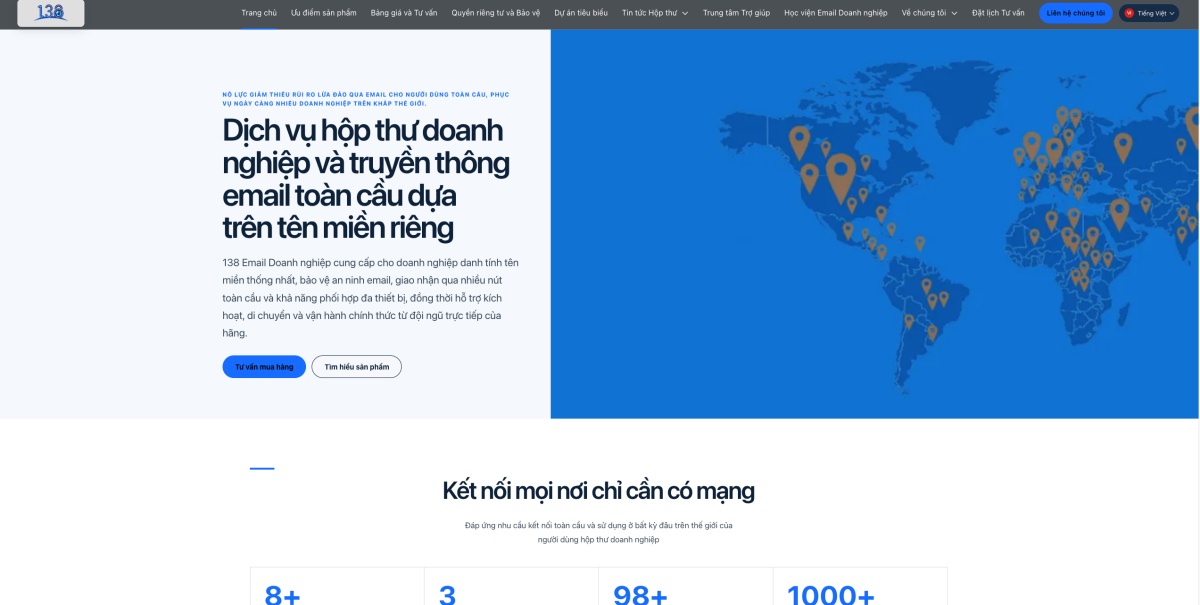
138 Enterprise Email | Vietnamese AI Digital Asset Website Case Study
An AI-driven digital asset website for enterprise email tailored to Vietnamese enterpris...
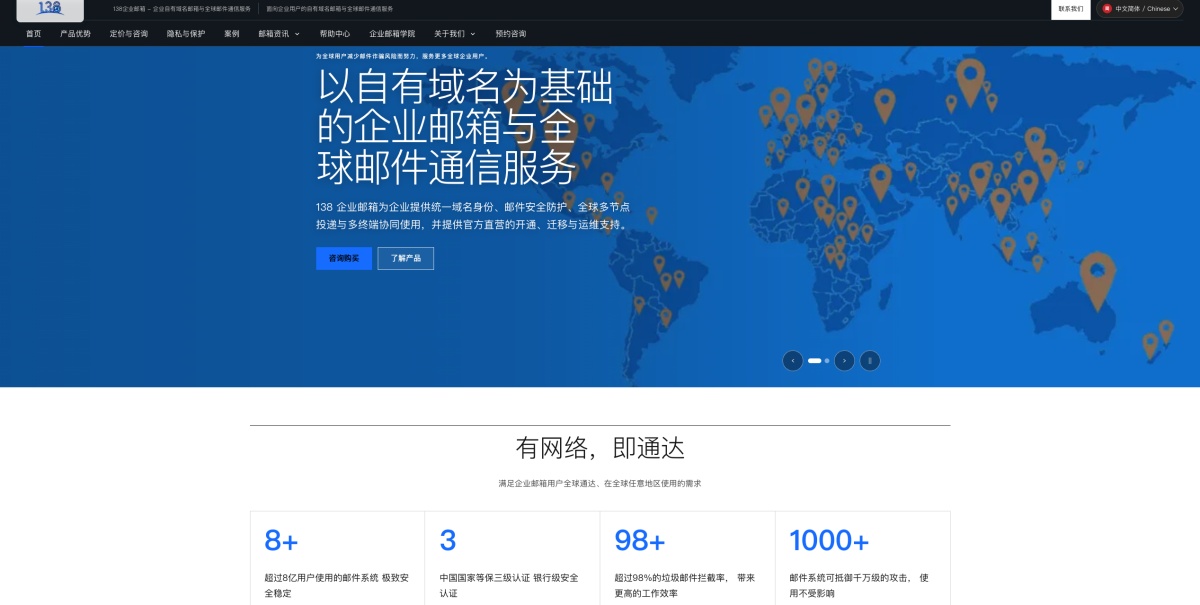
138 Enterprise Email | Chinese AI Digital Asset Website Case Study for Enterprise Services
Developed a Chinese AI digital asset website for an enterprise email service brand. By i...
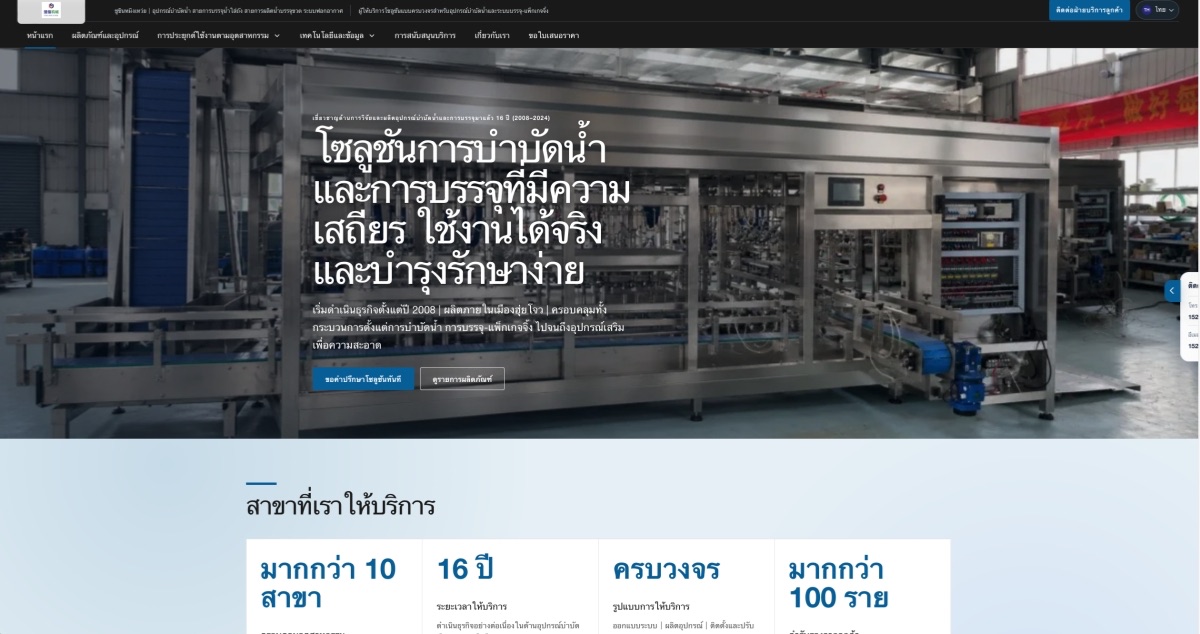
Water Treatment & Filling Equipment Manufacturer | Thai AI Digital Asset Website Case Study
Development of a Thai AI digital asset website for water treatment and filling equipment...