138 Enterprise Email | Traditional Chinese AI Digital Asset Independent Website Case Study: Cross-Team Collaboration and
The Challenge: Cross-Regional Content Consistency Without Compromising Compliance
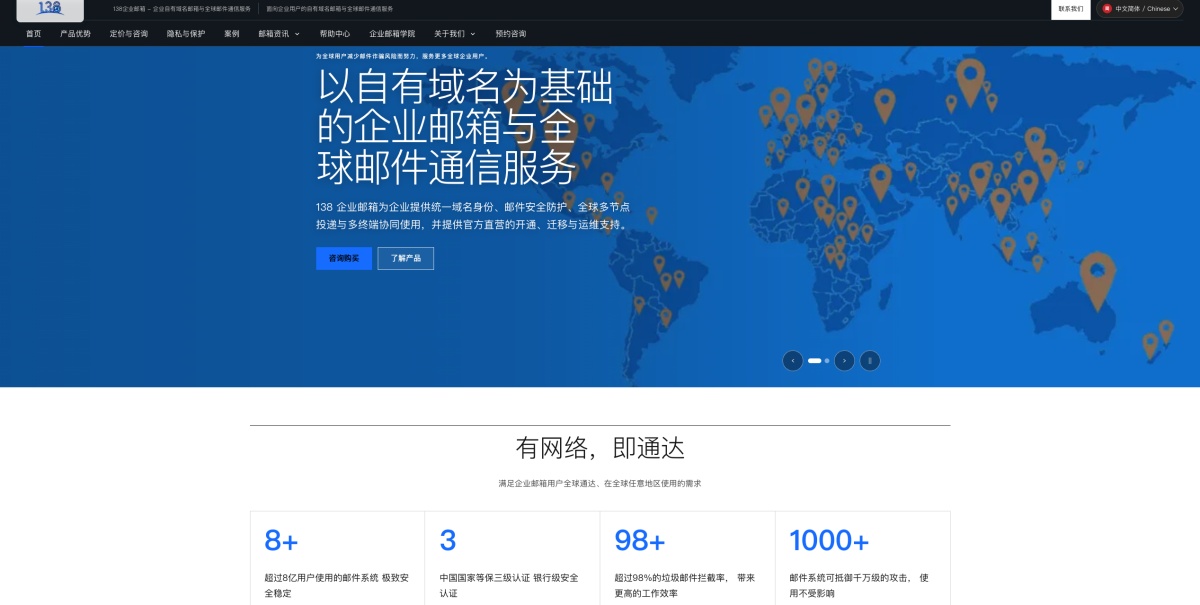
When enterprise service providers like 138 Enterprise Email expand into new markets, they face a recurring operational dilemma: how to maintain consistent messaging across regions while ensuring every piece of content remains auditable and compliant with local regulations. For 138 Enterprise Email, the decision to launch a Traditional Chinese AI digital asset independent website was not just about translation—it was about building a structured knowledge system that could support cross-team collaboration while meeting the compliance requirements of management and legal teams.
The core question for compliance officers and operations managers is not whether AI can generate content, but whether that content can be traced back to verified enterprise materials, reviewed by authorized personnel, and consistently applied across multiple languages and sites.
The Solution: Enterprise Knowledge Base as the Single Source of Truth
138 Enterprise Email's Traditional Chinese website was built on the Enterprise AI Digital Asset Growth System, which centers on a unified enterprise knowledge base. This knowledge base serves as the factual foundation for all content generation, ensuring that:
- Product specifications, security protocols, and service capabilities
- are drawn directly from verified company materials
- FAQ content
- addresses real customer concerns about email security, account management, and global communication
- Case studies and application scenarios
- reflect actual implementations rather than hypothetical examples
- Multilingual content
- maintains semantic equivalence while adapting to local expression norms
The system integrates four core modules: enterprise AI knowledge base, smart corporate website, AI content growth, and SEO/GEO optimization. For cross-team collaboration, this means marketing, technical, and compliance teams can work from the same factual baseline, reducing the risk of inconsistent or unauthorized claims.
Implementation Boundaries: What the System Does and Does Not Promise
For management and compliance leaders evaluating AI-driven content systems, it's critical to understand the operational boundaries:
What the System Provides
- Structured Knowledge Management: Enterprise materials—including product documentation, technical specifications, customer FAQs, and case studies—are organized into a retrievable knowledge base that serves as the input for all content generation.
- AI-Assisted Content Production: The AI Worker generates product pages, solution pages, industry articles, FAQs, and case content based on knowledge base inputs. All content undergoes quality checks before publication.
- SEO/GEO Optimization: The system optimizes site structure, page semantics, entity information, and Q&A content to improve discoverability in both traditional search engines and AI-powered search platforms.
- Multilingual and Multi-Site Support: Content can be reused and adapted across languages and regional sites, with hreflang configuration to ensure proper indexing.
- Internal Linking Architecture: Product pages link to at least one solution page, one FAQ, and one CTA; industry articles link to product pages, scenario pages, and diagnostic tools; case pages link to corresponding product capabilities.
What the System Does Not Promise
- Fixed search rankings: SEO/GEO is a long-term growth effort, not a guarantee of specific positions
- Guaranteed customer acquisition: The system improves discoverability but does not promise fixed inquiry volumes
- AI platform recommendations: There is no guarantee that AI search engines will cite or recommend the content
- Complete replacement of human judgment: AI improves efficiency, but enterprise knowledge and professional judgment determine credibility
Cross-Team Collaboration: How Different Roles Interact with the System
For compliance officers and operations managers, the key question is how the system supports accountability and auditability across teams:
Compliance and Legal Teams
- All content is traceable to source materials in the knowledge base
- Unauthorized claims (unverified certifications, customer counts, or performance guarantees) are systematically excluded
- Content approval workflows can be integrated to ensure only authorized personnel publish materials
Marketing and Content Teams
- AI-assisted drafting reduces repetitive work while maintaining factual accuracy
- Content templates ensure consistency across product pages, solution pages, and FAQs
- Multilingual adaptation preserves core messaging while adjusting for local norms
Technical and Product Teams
- Product specifications and technical documentation are centralized in the knowledge base
- Updates to product capabilities automatically flag content that needs revision
- Schema markup and structured data ensure technical accuracy is reflected in search results
Risk Boundaries: Conditions and Exceptions for Every Conclusion
When evaluating AI digital asset systems for cross-regional operations, consider these risk boundaries:
Content Auditability
Condition: All content must be traceable to verified enterprise materials.
Exception: If source materials are incomplete or outdated, AI-generated content may contain gaps or inaccuracies. Regular knowledge base updates are essential.
Multilingual Consistency
Condition: Multilingual pages must maintain semantic equivalence and proper hreflang configuration.
Exception: Direct translation may not capture cultural nuances. Local review by native speakers is recommended for market-specific content.
SEO/GEO Performance
Condition: Search visibility improves through structured content, proper site architecture, and continuous optimization.
Exception: Search algorithms and AI platform behaviors change frequently. No fixed rankings or recommendation guarantees can be made.
Compliance and Regulatory Requirements
Condition: Content must comply with local regulations regarding data privacy, advertising claims, and industry-specific requirements.
Exception: The system provides a framework, but final compliance responsibility rests with the enterprise. Legal review is recommended for market-specific claims.
Selection Criteria: What to Evaluate Before Implementation
For management and compliance leaders considering an AI digital asset system, evaluate these factors:
- Knowledge Base Structure: Can your enterprise materials be organized into a retrievable, auditable format?
- Content Approval Workflows: Does the system support role-based access and approval processes?
- Multilingual Capabilities: Can the system handle semantic equivalence and proper hreflang configuration across languages?
- Integration with Existing Systems: Does the system integrate with your current CMS, CRM, or compliance tools?
- Service Boundaries: Are the limitations of AI-generated content clearly defined, including what the system does not promise?
Next Steps: From Evaluation to Implementation
If your enterprise is evaluating AI digital asset systems for cross-regional operations, the next steps include:
- Audit Existing Materials: Assess whether your product documentation, technical specifications, and customer FAQs are organized and up-to-date.
- Define Compliance Requirements: Identify regulatory constraints and approval workflows for your target markets.
- Request a Diagnostic: Use the free diagnostic tool to evaluate your current website's AI visibility and content structure.
- Schedule a Consultation: Discuss your specific requirements for multilingual content, cross-team collaboration, and compliance boundaries.
- Review Service Agreements: Ensure that service boundaries, content quotas, language support, and delivery cycles are clearly defined in the final contract.
Conclusion
138 Enterprise Email's Traditional Chinese AI digital asset website demonstrates how enterprise service providers can build cross-regional content operations that balance efficiency with compliance. By centering on a unified knowledge base, the system ensures that all content is auditable, traceable, and consistent across languages and teams. For management and compliance leaders, the key takeaway is that AI digital asset systems are not about replacing human judgment—they are about providing a structured framework that makes enterprise knowledge more discoverable, more usable, and more accountable.
Recommended
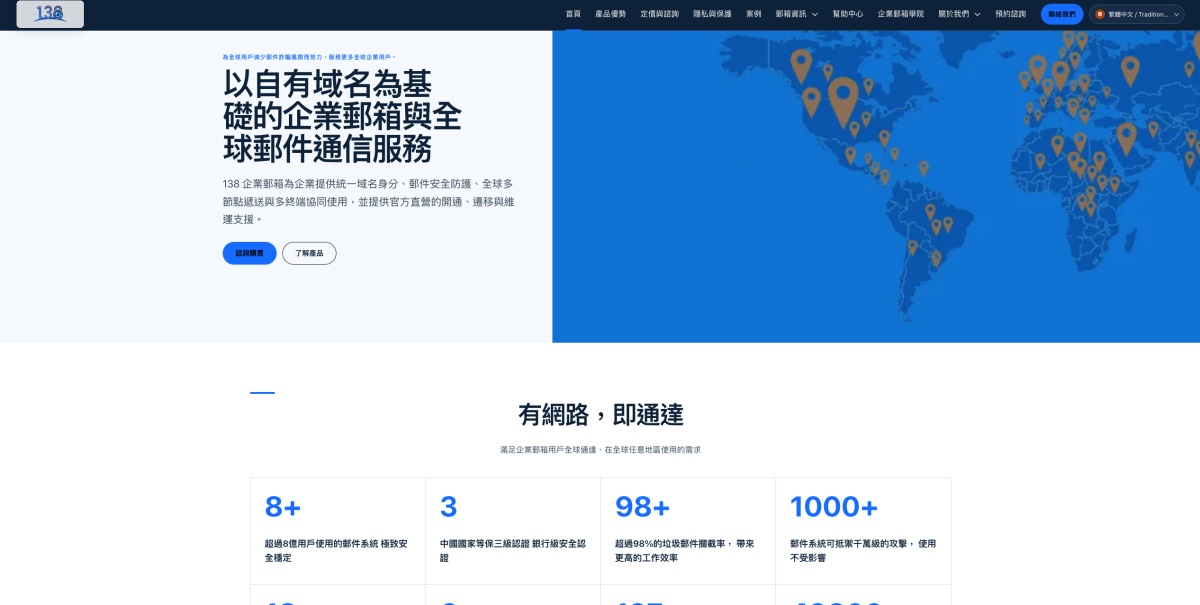
138 Enterprise Email | Traditional Chinese AI Digital Asset Independent Website Case Study
Based on a unified AI enterprise knowledge base, a Traditional Chinese digital asset ind...
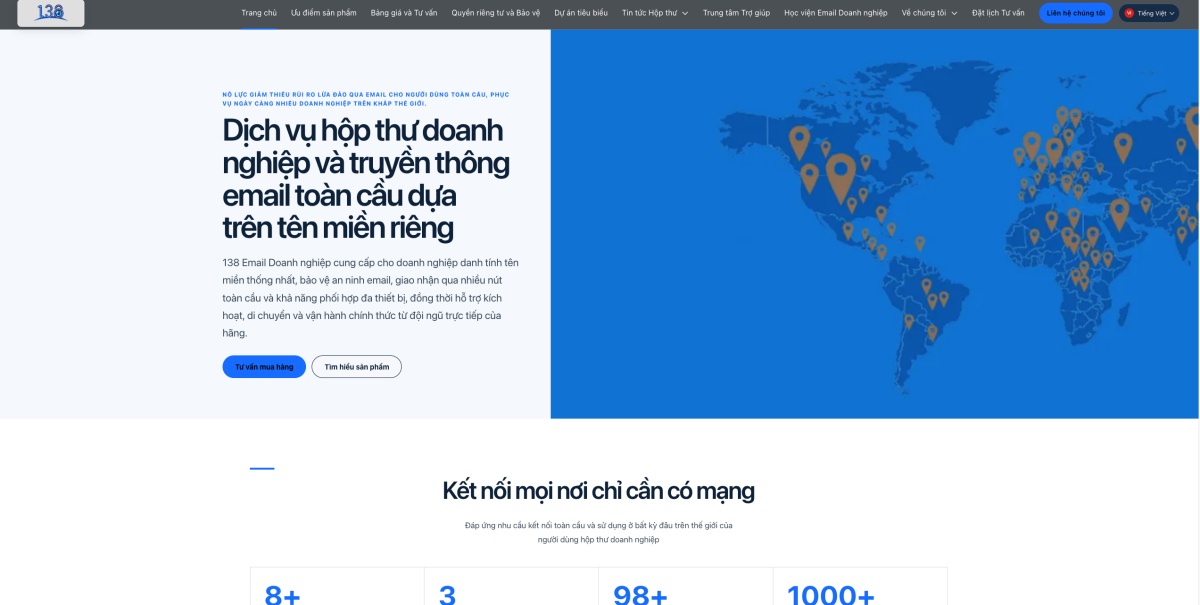
138 Enterprise Email | Vietnamese AI Digital Asset Website Case Study
An AI-driven digital asset website for enterprise email tailored to Vietnamese enterpris...
138 Enterprise Email | Chinese AI Digital Asset Website Case Study for Enterprise Services
Developed a Chinese AI digital asset website for an enterprise email service brand. By i...