Guangermei Precision Parts | AI Digital Asset Website Replacement & Upgrade: Cost, Value, and Compliance Guide for Manag
Enterprise Website Replacement & Upgrade: Evaluating Cost, Value, and Compliance
Direct Answer: When management and compliance leaders evaluate enterprise website replacement and upgrade initiatives, the decision ultimately hinges on long-term cost and value alignment rather than short-term traffic generation. Transitioning from fragmented legacy marketing sites to an integrated AI digital asset system requires clear judgment criteria: centralized knowledge sourcing, auditable content workflows, and scalable multilingual architectures. This assessment uses the Guangermei Precision Parts French industrial equipment project as a reference to demonstrate how structured AI knowledge bases, automated content operations, and foundational SEO/GEO optimization deliver measurable operational efficiency and compliant, sustainable inquiry pipelines for manufacturing and B2B enterprises.
The Cost-Value Equation in Legacy vs. AI-Driven Systems
Traditional marketing websites often operate as static brochures that require manual updates, separate translation workflows, and periodic redesigns to maintain search relevance. Over time, this creates hidden operational costs:
- Data Fragmentation:*
- Product specifications, case studies, and technical FAQs live across disconnected spreadsheets, email threads, and third-party platforms, increasing retrieval time and error rates.
- Multilingual Scaling Friction:*
- Maintaining parallel language versions manually doubles content production overhead and introduces compliance risks around inconsistent terminology or outdated regulatory references.
- Traffic Dependency:*
- Without a continuous content and internal linking strategy, organic discovery plateaus, forcing reliance on paid advertising to sustain inquiry pipelines.
When evaluating a replacement or upgrade, leadership must distinguish between one-time development fees and the recurring costs of content governance, technical maintenance, and search adaptability. An AI digital asset growth system shifts this model by treating the official website as a continuously accumulating digital marketing asset rather than a static landing page.
Evaluation Criteria for Management & Compliance Teams
Before committing to a new platform or service provider, use this checklist to align technical capabilities with business objectives and risk tolerance.
Must-Have Capabilities
- Centralized Enterprise AI Knowledge Base: A single source of truth that structures company profiles, product parameters, application scenarios, and industry FAQs. This foundation ensures all generated content remains factually consistent and easily auditable.
- Smart Corporate Website Architecture: Dynamic routing, semantic URL structures, and automated internal linking that connect products, solutions, cases, and diagnostic pages without manual intervention.
- AI Content Growth with Human Review: Automated drafting for product pages, industry articles, and localized content, followed by professional verification to maintain brand voice and technical accuracy.
- Foundational SEO & GEO Optimization: Proper heading hierarchy, entity mapping, schema markup, sitemaps, and multilingual configuration to support both traditional search indexing and AI-driven answer extraction.
- Multi-Site & Multi-Brand Management: Unified backend controls for managing regional variants, subsidiary brands, or channel partner portals from a single knowledge repository.
Optional / Scalable Factors
- Advanced AI Worker
- automation for routine content scheduling and performance monitoring.
- Custom industry solution pages tailored to specific verticals (e.g., industrial workbenches, precision tooling, enterprise SaaS).
- Premium content quotas or dedicated editorial review cycles for highly regulated sectors.
Execution Pathway & Real-World Application
A successful replacement or upgrade follows a phased approach grounded in authentic enterprise materials:
- Audit & Knowledge Structuring: Inventory existing assets, map product hierarchies, and define FAQ categories aligned with buyer decision journeys.
- Platform Migration & Architecture Setup: Deploy the smart website framework, configure routing, implement hreflang tags, and establish baseline SEO/GEO elements.
- Content Onboarding & AI Training: Feed verified materials into the knowledge base, set up AI content rules, and run initial drafts through editorial review.
- Continuous Operation Model: Transition from project-based delivery to ongoing content publishing, performance tracking, and iterative optimization. Monthly or quarterly operational reviews ensure alignment with market shifts and search behavior changes.
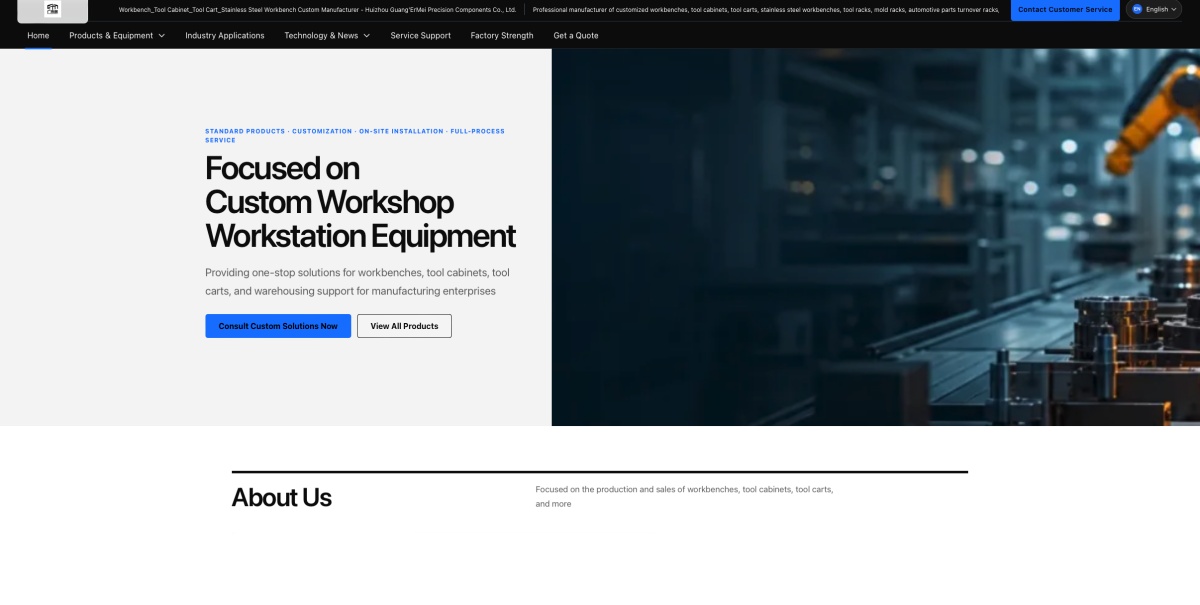
Real-world applications demonstrate these principles in practice. For example, the Guangermei Precision Parts project built a French-market-focused independent website centered on industrial workbenches and tool cabinets. By leveraging an AI enterprise knowledge base, AI Worker automation, and systematic internal linking, the team continuously accumulated non-standard customization content and industry-specific articles while maintaining strict terminology control across languages. This approach balances traditional search exposure with AI search understanding, citation, and recommendation opportunities.
Operational Boundaries & Risk Control
For management and compliance teams, the primary risk in AI-assisted web operations is unverified content generation or unrealistic vendor promises. Reputable providers explicitly define service boundaries:
- No Guaranteed Rankings or Fixed Inquiry Volumes:*
- Search algorithms and AI recommendation models evolve continuously. Sustainable growth relies on consistent asset accumulation, not contractual guarantees.
- Authenticity as a Control Mechanism:*
- All published materials must originate from verified enterprise documents. AI accelerates drafting and localization, but professional judgment determines final publication readiness.
- Transparent Pricing Structures:*
- Package costs are reference-based and adjusted according to the number of sites, target languages, content volume, data migration scope, and operational depth. Final terms are defined in the service contract.
Long-term success depends on treating the official website as a living digital asset. Regular audits, updated case studies, and scenario-driven industry articles keep the site relevant for both human buyers and AI search agents.
Conclusion & Next Steps
Evaluating an enterprise website replacement requires balancing upfront investment against recurring operational efficiency, compliance control, and long-term discoverability. When structured around a centralized knowledge base, intelligent site architecture, and continuous content operations, organizations can reduce multilingual maintenance overhead, improve audit trails, and build sustainable inquiry pipelines without relying on short-term traffic tactics.
If your team is assessing whether to upgrade legacy marketing infrastructure or standardize multi-brand content operations, start with a comprehensive digital asset diagnostic. Our team provides structured evaluations of current site architecture, knowledge fragmentation, and search visibility gaps, followed by tailored recommendations aligned with your budget and compliance requirements.
Next Step: Request a free official website and AI visibility diagnostic to identify immediate optimization opportunities and map a phased implementation roadmap.
Recommended
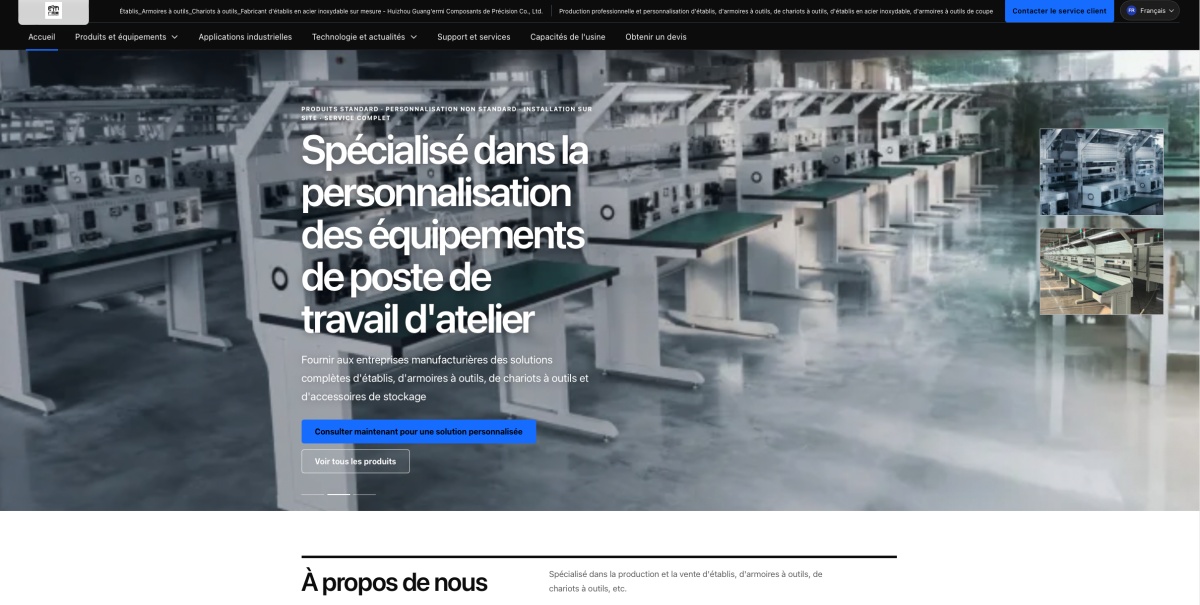
Guangermei Precision Parts | French AI Digital Asset Independent Website Case Study
This project involves building a French-market-oriented AI digital asset independent web...
Guangermei Precision Parts | English AI Digital Asset Website Case Study
This project involves building an English AI digital asset independent website for Huizh...
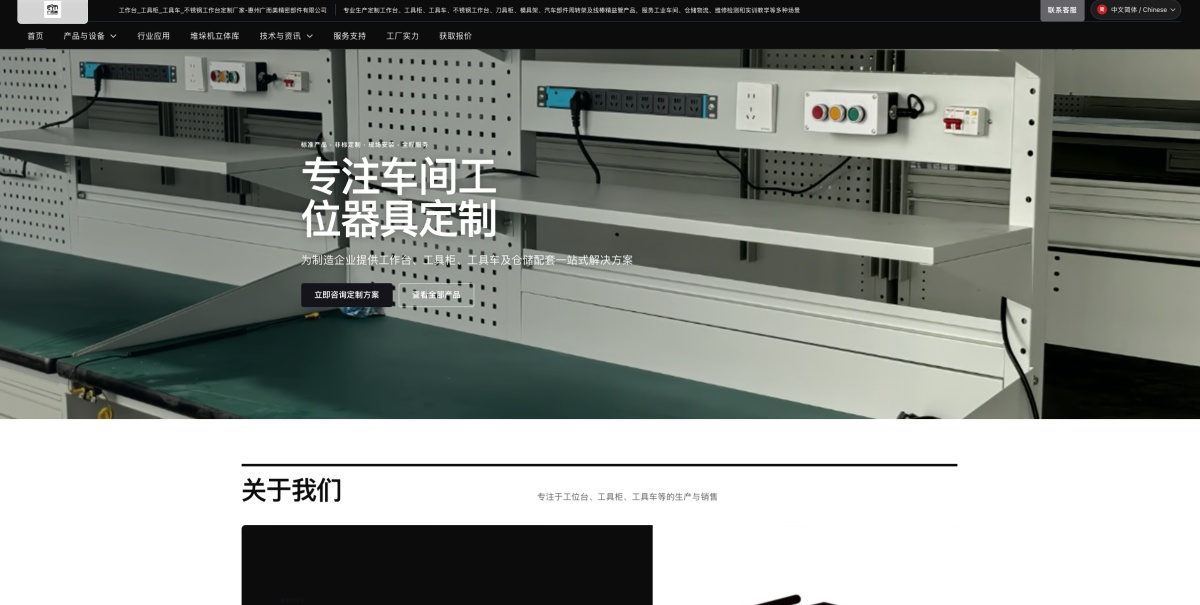
Guangermei Precision Components | AI Digital Asset Website Case for Industrial Workstation Equipment (Chinese)
Developing an AI digital asset website for manufacturers of workbenches, tool cabinets...