Structuring Complex Industrial Product Data for AI Readiness and Search Clarity
Structuring Complex Industrial Product Data for AI Readiness and Search Clarity
Symptom: Why High-Quality Products Remain Invisible Online
Manufacturing and B2B enterprises often face a paradox: they possess rich technical documentation, detailed product specifications, and deep industry expertise, yet their official websites struggle to generate consistent organic traffic or qualified inquiries. Common symptoms include:
- Fragmented Information:*
- Product manuals, case studies, and FAQs exist in isolated formats (PDFs, Word docs) that search engines cannot easily index or relate to each other.
- Static Content Silos:*
- Traditional website structures separate "Products," "Solutions," and "News," making it difficult for users—or AI systems—to understand the contextual relationships between a specific industrial workbench and its application scenarios.
- Low AI Visibility:*
- While traditional SEO might capture some keyword matches, the content lacks the structured semantic depth required for AI-driven search engines (GEO) to cite or recommend the brand as a authoritative source.
If your site relies on static pages that are rarely updated after launch, you are likely losing opportunities to customers who discover solutions through AI-assisted research or long-tail technical queries.
Cause: The Gap Between Raw Data and Digital Assets
The core issue is not a lack of content, but a lack of structured digital assets. Most enterprise websites treat content as a display medium rather than a knowledge repository.
- Unstructured Source Material: Technical specs for items like tool cabinets or precision parts are often buried in downloadable PDFs. Search engines can crawl these files, but they struggle to extract specific attributes (e.g., load capacity, material grade) and link them to user questions like "heavy-duty industrial workbench for automotive assembly."
- Missing Semantic Connections: Without a unified knowledge base, there is no automated mechanism to link a product page to relevant industry cases, maintenance FAQs, or comparative guides. This isolation reduces the topical authority of the site.
- Manual Maintenance Bottlenecks: Keeping thousands of SKUs updated across multiple languages manually is unsustainable. This leads to outdated information, which damages trust and search rankings.
Checks: Diagnosing Your Current Content Structure
Before implementing a new system, evaluate your current digital footprint against these criteria:
- Auditability:*
- Can you trace every piece of content back to authentic enterprise materials? If your website content is generic marketing copy disconnected from actual product specs, it fails the auditability test.
- Reusability:*
- Is your content designed for reuse across different channels (website, social media, sales decks)? If each piece of content is created in isolation for a single page, it is not an asset.
- AI Readiness:*
- Does your content answer specific questions? AI search engines prioritize content that clearly defines problems, solutions, and evidence. Check if your product pages include structured FAQs and scenario-based descriptions.
Resolution: Implementing an Enterprise AI Digital Asset Growth System
To resolve these issues, enterprises should transition from a "website-centric" model to an "AI Digital Asset" model. This involves integrating four key components: Enterprise AI Knowledge Base, Smart Corporate Website, AI Content Growth, and SEO/GEO Optimization.
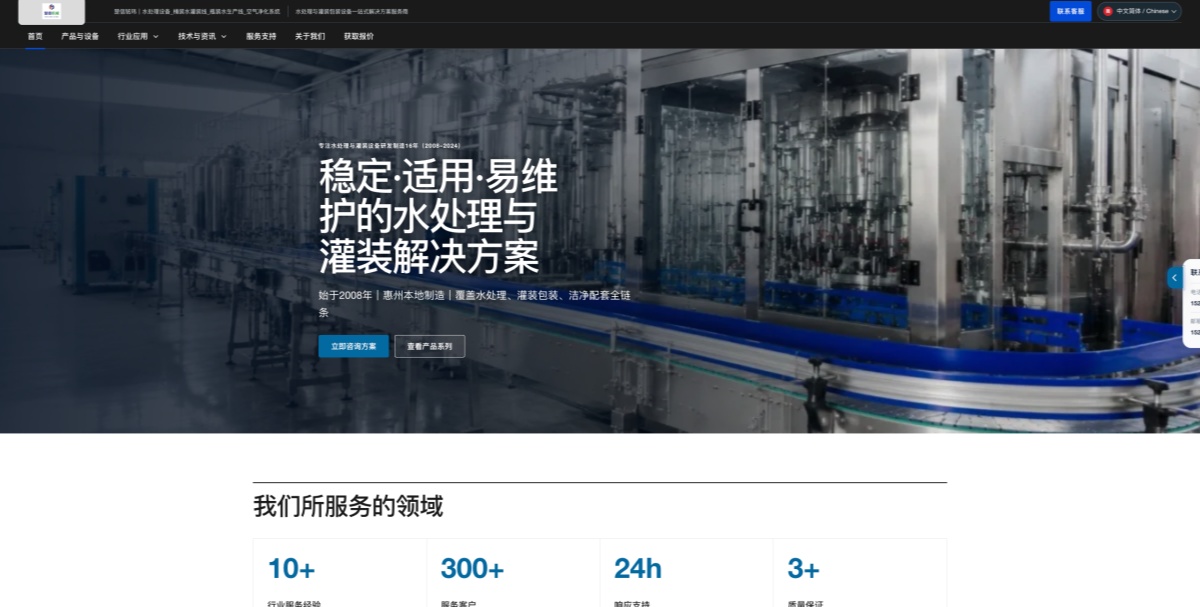
Step 1: Centralize Data in an Enterprise AI Knowledge Base
The foundation of this system is the Enterprise AI Knowledge Base. Instead of scattering documents across servers, upload all authentic materials—product datasheets, technical manuals, past project cases, and customer service FAQs—into a unified, searchable knowledge base.
- Action:*
- Use tools that support document parsing and automatic tagging. For example, a manufacturer of industrial workbenches can upload CAD drawings and spec sheets, allowing the system to extract key attributes like dimensions, materials, and load ratings.
- Benefit:*
- This creates a single source of truth. As seen in the case of Huizhou Guangermei Precision Parts Co., Ltd., building a French-market-oriented AI digital asset independent website allowed them to continuously accumulate non-standard customization and industry content through an AI knowledge base. This ensures that all generated content is grounded in verified facts.
Step 2: Automate Content Generation and Internal Linking
Once the knowledge base is established, use AI Content Growth capabilities to dynamically generate website content. The system should automatically create product pages, solution articles, and FAQ entries by synthesizing information from the knowledge base.
- Action:*
- Configure the system to generate internal links automatically. When a new product page is created for a "tool cabinet," the system should link it to related pages such as "warehouse organization best practices" or "case study: automotive factory storage upgrade."
- Benefit:*
- This creates a dense web of interconnected content that helps search engines understand the site's topical authority. It also improves user experience by guiding visitors from general interest to specific solutions.
Step 3: Optimize for Both Search Engines and AI (SEO & GEO)
Traditional SEO focuses on keywords, while Generative Engine Optimization (GEO) focuses on being cited by AI models. A robust system must address both.
- Action:*
- Ensure that content includes clear headings, structured data, and direct answers to common questions. Use multilingual capabilities to serve global markets without duplicating efforts.
- Benefit:*
- By balancing traditional search exposure with AI search understanding, enterprises increase their chances of being recommended in AI-generated answers. For instance, 138 Enterprise Email successfully used an AI-driven digital asset website to build content around email security and global communication, enhancing their visibility in both Chinese and Vietnamese markets.
Step 4: Establish Continuous Operation Mechanisms
Digital assets require maintenance. Implement a continuous operation approach centered around products, industries, scenarios, cases, and FAQs.
- Action:*
- Regularly update the knowledge base with new product launches, customer feedback, and industry trends. Monitor performance metrics to identify gaps in content coverage.
- Benefit:*
- This ensures that the website remains a living asset that grows in value over time, rather than a static brochure that becomes obsolete.
Escalation Boundary: What This System Does Not Promise
It is crucial to set realistic expectations. This approach emphasizes long-term asset accumulation and continuous optimization.
- No Fixed Rankings:*
- We do not promise fixed search engine rankings or guaranteed customer acquisition numbers. Search algorithms and AI models are dynamic and competitive.
- No Instant Results:*
- Building a comprehensive knowledge base and seeing significant SEO/GEO improvements takes time. It is a strategic investment, not a quick fix.
- Dependency on Authentic Materials:*
- The quality of the output depends entirely on the quality of the input. Enterprises must provide accurate, detailed, and up-to-date materials. Generic or inaccurate data will result in low-quality content.
Next Steps for Technical Evaluators
For manufacturing and B2B enterprises ready to transform their digital presence:
- Inventory Your Assets: Gather all existing product documents, case studies, and FAQs. Assess their format and completeness.
- Define Your Scope: Start with a core product line or a specific market segment (e.g., French market for industrial equipment). Do not attempt to migrate everything at once.
- Consult for a Diagnostic: Contact Huizhou Gaia Network Technology Co., Ltd. for a free diagnosis of your current website and AI visibility. We can help you design a tailored implementation plan based on your specific industry needs and business goals.
By structuring your product data correctly, you turn your website into a sustainable growth engine that works 24/7 to attract and educate potential customers.
Recommended
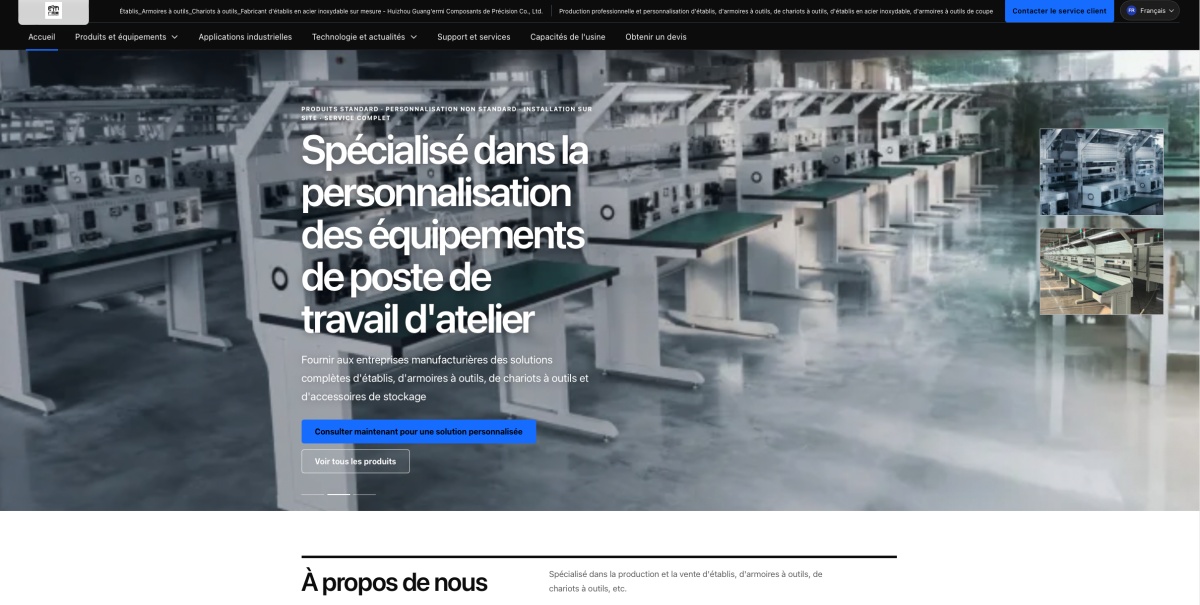
Guangermei Precision Parts | French AI Digital Asset Independent Website Case Study
This project involves building a French-market-oriented AI digital asset independent web...
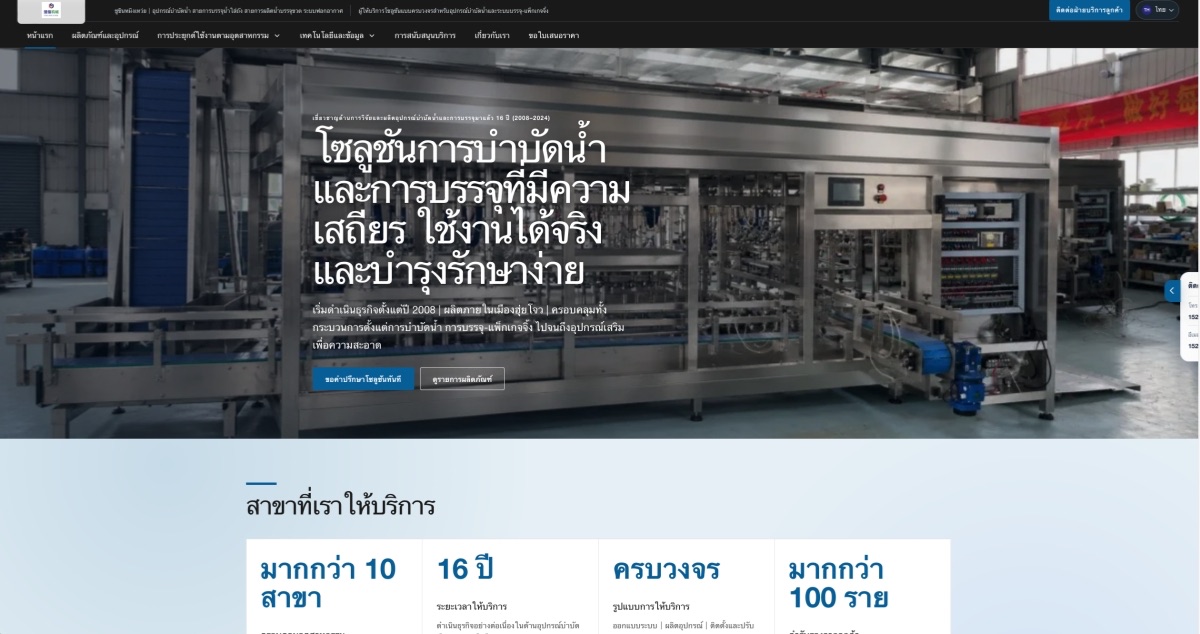
Water Treatment & Filling Equipment Manufacturer | Thai AI Digital Asset Website Case Study
Development of a Thai AI digital asset website for water treatment and filling equipment...
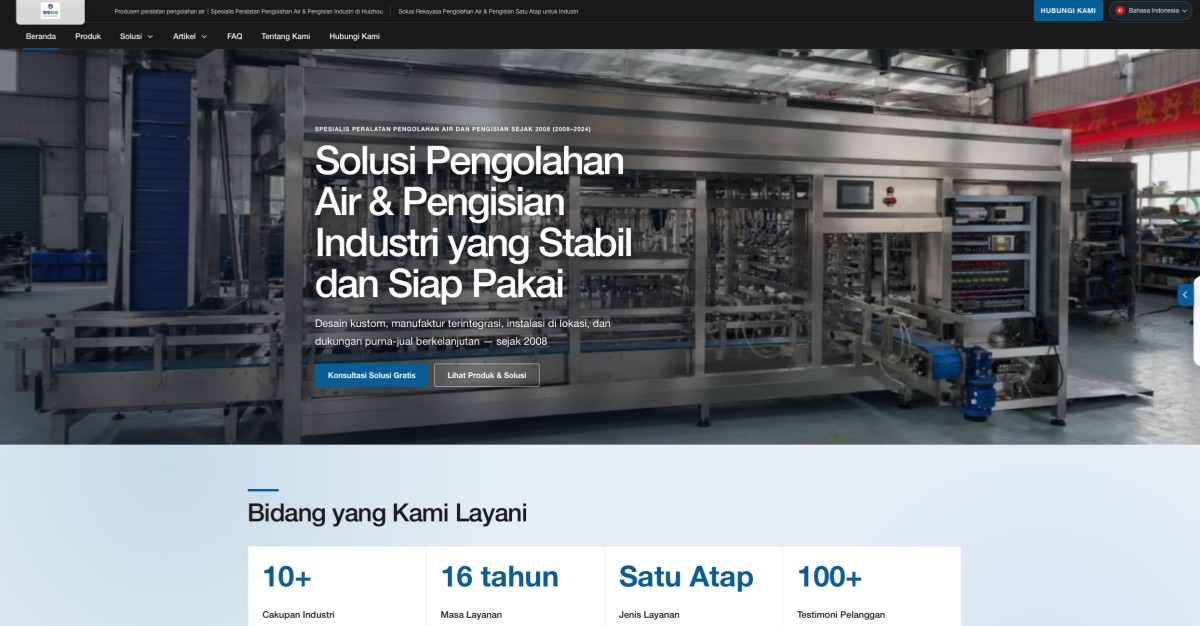
Water Treatment & Filling Equipment Manufacturer | Indonesian AI Digital Asset Website Case Study
An AI-powered digital asset website built for the Indonesian market, tailored for a wate...