SEO vs GEO Optimization: Which Strategy Fits Your B2B Digital Asset System?
SEO vs GEO Optimization: Which Strategy Fits Your B2B Digital Asset System?
If you’re a decision-maker in manufacturing, B2B services, or foreign trade expansion, you’ve likely heard both terms: SEO and GEO. But beyond buzzwords, what do they actually deliver — and which one should anchor your next website upgrade or replacement project?
The answer isn’t “either/or.” It’s “when and how.”
At Huizhou Gaia Network Technology Co., Ltd., we design Enterprise AI Digital Asset Growth Systems that integrate both — because modern B2B buyers don’t just search; they ask. And AI doesn’t just index; it interprets.
Preparation: What You Need Before Choosing Between SEO and GEO
For Traditional SEO
You need:
- Clear keyword targets (e.g., “French industrial workbench supplier”)
- Technical site hygiene: fast load times, mobile responsiveness, clean URL structures
- Content mapped to commercial intent: product pages, category hubs, comparison guides
This is table stakes. Without it, even the smartest AI won’t find you.
For GEO (Generative Engine Optimization)
You need:
- Structured, auditable enterprise knowledge: product specs, use cases, FAQs, compliance documentation
- Entity clarity: Who you are, what you make, where you operate, who your customers are
- Citation-ready content: answers that can be pulled into AI summaries without hallucination risk
GEO doesn’t replace SEO — it builds on it. Think of SEO as getting your name on the map. GEO is making sure AI assistants can explain why someone should call you.
Example: A French-language industrial equipment site we built for a precision parts manufacturer didn’t just target “établi industriel France.” It structured product capabilities, customization workflows, and safety documentation into an AI Worker-enabled knowledge base, so generative engines could surface accurate, brand-aligned answers — not generic listings.
---
Implementation: How Each Optimization Path Works in Practice
SEO Execution Focus
- On-page elements: title tags, meta descriptions, header hierarchy
- Internal linking: connecting related products, solutions, and resources
- Backlink strategy: earning authority from industry-relevant domains
- Localized keyword mapping for multilingual sites (e.g., Vietnamese enterprise email terms for cross-border teams)
Deliverables are measurable: rankings, traffic volume, bounce rates.
GEO Execution Focus
- Knowledge graph alignment: defining your company, products, and services as machine-readable entities
- FAQ and Q&A structuring: anticipating real buyer questions and answering them with sourced, reusable content
- Schema markup: helping AI platforms understand context — e.g., “this page describes a stainless steel tool cabinet compliant with internal quality standards”
- Continuous content auditing: ensuring AI-generated drafts are reviewed against source materials before publishing
Deliverables are qualitative: citation frequency, answer accuracy, brand consistency in AI responses.
Acceptance: How to Measure Success Without False Promises
We do not guarantee top rankings or AI platform placements. Why? Because:
- Search algorithms change.
- AI models evolve.
- Competitors adapt.
What we do ensure:
- Your content is built from authentic enterprise materials
- — product sheets, case studies, technical manuals — not fabricated fluff.
- Every piece of AI-assisted content is auditable and reusable
- across languages and sites.
- Your system supports continuous operation, not one-time launches.
Acceptance criteria should include:
Can new team members quickly find and reuse approved content?
Are non-English sites (e.g., French, Vietnamese) maintaining consistent messaging?
Is the knowledge base reducing repetitive customer inquiries?
Are SEO and GEO efforts feeding each other — not working in silos?
Maintenance: Sustaining Visibility in a Shifting Landscape
Traditional SEO maintenance often stalls after launch. Traffic plateaus. Updates stop. The site becomes a digital brochure.
In contrast, a GEO-aware AI Digital Asset System thrives on iteration:
- Monthly content audits against source documents
- Quarterly entity updates (new products, certifications, markets)
- Biannual schema and FAQ refreshes based on real user queries
- Cross-language sync: when Chinese content updates, French and Vietnamese versions follow via structured reuse
Maintenance isn’t overhead — it’s your competitive moat.
Strategic Recommendation: Start with SEO, Scale with GEO
For most enterprises replacing outdated websites or evaluating new vendors:
- Fix foundational SEO first. If you’re invisible in Google, Bing, or Baidu, AI won’t save you.
- Build your knowledge base in parallel. Import real product data, technical specs, and customer FAQs — this becomes your GEO fuel.
- Layer in GEO practices gradually. Start with schema markup and FAQ structuring. Then expand to entity definition and AI content review workflows.
- Measure asset growth, not just traffic. Track how many reusable content blocks you’ve created, how many languages they support, and how often they’re cited internally or externally.
---
Next Step: Audit Your Current Digital Assets
Before choosing between SEO or GEO vendors — or deciding whether to upgrade your existing setup — ask:
- Is our content scattered across sales decks, emails, and employee hard drives?
- Do we have a single source of truth for product specs and use cases?
- Can our current website support multilingual updates without rebuilding from scratch?
If the answer is “no” to any of these, you don’t need more keywords — you need a system.
Request a Free Digital Asset Diagnostic to see where your site stands — and what it would take to turn it into a growth engine, not just a placeholder.
Huizhou Gaia Network Technology Co., Ltd. provides Enterprise AI Digital Asset Growth Systems for manufacturing, B2B, foreign trade, and professional service enterprises — helping you be found, understood, and trusted by both search engines and AI assistants.
Recommended
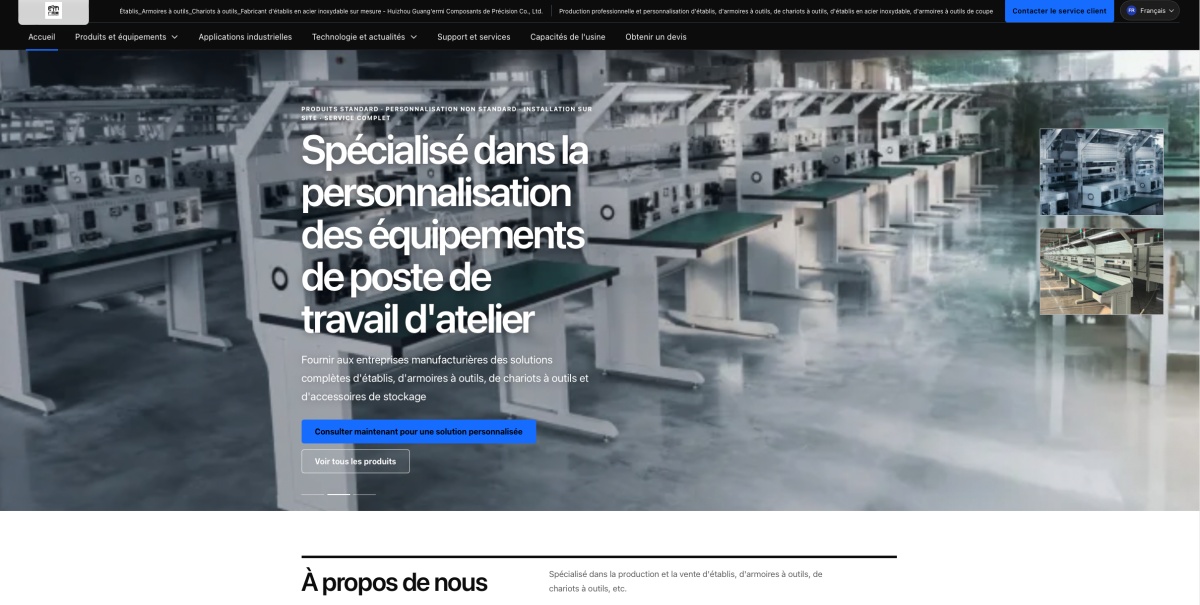
Guangermei Precision Parts | French AI Digital Asset Independent Website Case Study
This project involves building a French-market-oriented AI digital asset independent web...
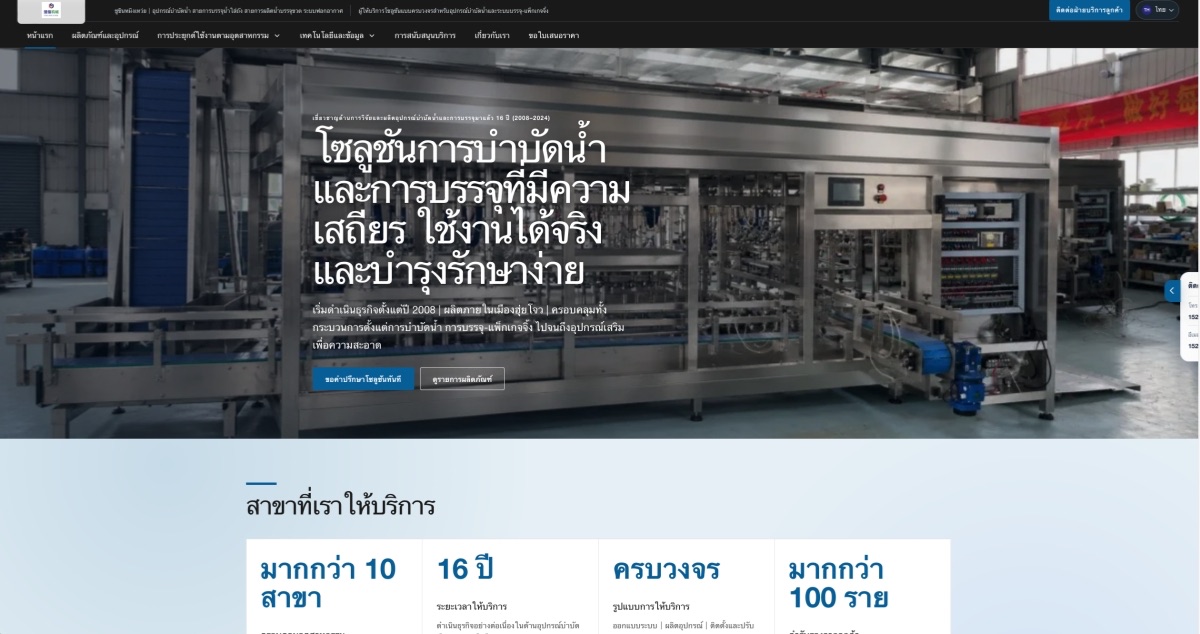
Water Treatment & Filling Equipment Manufacturer | Thai AI Digital Asset Website Case Study
Development of a Thai AI digital asset website for water treatment and filling equipment...
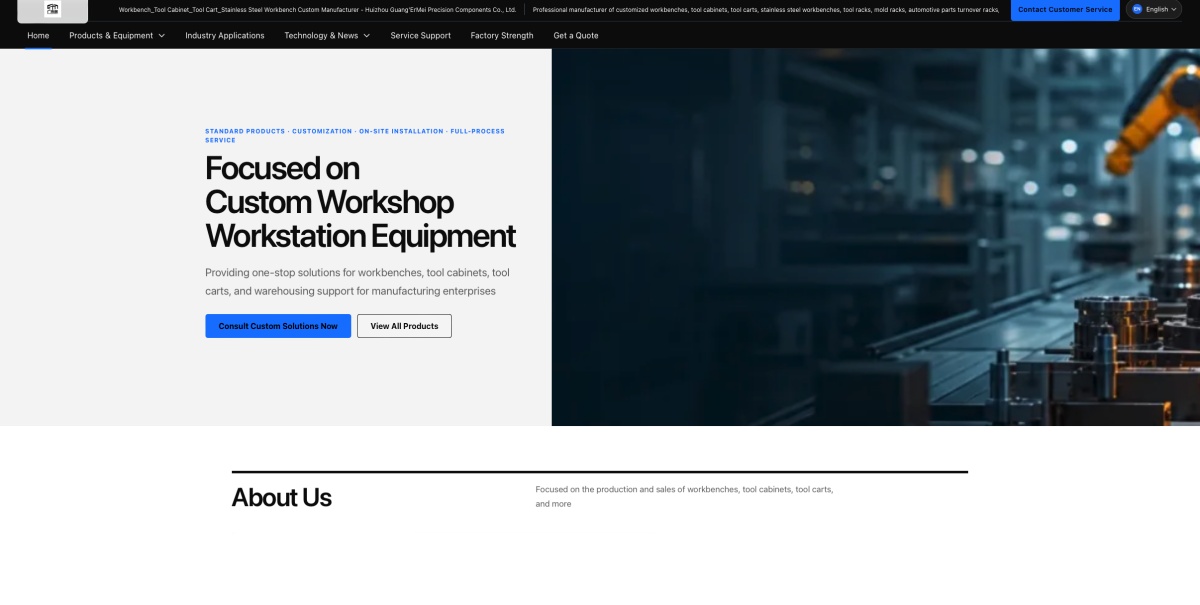
Guangermei Precision Parts | English AI Digital Asset Website Case Study
This project involves building an English AI digital asset independent website for Huizh...