Automated Internal Linking for French Industrial Equipment: Operations Guide for Technical Evaluators
Automated Internal Linking for French Industrial Equipment: Operations Guide for Technical Evaluators
Operational Context: The Challenge of Fragmented Assets in French Manufacturing
For manufacturing enterprises expanding into Francophone markets, a critical operational bottleneck is the fragmentation of digital assets. Product specifications for industrial workbenches and tool cabinets often exist in isolation from industry case studies, technical FAQs, and localized solution pages. When these assets are not systematically connected, search engines struggle to map site authority, and AI models lack the contextual evidence needed to cite the enterprise as a reliable source.
The solution lies in implementing rule-based automated internal linking within an Enterprise AI Knowledge Base. This approach transforms a static website into a dynamic network where every piece of content reinforces others, creating a robust structure that supports both traditional SEO and Generative Engine Optimization (GEO).
Core Principles for Daily Operations
Effective internal linking for AI-driven growth systems follows strict operational rules derived from the enterprise's knowledge structure. Based on the implementation standards for the Enterprise AI Digital Asset Growth System, the following principles define how links should be structured for daily operations:
1. Mandatory Cross-Linking Patterns for Industrial Equipment
To ensure comprehensive coverage for French independent websites, specific page types must link to defined categories. This creates a predictable path for crawlers and AI agents to traverse the site's logic.
- Product Pages:*
- Every product detail page (e.g., industrial workbenches, tool cabinets) must automatically link to at least one relevant Solution Page, one related FAQ entry, and a primary Call-to-Action (CTA) for inquiries.
- Industry Articles:*
- Technical or industry-focused articles must link back to the core Product Page, a specific Scenario/Use Case Page, and the Free Diagnosis page to capture user intent early.
- Case Studies:*
- Customer success stories must explicitly link to the Product Capabilities used in that project, proving the asset's real-world application.
2. Anchor Text Discipline for Localization
Automated systems must avoid keyword stuffing. The strategy requires using natural, descriptive anchor text that reflects the target page's actual content. For instance, instead of generic "click here," the system should use anchors like "industrial workstation customization" or "French market compliance." This clarity helps AI models understand the semantic relationship between the source and destination pages.
3. Multilingual Consistency Across Markets
For enterprises operating in multiple markets (e.g., French-speaking regions), the internal linking structure must remain equivalent across languages. Each language version of a product or article must maintain the same logical connections, with proper `hreflang` tags configured to signal equivalence to search engines and AI models.
Implementation Workflow for Technical Evaluators
Implementing these strategies requires a shift from manual editing to a systematic operational workflow. The process integrates content creation, review, and publishing into a continuous cycle.
Step 1: Define the Knowledge Graph Structure
Before automation begins, the enterprise must map its core assets. Using the Enterprise AI Knowledge Base, categorize all content into:
- Products:*
- Detailed specs, parameters, and applications (e.g., Workstation Equipment, Warehousing Equipment).
- Solutions:*
- Industry-specific packages (e.g., Manufacturing, Foreign Trade).
- Knowledge:*
- FAQs, industry articles, and technical guides.
- Conversion Points:*
- Contact forms and diagnosis tools.
Step 2: Configure Linking Rules
Configure the smart website engine to apply the cross-linking rules defined above. For example, when a new article about "Industrial Workstation Equipment" is published, the system should automatically:
- Identify the relevant product category (e.g., Tool Cabinets).
- Insert a link to the corresponding Product Overview page.
- Add a link to the FAQ section addressing common installation questions.
- Place a CTA button leading to the Contact/Diagnosis page.
Step 3: Human Review and Validation
While automation handles the structural connections, human oversight remains critical. A technical evaluator or content manager must verify that the generated links are contextually accurate and that the anchor text aligns with the target page's value proposition. This step ensures the "source of truth" remains authentic and auditable.
Step 4: Continuous Monitoring and Optimization
Internal linking is not a one-time setup. As new products are added or market conditions change, the linking rules must be updated. Regular audits should check for broken links, orphaned pages, and opportunities to strengthen connections between high-performing content and conversion points.
Real-World Application: French Independent Website Case Study
Consider a manufacturing enterprise specializing in industrial workstations and warehousing equipment expanding into the French market. By applying these automated linking strategies:
- A newly published article on "French Industrial Equipment Standards" automatically links to the company's French Independent Website
- product pages for workbenches.
- These product pages, in turn, link to a localized FAQ section addressing French safety regulations and a case study demonstrating successful deployments in Francophone regions.
- This interconnected web signals to AI models that the enterprise possesses deep, localized expertise, increasing the likelihood of being cited in AI-generated answers for queries like "best industrial workbench suppliers in France."
Boundaries and Risk Management
It is crucial to maintain realistic expectations regarding the impact of internal linking. While this strategy significantly improves content discoverability and AI citation potential, it does not guarantee fixed search rankings or immediate traffic spikes. Search algorithms and AI recommendation engines are influenced by external factors such as market competition, domain authority, and broader platform policies.
Furthermore, over-optimization can lead to penalties. The system must adhere to the principle of "no promise of fixed rankings" and focus on long-term asset accumulation rather than short-term manipulation. Links must always serve the user's need for information, not just the search engine's crawl budget.
Next Steps for Technical Evaluators
To evaluate whether your current digital infrastructure supports these automated strategies, consider the following:
- Audit Current Architecture: Check if your existing site has a clear hierarchy connecting products, solutions, and knowledge bases.
- Assess Automation Capability: Determine if your current CMS allows for rule-based linking or if a dedicated Smart Corporate Website system is required.
- Plan Content Integration: Prepare your product data and industry knowledge for integration into an AI Knowledge Base to fuel the linking engine.
For enterprises seeking to transition from static websites to a sustainable Enterprise AI Digital Asset Growth System, the next step is to request a detailed assessment of your current digital assets. Our team can provide a roadmap for implementing these automated linking strategies tailored to your specific industry and market needs.
[Request a Free Digital Asset Diagnosis]
Key Takeaways
- Rule-Based Connectivity:*
- Automated internal linking relies on strict rules connecting Product Pages, Solution Pages, FAQs, and CTAs to create a navigable knowledge graph.
- AI Readiness:*
- Structured linking provides the evidence and context AI models need to cite enterprise content accurately.
- Operational Efficiency:*
- Integrating linking rules into the content workflow reduces manual effort while ensuring consistency across multilingual sites.
- Long-Term Value:*
- This approach focuses on accumulating durable digital assets rather than chasing temporary ranking fluctuations.
Conclusion
Automated internal linking is a foundational element of the Enterprise AI Digital Asset Growth System. By systematically connecting product details, industry insights, and customer questions, enterprises can build a resilient digital presence that thrives in both traditional search environments and emerging AI-driven discovery channels. This strategy empowers manufacturing and B2B firms to turn their technical expertise into visible, actionable business opportunities.
Call to Action
Ready to optimize your digital asset structure? Contact Huizhou Gaia Network Technology Co., Ltd. today to schedule a consultation on implementing automated internal linking and building your smart corporate website.
Recommended
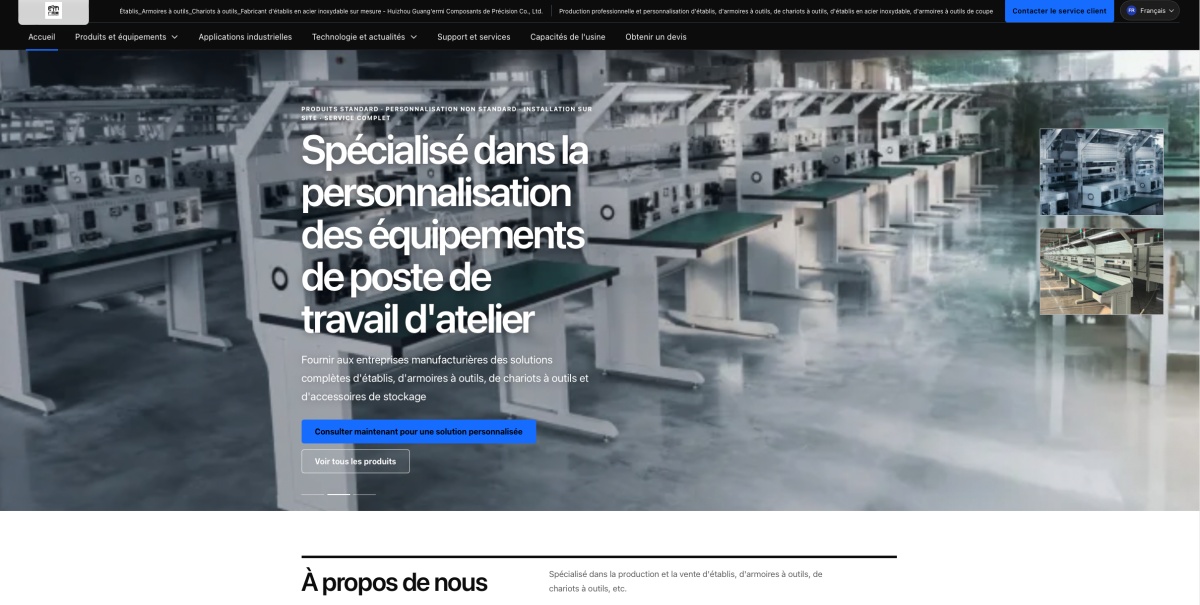
Guangermei Precision Parts | French AI Digital Asset Independent Website Case Study
This project involves building a French-market-oriented AI digital asset independent web...
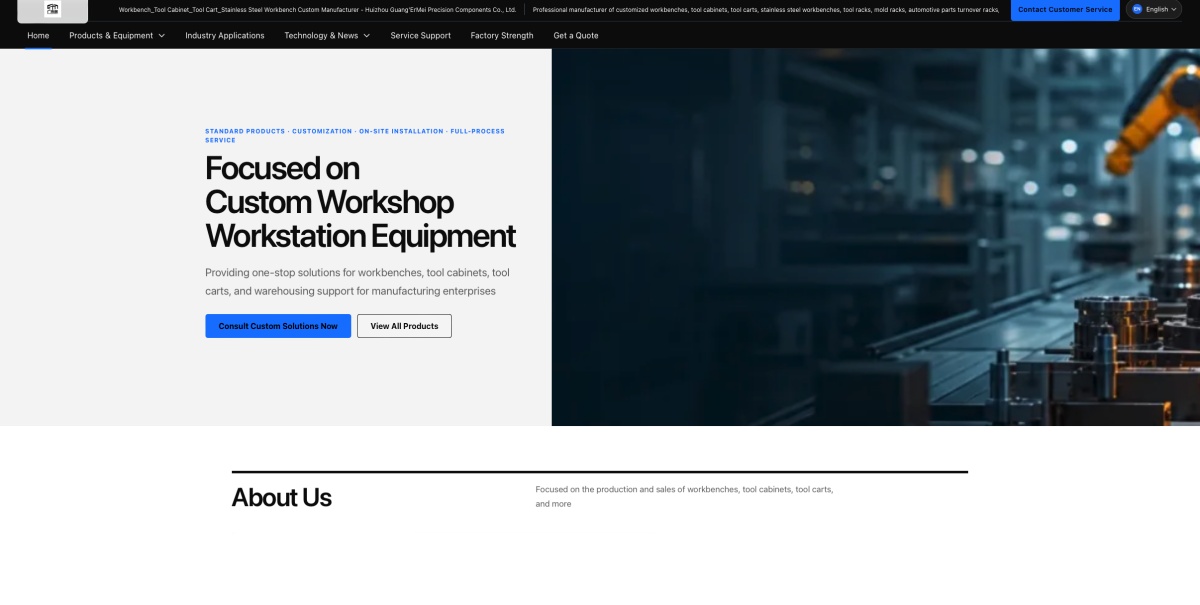
Guangermei Precision Parts | English AI Digital Asset Website Case Study
This project involves building an English AI digital asset independent website for Huizh...
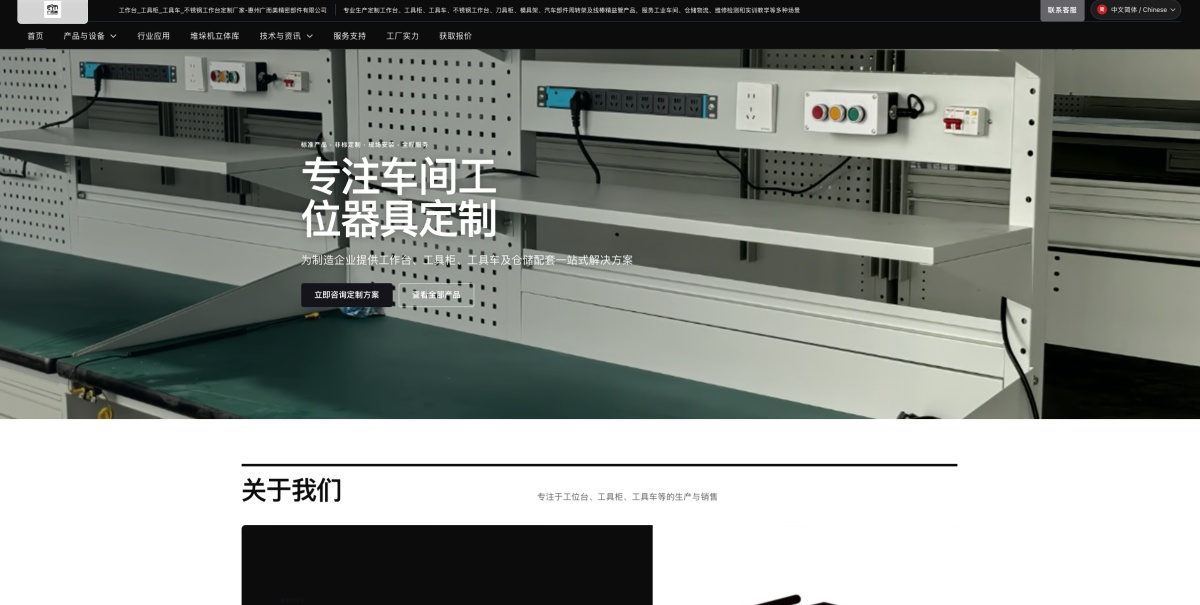
Guangermei Precision Components | AI Digital Asset Website Case for Industrial Workstation Equipment (Chinese)
Developing an AI digital asset website for manufacturers of workbenches, tool cabinets...