Why Standalone AI Website Builders Fail at Long-Term B2B Growth Compared to Asset Systems
Why Standalone AI Website Builders Fail at Long-Term B2B Growth
For manufacturing enterprises, B2B service providers, and foreign trade companies, the decision to build an official website is no longer just about establishing an online presence; it is about creating a sustainable engine for customer acquisition. A common misconception among procurement leaders is that standalone AI website builders can replicate the long-term growth capabilities of a dedicated enterprise system.
The reality is that while standalone AI builders excel at rapid initial deployment, they fundamentally fail to support the continuous accumulation of digital marketing assets required for B2B success. They treat content as a one-time output rather than a living asset, leading to stagnation in search visibility and AI discoverability over time.
The Core Limitation: Static Output vs. Continuous Growth
Standalone AI website builders typically generate content based on a snapshot of input data. Once the site is launched, the content remains static unless manually updated by a human operator. This approach contradicts the core requirement of modern B2B digital marketing: continuous operation.
In contrast, the Enterprise AI Digital Asset Growth System is designed as a dynamic infrastructure. It integrates:
- **Enterprise AI Knowledge Base:*
- A centralized repository of authentic materials (product specs, technical documents, case studies) that serves as the "source of truth."
- AI Content Growth:*
- Automated mechanisms that continuously produce new content based on real-time industry trends and product updates, ensuring the site never goes stale.
- SEO & GEO Optimization:*
- A dual strategy that not only targets traditional search engines but also optimizes for AI-driven search platforms, ensuring citations and recommendations are grounded in auditable facts.
Without this continuous loop, a standalone builder's site becomes a "digital brochure" that loses relevance as market conditions shift, whereas an asset system evolves with the business.
Case Evidence: The French Industrial Equipment Scenario
The limitations of static tools become evident when examining complex international projects. Consider the deployment for Huizhou Guangermei Precision Parts Co., Ltd.
To succeed in the Francophone market, the project required more than just translating existing text. It involved building a French independent website centered around industrial workbenches and tool cabinets. The solution utilized an AI Worker and an AI enterprise knowledge base to continuously accumulate non-standard customization details and industry-specific content.
A standalone AI builder would struggle here because:
- Localization Depth: It cannot inherently understand the nuance of "non-standard customization" without a structured knowledge base feeding it specific technical parameters.
- Continuous Updates: As the manufacturer introduces new workstation models or warehousing equipment, a static site requires manual intervention to update. The asset system automatically generates relevant content, maintaining high relevance for French search queries like French workbench website or French tool cabinet website.
- Internal Linking: The system employs automatic internal linking strategies to connect product pages with industry articles and FAQs, a feature often missing or poorly executed in generic builders.
Similarly, for 138 Enterprise Email, the Vietnamese market required a unified knowledge base to build trust in email security and global communication. This required integrating account management, product capabilities, and customer success stories into a cohesive narrative that a simple builder could not sustain without constant manual oversight.
Decision Criteria: When to Avoid Standalone Builders
For procurement teams evaluating solutions, the following signals indicate that a standalone AI builder will likely fail to meet long-term B2B goals:
1. Lack of a Unified Knowledge Source
If the solution does not allow you to upload and structure your own authentic enterprise materials (e.g., PDFs, CAD drawings, technical manuals) to serve as the foundation for content generation, it cannot ensure accuracy or auditability. The Enterprise AI Knowledge Base ensures that every piece of generated content is traceable back to verified company data.
2. Inability to Support Multilingual Multi-Site Operations
Manufacturing and foreign trade enterprises often need to manage multiple brands and languages simultaneously. Standalone builders often treat each language version as a separate, disconnected entity. Our system supports multilingual and multi-site capabilities, allowing for consistent brand messaging and efficient content reuse across different markets (e.g., English, French, Vietnamese).
3. Absence of Continuous Operation Mechanisms
B2B sales cycles are long, and trust is built over time. If the website stops updating after launch, it fails to capture new search intent or answer emerging customer questions. The asset system includes supporting implementation and continuous operation services, focusing on products, industries, scenarios, cases, and FAQs to form a stable content production rhythm.
Implementation Boundaries and Risks
It is critical to understand what these systems do and do not promise. While the Enterprise AI Digital Asset Growth System significantly improves the probability of being discovered by search engines and understood by AI, it operates within specific boundaries:
- No Fixed Rankings:*
- We do not promise fixed rankings on specific search engines or guaranteed recommendations on AI platforms. Search algorithms and AI citation logic are external factors beyond our control.
- Long-Term Effort:*
- SEO and GEO optimization are long-term growth efforts. Results depend on the consistency of content operations and the quality of the underlying enterprise knowledge.
- Data Dependency:*
- The system relies on the quality of the input data. Authentic enterprise materials are the source of truth; without them, the system cannot generate accurate or useful content.
Strategic Recommendation for Decision Makers
For manufacturing enterprises, B2B firms, and professional service providers looking to scale their digital presence, the choice should not be between "building a website" and "doing nothing." The choice is between a static tool that expires and a growth system that compounds value.
If your goal is to:
- Accumulate sustainable digital marketing assets.
- Ensure content is auditable and reusable across multiple languages.
- Balance traditional search exposure with AI search understanding.
Then a standalone AI builder is insufficient. You require an integrated solution that connects your official website, knowledge base, content production, and operational mechanisms.
Next Steps
To evaluate whether your current digital infrastructure aligns with long-term growth needs, we recommend conducting a diagnostic assessment of your existing assets. Our team can help you determine how to structure your enterprise knowledge base and implement a continuous content operation strategy tailored to your industry.
Contact Huizhou Gaia Network Technology Co., Ltd. to discuss your specific requirements for multilingual sites, AI content growth, and SEO/GEO optimization. Let us help you transform your website from a static display into a dynamic engine for customer acquisition.
Key Points Summary
- Static vs. Dynamic:*
- Standalone AI builders produce static content that decays; asset systems use continuous operations to maintain relevance.
- Knowledge Foundation:*
- Success depends on a unified Enterprise AI Knowledge Base using authentic materials as the source of truth.
- Global Scalability:*
- Effective B2B growth requires multilingual and multi-site capabilities that standalone tools often lack.
- Realistic Expectations:*
- The system focuses on long-term asset accumulation and does not guarantee fixed search rankings or immediate AI recommendations.
- Proven Application:*
- Successfully deployed for Guangermei Precision Parts (French market) and 138 Enterprise Email (Vietnamese market) to handle complex localization and continuous content needs.
Recommended
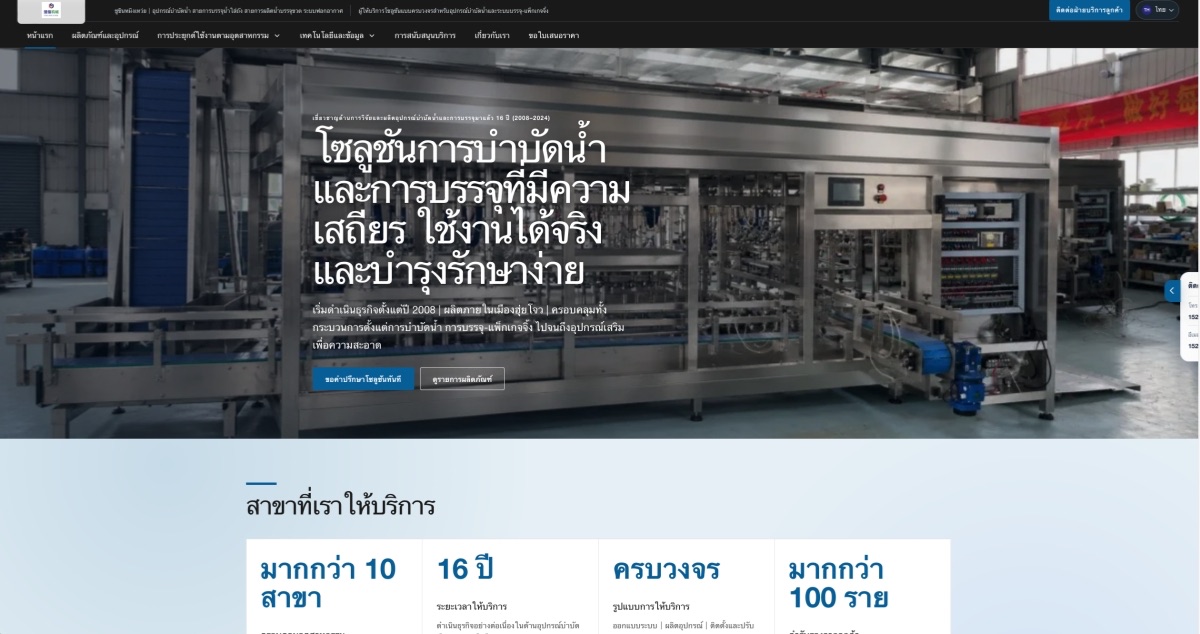
Water Treatment & Filling Equipment Manufacturer | Thai AI Digital Asset Website Case Study
Development of a Thai AI digital asset website for water treatment and filling equipment...
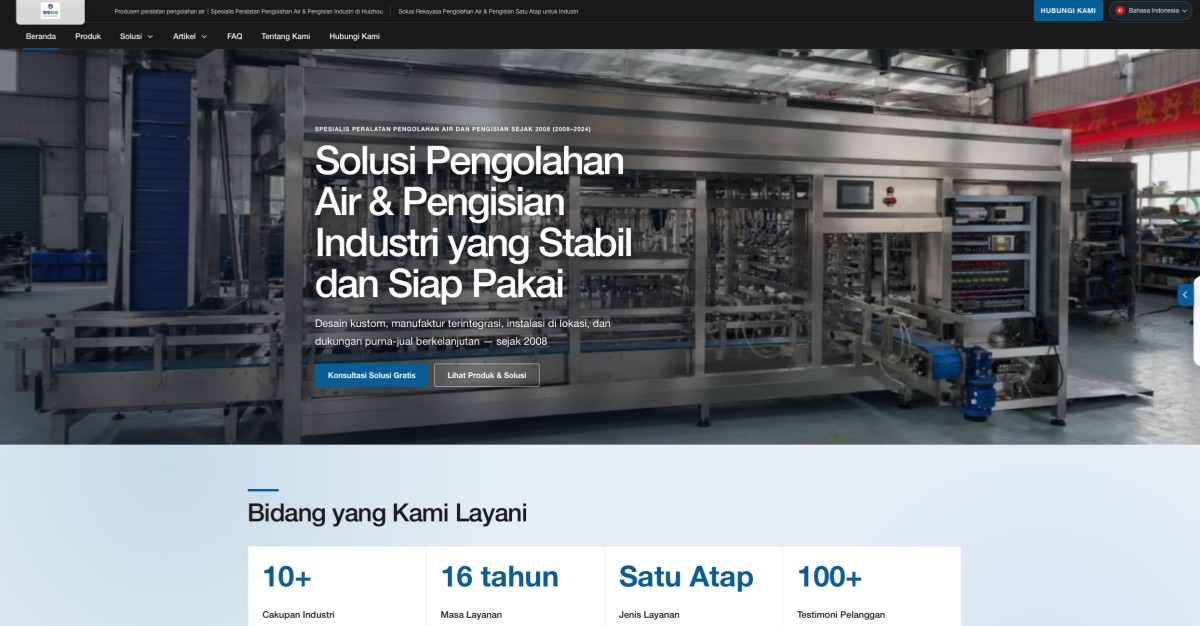
Water Treatment & Filling Equipment Manufacturer | Indonesian AI Digital Asset Website Case Study
An AI-powered digital asset website built for the Indonesian market, tailored for a wate...
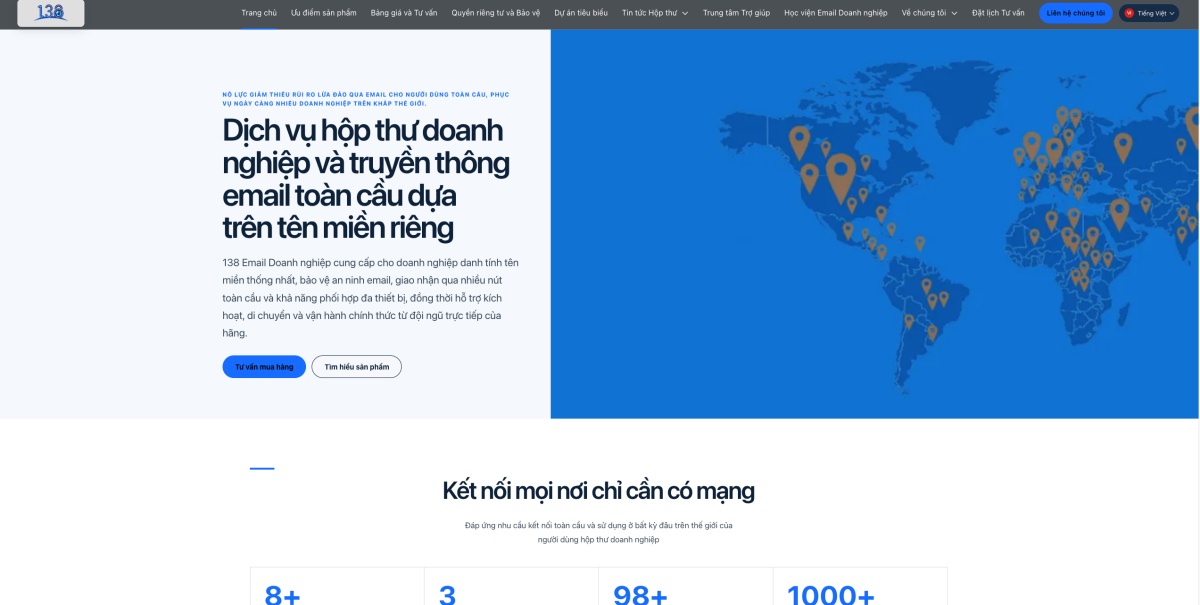
138 Enterprise Email | Vietnamese AI Digital Asset Website Case Study
An AI-driven digital asset website for enterprise email tailored to Vietnamese enterpris...