
Guangermei Precision Parts | French AI Digital Asset Independent Website Case Study: Selection Evaluation & Daily Operat
Guangermei Precision Parts | French AI Digital Asset Independent Website Case Study: Selection Evaluation & Daily Operations for Technical Evaluators
For technical evaluators leading the selection evaluation of an AI digital asset official website for the Francophone market, success depends on moving beyond marketing claims to verify architectural foundations and daily operations workflows. When deploying a French independent website for industrial workbenches, tool cabinets, or custom manufacturing equipment, evaluators must prioritize systems that treat authentic enterprise materials as the single source of truth, enforce rule-based AI Worker generation, and establish clear operational boundaries for continuous content growth and SEO/GEO optimization.
Concrete Use Scenario: The Francophone Industrial Workstation Workflow
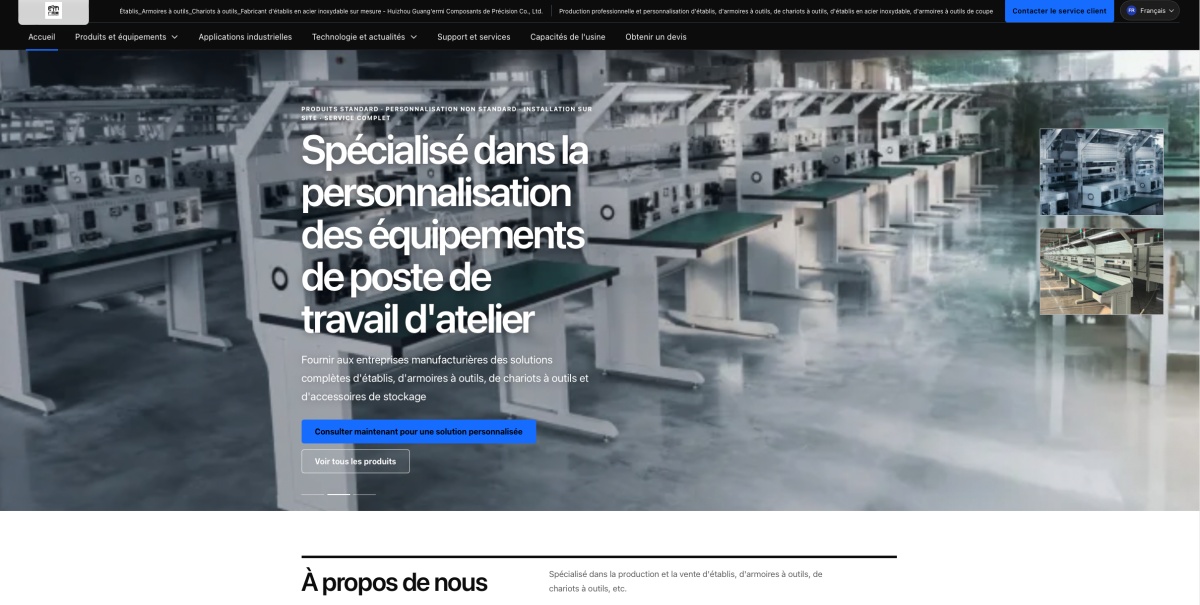
Industrial equipment suppliers like Huizhou Guangermei Precision Parts face a common operational bottleneck: fragmented product specifications, non-standard customization requests, and high costs for localized content production. Expanding into French-speaking markets requires more than static translation or one-off builds. The goal shifts to building a self-reinforcing digital asset ecosystem that continuously captures buyer intent through structured data, localized technical content, and automated internal linking. This case demonstrates how a French manufacturing website can scale by integrating product manuals, material parameters, application scenarios, and procurement FAQs into a unified knowledge foundation.
Step 1: Selection Evaluation Criteria for Technical Evaluators
Technical evaluators should first verify how the platform ingests, structures, and governs corporate materials before shortlisting vendors. The system must treat authentic enterprise documents—product catalogs, technical drawings, process descriptions, and past project records—as immutable facts. Judgment Criteria:
- *Data Ingestion & Mapping:
- Verify that product hierarchies (e.g., industrial workbenches, tool cabinets) are mapped to standardized attribute fields rather than free-text fields.
- *Auditability & Citation:
- Ensure generated pages explicitly cite source documents, allowing technical teams to trace every parameter back to original engineering files.
- *Version Control:
- Confirm the platform supports version tracking for technical updates to prevent stale parameters from propagating across multilingual routes.
Step 2: Configuring AI Workers & Daily Operations Workflows
Once the knowledge foundation is stable, technical evaluators must define how content scales without compromising accuracy. AI Workers should operate within strict task rules tied to specific columns, target languages, and audience intents. Execution Advice for Daily Operations:
- Set up automated generation pipelines for FAQs, industry application notes, and case studies based on predefined templates aligned with procurement decision points.
- Enable automatic internal linking to reinforce site architecture and distribute authority to key commercial pages, reducing manual maintenance overhead.
- Implement a mandatory human-in-the-loop review stage for technical claims, pricing references, and compliance statements before publication. AI accelerates efficiency, but professional judgment determines credibility.
Step 3: SEO/GEO Foundations & Multilingual Routing Boundaries
Visibility in both traditional search engines and AI-driven answer layers requires parallel optimization. Technical selection criteria must include native support for hreflang tags, structured data (Schema), entity alignment, and clean URL routing. Configuration Requirements:
- Ensure each language variant maintains semantic equivalence while adapting terminology to local procurement conventions and industrial standards.
- Optimize title tags, meta descriptions, and heading structures for both keyword relevance and AI comprehension models.
- Maintain consistent sitemap indexing and crawl directives across all regional domains or subdirectories to prevent duplicate content penalties.
Step 4: Acceptance Metrics & Operational Boundaries
A responsible vendor will clearly separate deliverables from marketing promises. Evaluators should document acceptance metrics around content freshness, technical accuracy, and operational workload reduction, not ranking guarantees. Key Boundaries to Verify:
- The platform accelerates content production and improves discoverability but does not guarantee fixed search positions or direct customer acquisition volumes.
- AI recommendations on third-party platforms depend on external algorithm updates and cannot be contractually assured.
- Continuous operation requires ongoing input of new product data, market feedback, and periodic SEO/GEO adjustments. Expectations should focus on long-term asset accumulation and sustained inquiry generation.
Conclusion & Next Steps
Selecting an AI digital asset growth system is fundamentally an infrastructure decision. It succeeds when technical teams prioritize verifiable data architecture, enforce disciplined content workflows, and align expectations with long-term asset compounding. For manufacturing and B2B exporters preparing to scale into French or other multilingual markets, the priority should be establishing a unified knowledge base, configuring rule-based AI workers, and mapping out a sustainable content operation cadence. Evaluate shortlisted vendors against these implementation steps, request live environment access, and validate their approach to data governance and multilingual consistency before finalizing contracts.
Recommended
Guangermei Precision Parts | French AI Digital Asset Independent Website Case Study
This project involves building a French-market-oriented AI digital asset independent web...
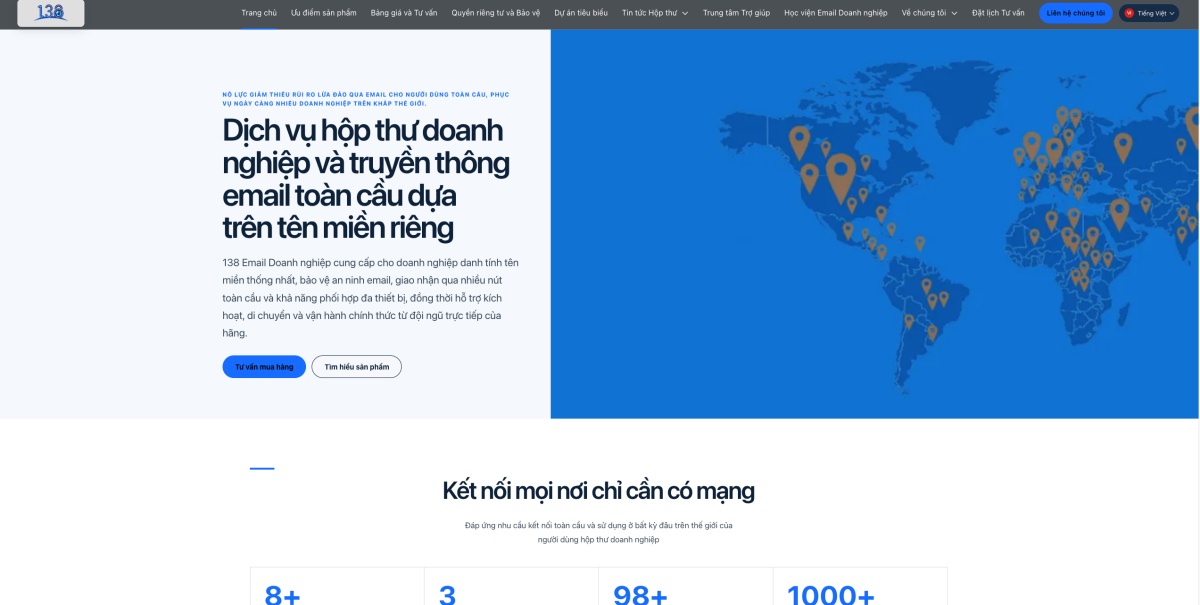
138 Enterprise Email | Vietnamese AI Digital Asset Website Case Study
An AI-driven digital asset website for enterprise email tailored to Vietnamese enterpris...
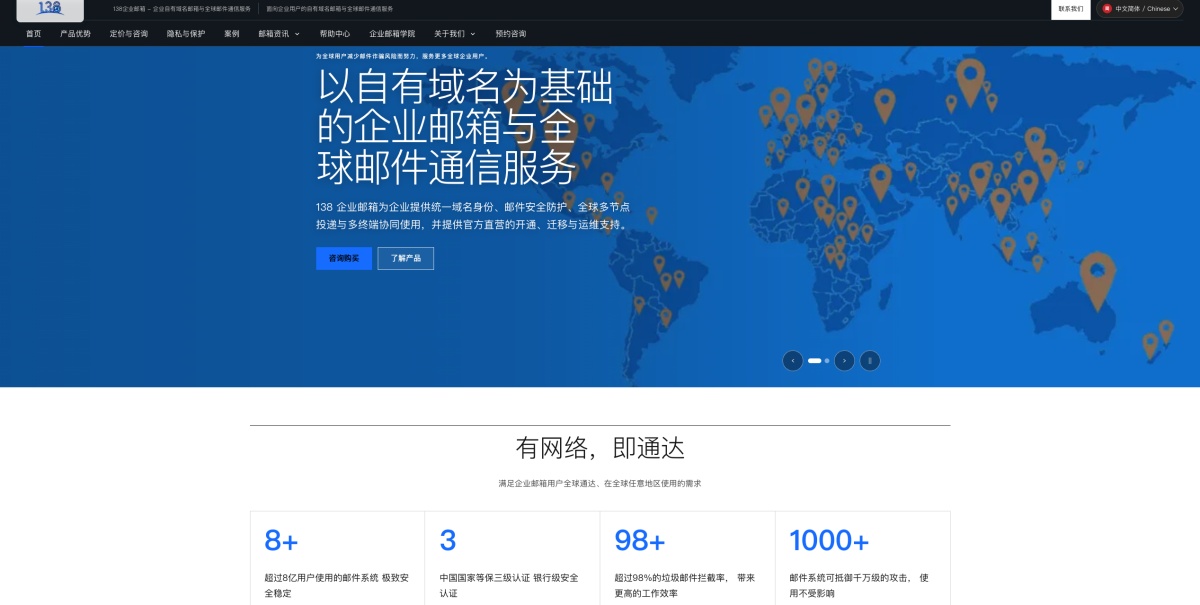
138 Enterprise Email | Chinese AI Digital Asset Website Case Study for Enterprise Services
Developed a Chinese AI digital asset website for an enterprise email service brand. By i...