Calculating the Long-Term ROI of a Digital Asset Growth System vs. One-Time Website Projects
Calculating the Long-Term ROI of a Digital Asset Growth System vs. One-Time Website Projects
For procurement leaders and cross-regional teams in manufacturing, B2B, and foreign trade sectors, the critical metric is no longer just the cost of building a website, but the digital asset growth system ROI. The core distinction lies between treating an official site as a one-time project versus a continuous operation that converts enterprise knowledge into searchable, AI-understandable assets.
Traditional web development often results in a "launch and stagnate" cycle: design, build, deploy, and then stop. In contrast, an Enterprise AI Digital Asset Growth System treats the website as a living engine. It connects authentic enterprise materials—product specifications, technical documents, and case studies—to a continuous mechanism involving SEO (Search Engine Optimization) and GEO (Generative Engine Optimization).
The fundamental difference in ROI calculation is clear: a one-time project yields diminishing returns as content ages, while a continuous operation model compounds value by making your enterprise increasingly discoverable by both traditional search engines and AI agents.
The Core Value Shift: From Static Display to Accumulating Assets
When evaluating vendors, decision-makers must distinguish between a "digital brochure" and a "growth system."
A standard website project delivers a URL and a design. Once launched, unless there is a dedicated internal team or retainer, the content rarely updates. Competitors with fresher data quickly overshadow static pages.
Conversely, a growth system based on an Enterprise AI Knowledge Base ensures that every piece of verified company knowledge is structured for reuse. The goal is to transform scattered enterprise experience into a continuous content engine. This engine produces targeted content around products, industry scenarios, and customer FAQs, ensuring the site remains relevant and authoritative.
Key ROI Indicators for Sustainable Growth:
- Asset Reusability:*
- Can content created for a French industrial equipment page be adapted for a Vietnamese market entry without starting from scratch? A true growth system allows central knowledge to be localized efficiently.
- AI Readiness:*
- Is your technical data structured so AI models can cite your brand as an authoritative source? This requires entity recognition and structured answers, not just keywords.
- Operational Continuity:*
- Does the system support multi-site management for group enterprises without exponentially increasing headcount?
Decision Checklist: Evaluating Cost vs. Value
Use this checklist during vendor comparisons to validate whether a proposal supports long-term asset accumulation or merely short-term delivery.
1. Source of Truth & Data Integrity
- One-Time Project Risk:*
- Relies on generic templates or unverified marketing copy that lacks technical depth.
- Growth System Requirement:*
- The solution must use authentic enterprise materials as the single source of truth. Content should be auditable and traceable back to actual product specs or service capabilities.
- Verification Question:*
- "Does your process require us to upload our actual technical manuals and case files to build the initial knowledge base, or do you generate generic content?"
2. Cross-Team and Cross-Regional Collaboration
- One-Time Project Risk:*
- Each new language or regional site requires a separate, costly development cycle with disconnected content management.
- Growth System Requirement:*
- Support for multilingual and multi-site capabilities where content logic is centralized but localization is streamlined. For example, a manufacturing group can manage product cores centrally while allowing regional teams to adapt specific market narratives.
- Verification Question:*
- "How does your system handle content synchronization when we update a core product specification across five different country sites?"
3. Search Visibility: SEO + GEO Dual Mechanism
- One-Time Project Risk:*
- Focuses solely on basic keyword meta-tags, ignoring how AI search engines synthesize answers.
- Growth System Requirement:*
- A dual approach covering traditional SEO (keywords, technical health) and GEO (entity recognition, structured answers for AI citation). This ensures visibility whether a buyer uses Google Search or asks an AI assistant for supplier recommendations.
- Critical Boundary:*
- Be wary of any vendor promising fixed rankings or guaranteed AI recommendations. Legitimate providers emphasize that SEO/GEO is a long-term growth effort influenced by market competition and algorithm changes. There are no guarantees of specific rankings or immediate customer acquisition; the value lies in continuous optimization and asset accumulation.
4. Implementation Boundaries & Service Scope
- One-Time Project Risk:*
- Vague deliverables like "SEO optimization" without defining the ongoing content production cadence.
- Growth System Requirement:*
- Clear definition of service modules including AI content growth, knowledge base maintenance, and continuous operation tasks. Contracts should specify that prices, content quotas, number of languages, and delivery cycles are subject to the final agreement based on the scale of operations.
Real-World Application Scenarios
Consider the operational differences in complex B2B environments:
- Industrial Manufacturing:*
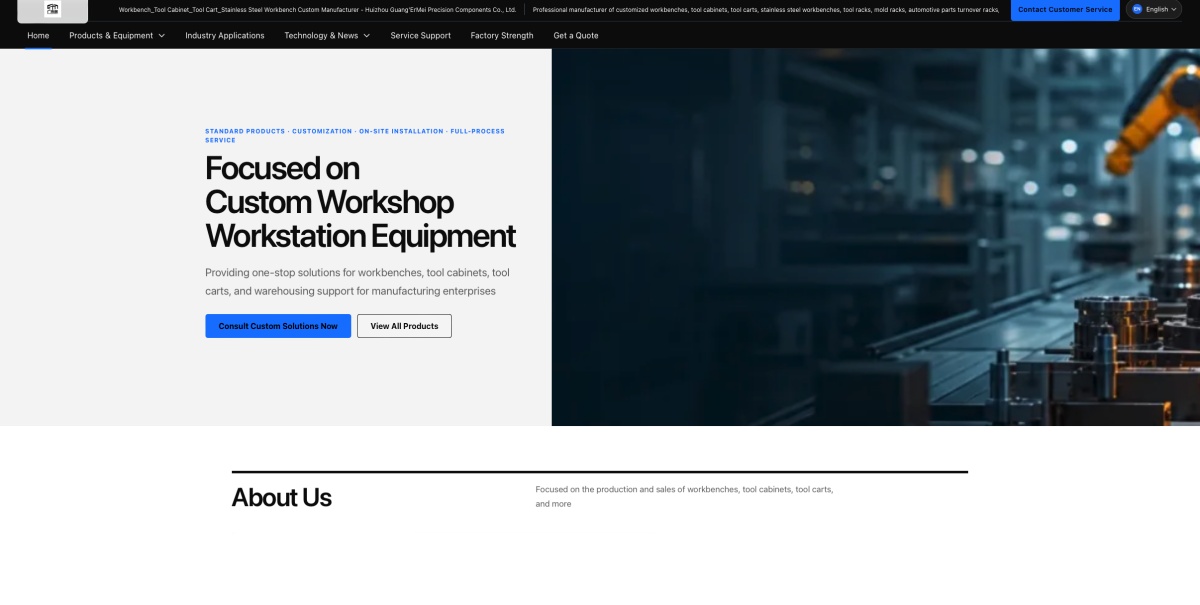
- A precision parts manufacturer needs to showcase non-standard customization capabilities. Instead of a static "Services" page, a growth system continuously generates detailed case studies linking specific workbench or tool cabinet configurations to industry pain points. This creates a deep internal link structure that signals expertise to search algorithms and AI models.
- Foreign Trade Expansion:*
- An enterprise expanding into Southeast Asia and Europe needs more than translation. They need localized content that addresses regional compliance and usage scenarios. A unified knowledge base allows the central team to push verified product data while local teams layer on market-specific context, reducing redundancy and error rates.
- Professional Services:*
- For firms selling high-value consulting or SaaS solutions, the buying cycle is long. Continuous publication of expert answers to niche technical questions builds trust over time, positioning the firm as a thought leader rather than just a vendor.
Conclusion: The Strategic Imperative
The digital asset growth system ROI is not measured in the week after launch, but in the cumulative authority built over quarters and years. For manufacturing, B2B, and foreign trade enterprises, the choice is between paying repeatedly for disjointed projects or investing in a systematic infrastructure that turns existing knowledge into a perpetual acquisition channel.
By prioritizing authentic data, continuous operations, and a balanced SEO/GEO strategy, organizations can mitigate the risk of content stagnation and ensure their digital presence evolves alongside their business.
Next Steps for Validation
If your team is currently comparing proposals or planning a digital transformation:
- Audit Your Current Assets: Gather your existing product manuals, case studies, and FAQ logs. These are the raw materials for your AI knowledge base.
- Define Operational Boundaries: Clarify whether you need a single site or a multi-brand, multilingual network to determine the appropriate service package.
- Request a Structural Proposal: Ask potential partners how they integrate your real materials into a smart website framework, rather than just showing design portfolios.
Contact Huizhou Gaia Network Technology Co., Ltd. to discuss how the Enterprise AI Digital Asset Growth System can be tailored to your specific industry scenarios and cross-regional collaboration needs. Specific pricing, language quotas, and delivery timelines will be finalized based on your unique requirements in our formal consultation.
Recommended
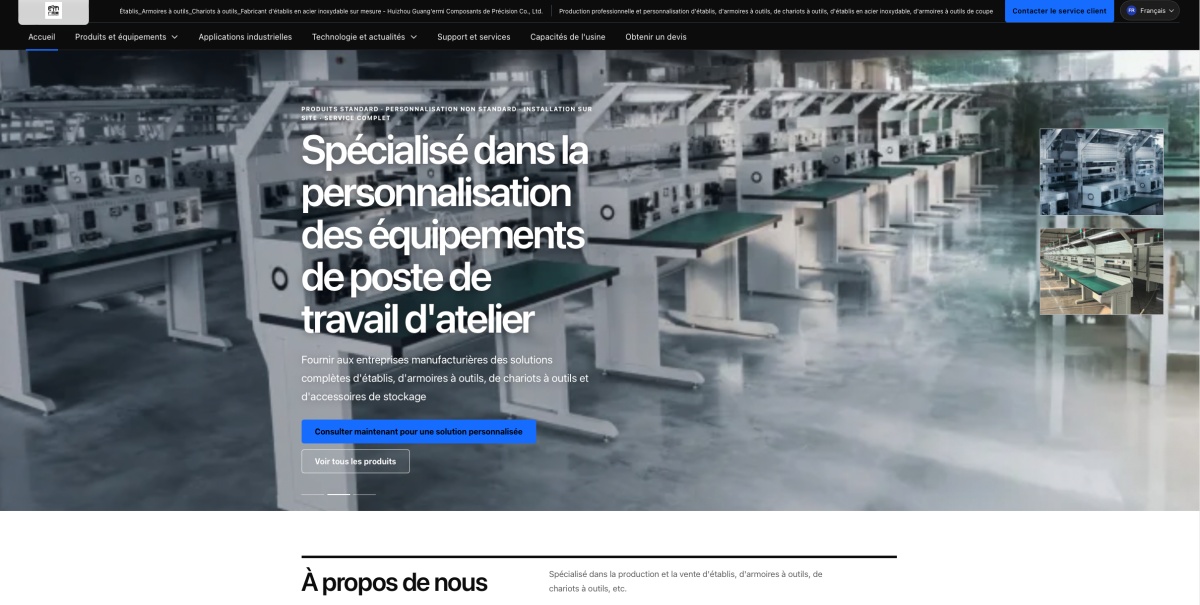
Guangermei Precision Parts | French AI Digital Asset Independent Website Case Study
This project involves building a French-market-oriented AI digital asset independent web...
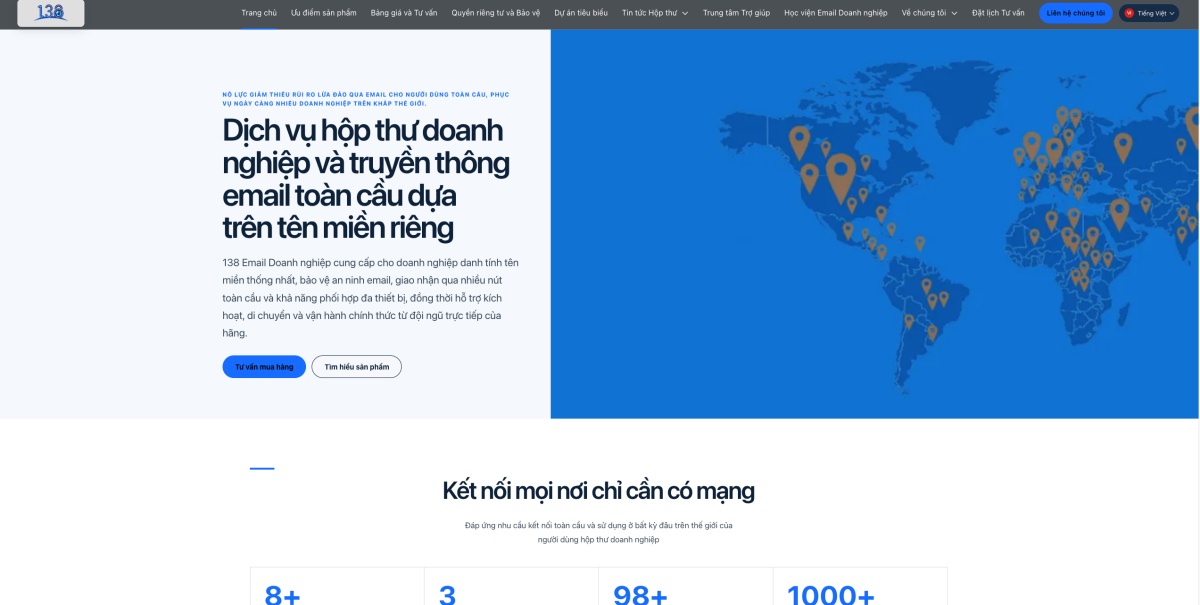
138 Enterprise Email | Vietnamese AI Digital Asset Website Case Study
An AI-driven digital asset website for enterprise email tailored to Vietnamese enterpris...
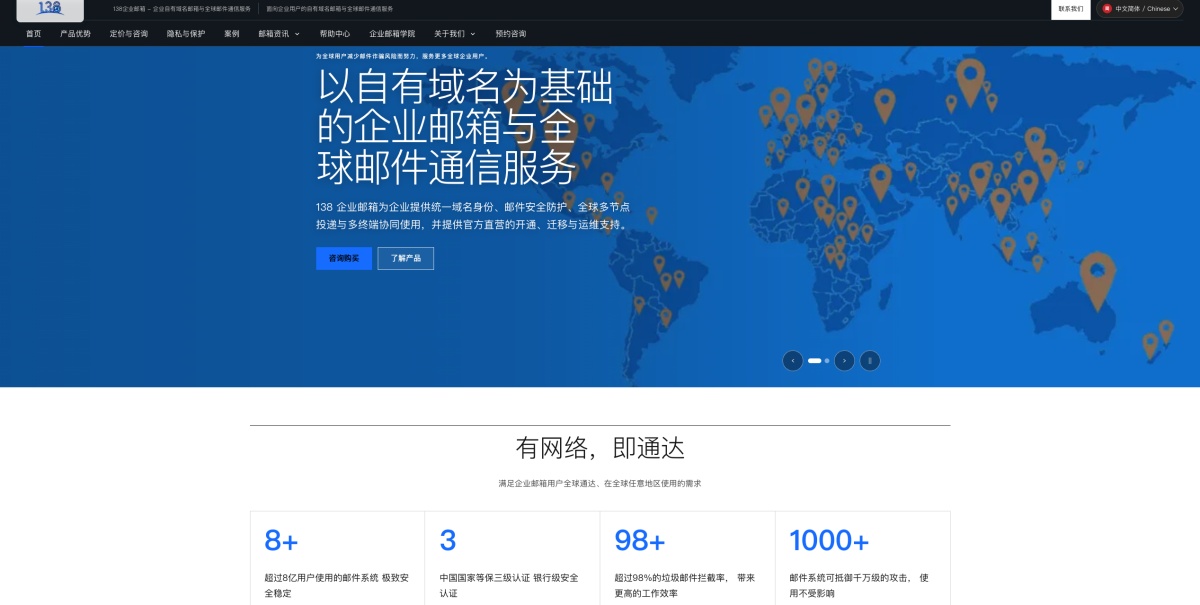
138 Enterprise Email | Chinese AI Digital Asset Website Case Study for Enterprise Services
Developed a Chinese AI digital asset website for an enterprise email service brand. By i...