Manufacturing AI Worker: Concepts, Use Cases & Next Steps
Who actually needs a Manufacturing AI Worker
A Manufacturing AI Worker is best understood as an operational layer, not a single tool. It sits between your engineering documents, product catalogs, process records and your public-facing website. Its job is to convert authentic enterprise materials into structured product pages, application scenarios, selection guides and FAQs that search engines and AI platforms can read, cite and recommend over time.
It is most useful for:
- Manufacturing and industrial equipment makers with deep technical documentation but limited marketing bandwidth.
- B2B enterprises that need to shorten pre-sales explanation through reusable, auditable content.
- Foreign trade and overseas expansion teams that must maintain consistent messaging across multiple languages and markets.
- Group or multi-brand companies that want one knowledge base feeding several branded sites without duplication or contradiction.
If your current website is mostly a brochure, or your product pages lack parameters, application scenarios and decision-oriented FAQs, a Manufacturing AI Worker is a practical next step rather than a speculative trend.
What a Manufacturing AI Worker actually does
In practice, the system performs four connected tasks:
- Knowledge structuring. It organizes product manuals, technical parameters, process descriptions and service materials into an enterprise AI knowledge base. This becomes the single source of truth for all downstream content.
- Content production. It generates product detail pages, selection guides, application scenarios, case summaries and FAQ entries based strictly on verified enterprise materials.
- Search and AI alignment. It applies basic SEO and GEO optimization so that content is discoverable by traditional search engines and understandable by AI platforms for citation and recommendation.
- Multilingual and multi-site management. It reuses the same knowledge base across different languages, regions and brand sites, reducing repetition and inconsistency.
The key boundary is that the AI worker does not invent specifications, certifications or performance claims. All output is traceable back to authentic enterprise materials, which is what makes the content auditable and reusable.
A step-by-step implementation path
Rolling out a Manufacturing AI Worker is closer to an operational project than a software installation. A practical path includes the following checkpoints.
Step 1 — Material audit and scope definition
Collect existing product manuals, parameter sheets, process records, past case materials and customer FAQs. Classify them by product line, application scenario and target market. Define what will be published on the website and what will remain internal.
Checkpoint: a verified material list, not a wish list.
Step 2 — Knowledge base setup
Import the verified materials into an enterprise AI knowledge base. Structure them around products, industries, scenarios, cases and FAQs. This is the foundation that prevents the AI from generating generic or unverified content.
Checkpoint: every published topic can be traced to at least one internal source document.
Step 3 — Smart website and content framework
Build or restructure the corporate website around the knowledge base. Product pages should cover parameters, advantages, application scenarios and selection guidance. Solution pages should address specific industry problems. FAQ pages should reflect real pre-sales questions.
Checkpoint: content types are mapped to buyer decision stages, not just product categories.
Step 4 — SEO and GEO optimization
Apply basic SEO practices such as clear information architecture, internal linking and structured metadata. At the same time, optimize for GEO so that AI platforms can understand, cite and recommend your content when relevant questions arise.
Checkpoint: content is both human-readable and machine-interpretable.
Step 5 — Multilingual and multi-site rollout
For foreign trade or overseas expansion, reuse the same knowledge base to produce multilingual versions. For group companies, manage multiple brand sites from one knowledge foundation to avoid duplication and contradiction.
Checkpoint: language and brand variations are controlled from a single source.
Step 6 — Continuous operation
Treat the website as a growing digital asset, not a one-time project. Continuously add new products, update parameters, expand scenarios and refresh FAQs. Monitor search visibility and AI citation opportunities, then adjust content priorities accordingly.
Checkpoint: a monthly content operation rhythm tied to product launches, customer questions and market changes.
Where the boundaries are
It is important to be clear about what a Manufacturing AI Worker does not do.
- It does not guarantee fixed search rankings or guaranteed customer acquisition. SEO and GEO are long-term growth efforts, and results depend on content quality, consistency and market competition.
- It does not replace professional judgment. AI improves efficiency, but enterprise knowledge and technical accuracy determine credibility.
- It does not work well if the underlying materials are incomplete, outdated or unverified. The system amplifies what you feed it; poor inputs produce poor outputs.
- It is not a shortcut for companies that expect immediate results without ongoing operation. The value comes from sustained accumulation of digital assets.
Next steps for manufacturing decision-makers
If you are evaluating whether a Manufacturing AI Worker fits your current stage, start with a focused diagnostic rather than a full rollout.
- List your top 10 products and the top 10 questions buyers ask before purchasing.
- Check whether your current website answers those questions with verifiable parameters, scenarios and FAQs.
- Identify which materials exist internally but are not yet published online.
- Request a website and AI visibility diagnostic to see where your current digital assets stand and where the biggest gaps are.
This approach keeps the project grounded in real business problems and avoids overpromising on AI capabilities.
Conclusion
A Manufacturing AI Worker is most valuable when it is treated as an operational system for turning authentic enterprise knowledge into a continuously growing digital asset. It helps manufacturing, B2B, foreign trade and professional service enterprises become easier to find in search and easier for AI platforms to understand and recommend. The realistic path is to start with verified materials, build a structured knowledge base, align content with buyer decisions, and operate continuously rather than chasing fixed rankings or guaranteed results.
Recommended
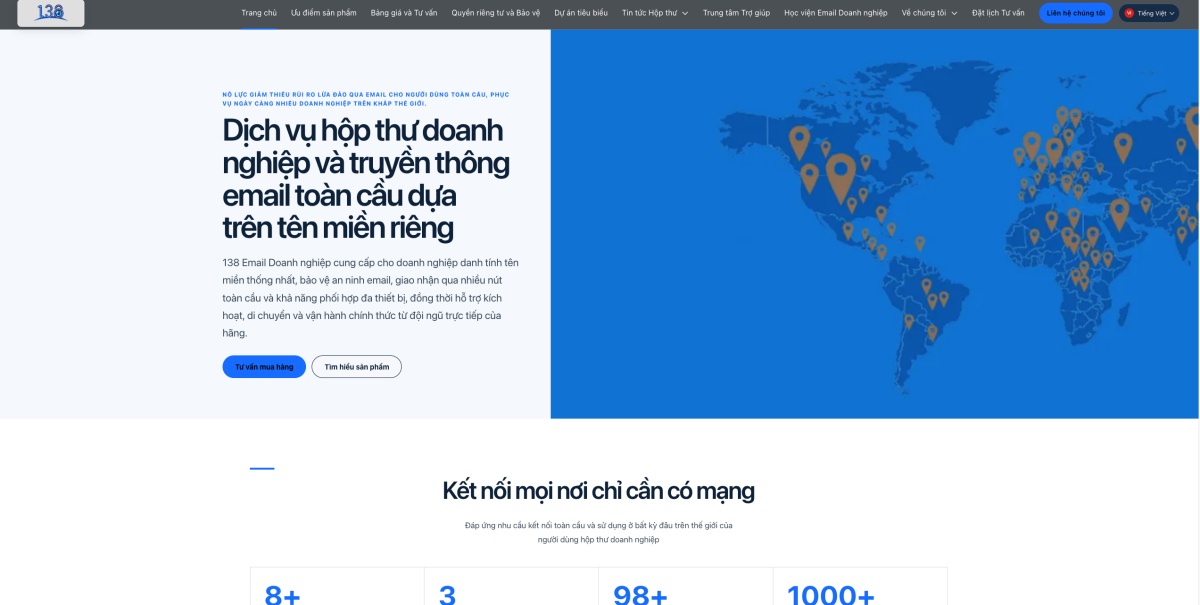
138 Enterprise Email | Vietnamese AI Digital Asset Website Case Study
An AI-driven digital asset website for enterprise email tailored to Vietnamese enterpris...
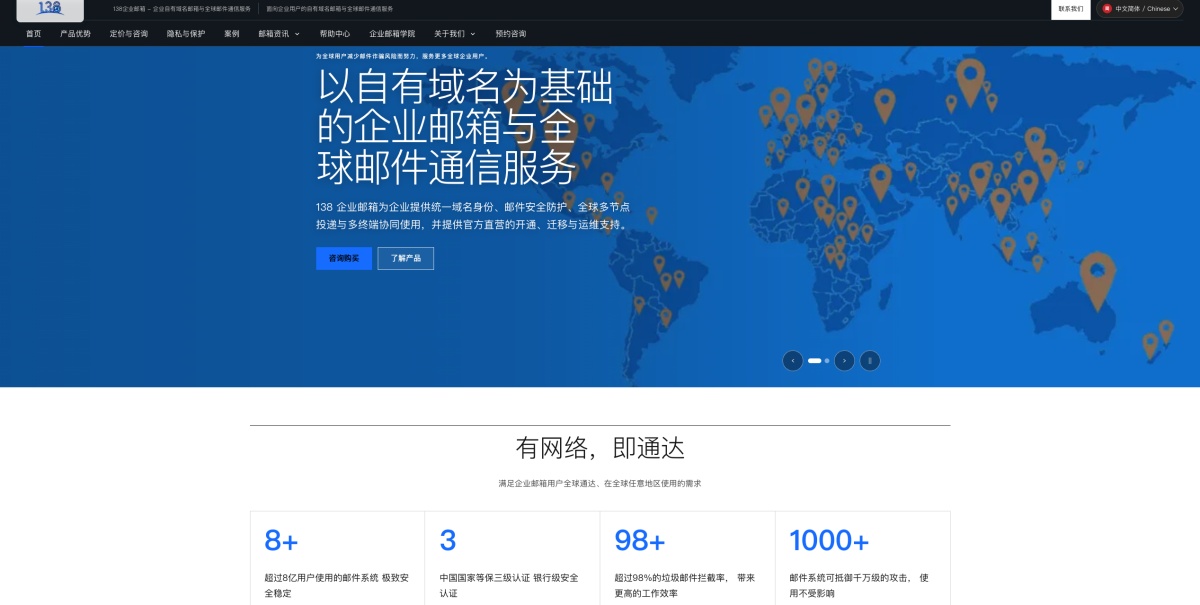
138 Enterprise Email | Chinese AI Digital Asset Website Case Study for Enterprise Services
Developed a Chinese AI digital asset website for an enterprise email service brand. By i...
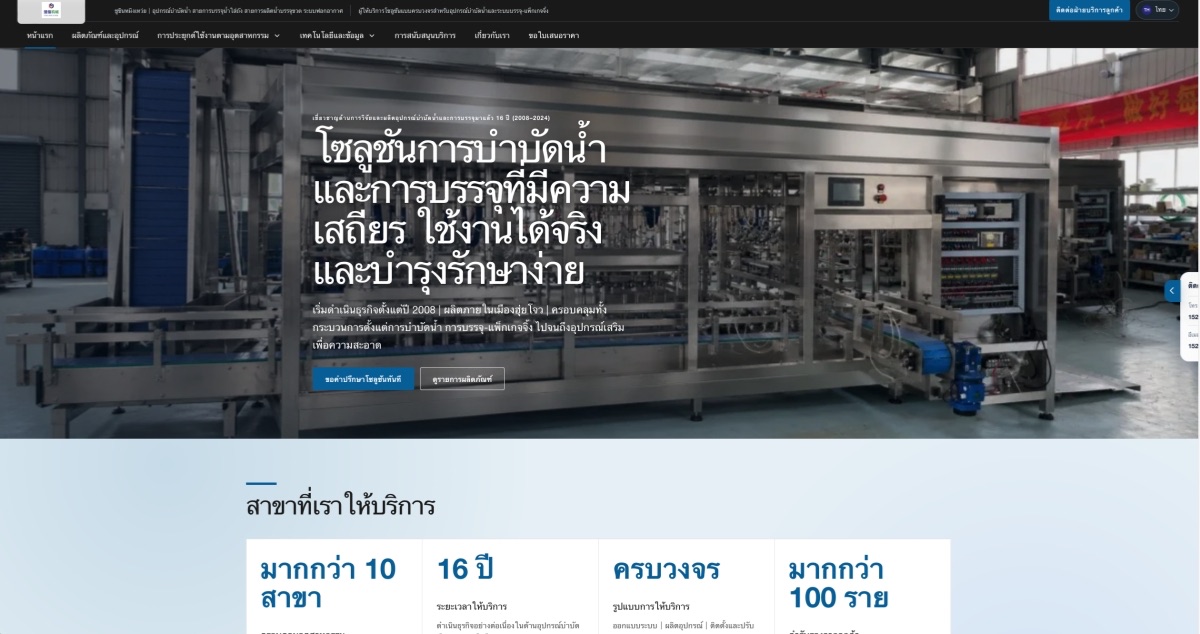
Water Treatment & Filling Equipment Manufacturer | Thai AI Digital Asset Website Case Study
Development of a Thai AI digital asset website for water treatment and filling equipment...