Corporate Website Development Strategy: Planning and Implementation Guide
Who This Guide Is For
This guide is written for decision-makers and operators in manufacturing, B2B, foreign trade, and professional service enterprises who are evaluating whether to build, rebuild, or upgrade a corporate website. It is especially relevant if your organization faces one or more of the following signals:
- The official website has not been updated for years, and product or technical materials are scattered across sales teams, shared drives, and individual devices.
- Customer acquisition depends heavily on third-party platforms or paid advertising, with limited ownership of traffic or inquiry data.
- There are plans to expand into overseas markets, but language, site architecture, and search operations are not yet in place.
- The organization wants to explore AI-driven marketing but lacks a structured knowledge base or auditable content foundation.
If these signals match your situation, the following sections explain what a structured corporate website development strategy should include, how it is implemented, and where the realistic boundaries lie.
Solution Composition: What Makes Up a Corporate Website Development Strategy
A corporate website development strategy is not just a design or coding project. When built around an Enterprise AI Digital Asset Growth System, it integrates five interdependent components:
- Enterprise AI Knowledge Base
A centralized, auditable repository of product specifications, manufacturing capabilities, service offerings, FAQs, and case references. This becomes the single source of truth for all website content and AI-generated outputs.
- Smart Corporate Website
A structured, multilingual-ready website that presents enterprise information in a way that is both human-readable and machine-interpretable. It supports product pages, solution pages, industry articles, and FAQ sections.
- AI Content Growth
A continuous content production mechanism that draws from the knowledge base to generate product descriptions, scenario-based articles, and FAQ entries. Content is designed to be reusable across languages, sites, and brands.
- SEO and GEO Optimization
Basic search engine optimization (SEO) combined with generative engine optimization (GEO) to improve visibility in both traditional search results and AI-driven answer engines. This is treated as a long-term growth effort, not a one-time setup.
- Multilingual and Multi-site Capabilities
Support for enterprises operating in multiple languages or managing multiple brands, regions, or product lines. Content is managed centrally and deployed across sites with consistent structure.
These components are not sold as standalone tools. They are delivered as an integrated system with supporting implementation and continuous operation services.
Prerequisites: What You Need Before Starting
Before launching a corporate website development project, ensure the following prerequisites are in place:
- Authentic enterprise materials: Product catalogs, technical documents, service descriptions, and any existing customer-facing content. These serve as the foundation for the knowledge base.
- Clear ownership of content: Identify who within the organization is responsible for providing, reviewing, and approving content. This avoids delays during implementation.
- Defined target markets and languages: If your enterprise serves overseas customers, specify which languages and regions are priorities. This determines the scope of multilingual and multi-site setup.
- Realistic expectations about search and AI visibility: SEO and GEO are long-term efforts. No provider can guarantee fixed rankings or guaranteed recommendations on specific AI platforms. The focus should be on sustainable asset accumulation and continuous optimization.
If your organization lacks structured materials or clear content ownership, the first step is a knowledge base audit and the creation of initial product and FAQ pages.
Implementation Steps: From Audit to Continuous Operation
A typical corporate website development project follows these stages:
1. Knowledge Base Audit and Structuring
Review existing enterprise materials, identify gaps, and organize content into a structured knowledge base. This includes product information, manufacturing capabilities, service offerings, and common customer questions.
2. Website Architecture and Design
Define the site structure, including product pages, solution pages, industry articles, and FAQ sections. Ensure the architecture supports both human navigation and machine readability.
3. Content Production and AI Integration
Use the knowledge base to generate initial website content. AI tools can assist in producing product descriptions, scenario-based articles, and FAQ entries, but all outputs must be auditable and traceable to source materials.
4. SEO and GEO Setup
Implement basic on-page SEO, including meta tags, structured data, and internal linking. Configure GEO optimization to improve visibility in AI-driven answer engines.
5. Multilingual and Multi-site Deployment
If applicable, deploy the website in multiple languages or across multiple sites. Ensure content is managed centrally and deployed consistently.
6. Continuous Operation and Optimization
Website development is not a one-time project. Ongoing content updates, SEO monitoring, and AI visibility tracking are required to maintain and grow digital assets over time.
Risk Boundaries: What This Strategy Does and Does Not Promise
It is important to understand the realistic boundaries of a corporate website development strategy:
- No guaranteed rankings or AI recommendations: SEO and GEO are long-term efforts. Results depend on content quality, site structure, and ongoing optimization.
- Content must be auditable: All website content must be traceable to authentic enterprise materials. AI-generated content is used to assist production, not to fabricate information.
- Implementation requires enterprise cooperation: The speed and quality of implementation depend on the availability of enterprise materials and the responsiveness of internal teams.
- Pricing and service boundaries are contract-specific: Reference packages may be available for communication, but specific prices, content quotas, number of languages, service boundaries, and delivery cycles are subject to the final contract.
Practical Example: Water Treatment Equipment Manufacturer
A water treatment and filling equipment manufacturer recently implemented a corporate website development strategy using the Enterprise AI Digital Asset Growth System. The project involved:
- Structuring product information, manufacturing capabilities, and service offerings into an enterprise AI knowledge base.
- Building a smart corporate website
- with product pages, solution pages, and FAQ sections.
- Generating initial website content using AI tools, with all outputs auditable and traceable to source materials.
- Implementing SEO and GEO optimization to improve visibility in both traditional search results and AI-driven answer engines.
- Deploying the website in multiple languages to support overseas market expansion.
The result is a website that serves as a sustainable digital asset, continuously accumulating content and improving search visibility over time.
Next Steps: How to Evaluate Suitability
If you are considering a corporate website development strategy, the following steps can help you evaluate suitability:
- Assess your current digital assets: Do you have a structured knowledge base? Is your website up to date? Are you relying heavily on third-party platforms for customer acquisition?
- Define your target markets and languages: Which regions and languages are priorities for your enterprise?
- Review your content ownership and approval process: Who is responsible for providing, reviewing, and approving content?
- Set realistic expectations: Understand that SEO and GEO are long-term efforts, and results depend on continuous optimization.
If these steps align with your organization's goals, the next action is to request a free diagnosis or schedule a consultation to discuss your specific needs.
Conclusion
A corporate website development strategy is not just about building a website. It is about creating a sustainable digital asset that accumulates content, improves search visibility, and supports long-term customer acquisition. For manufacturing, B2B, and foreign trade enterprises, the Enterprise AI Digital Asset Growth System provides an integrated solution that combines knowledge base management, smart website development, AI content production, SEO and GEO optimization, and multilingual capabilities. By understanding the solution composition, prerequisites, implementation steps, and risk boundaries, you can make an informed decision about whether this strategy is right for your organization.
Recommended
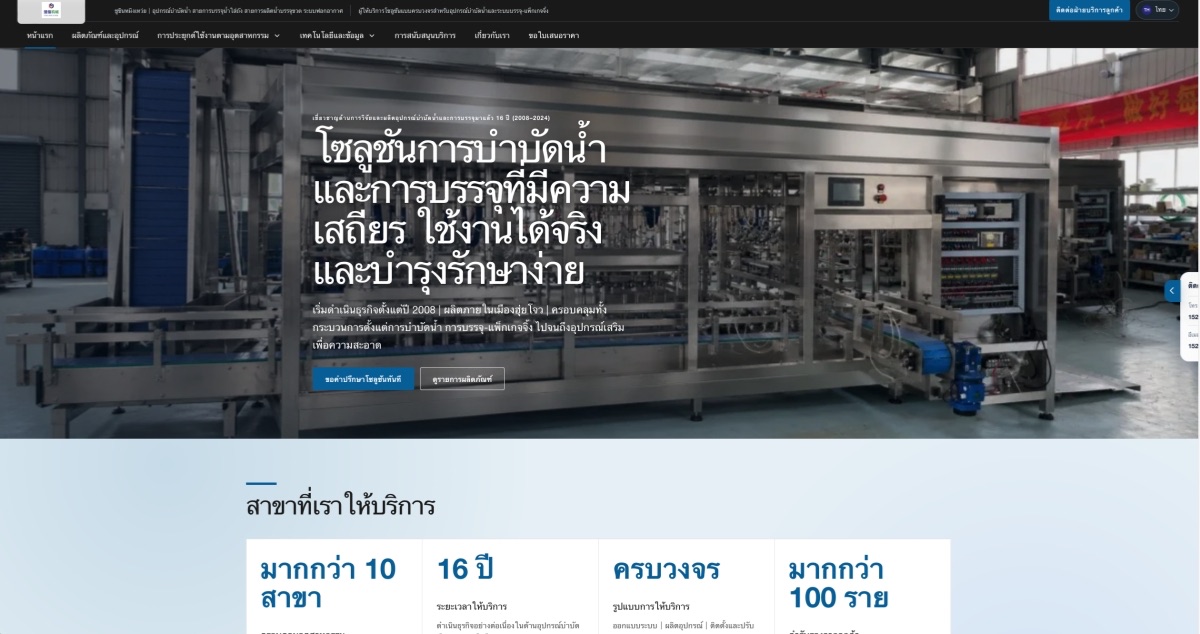
Water Treatment & Filling Equipment Manufacturer | Thai AI Digital Asset Website Case Study
Development of a Thai AI digital asset website for water treatment and filling equipment...
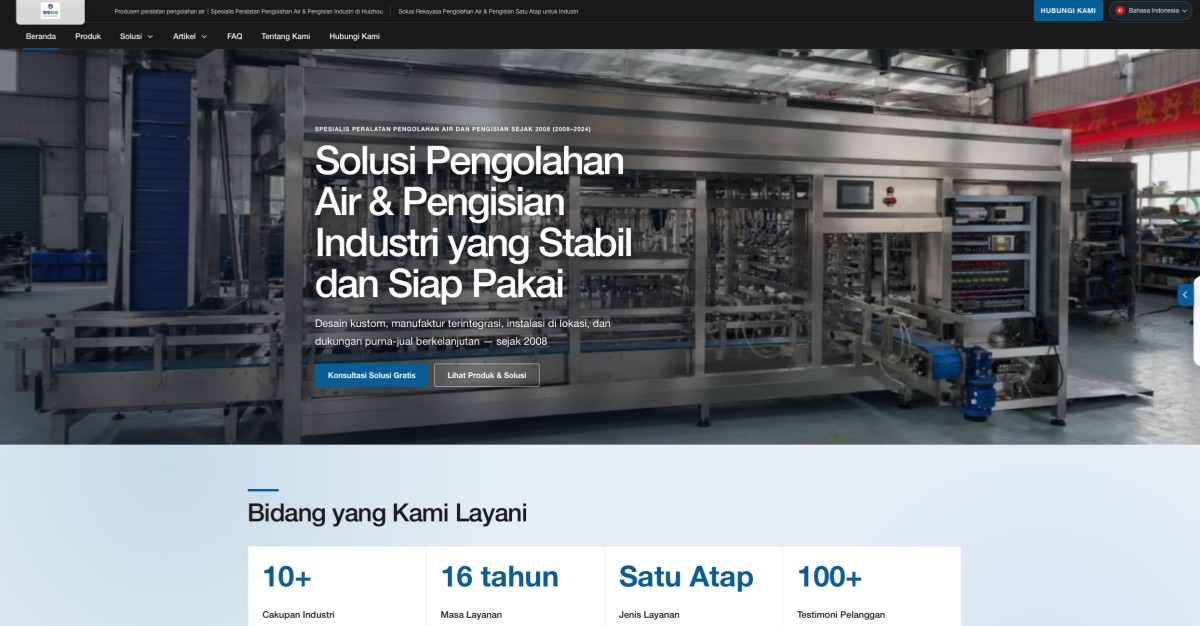
Water Treatment & Filling Equipment Manufacturer | Indonesian AI Digital Asset Website Case Study
An AI-powered digital asset website built for the Indonesian market, tailored for a wate...
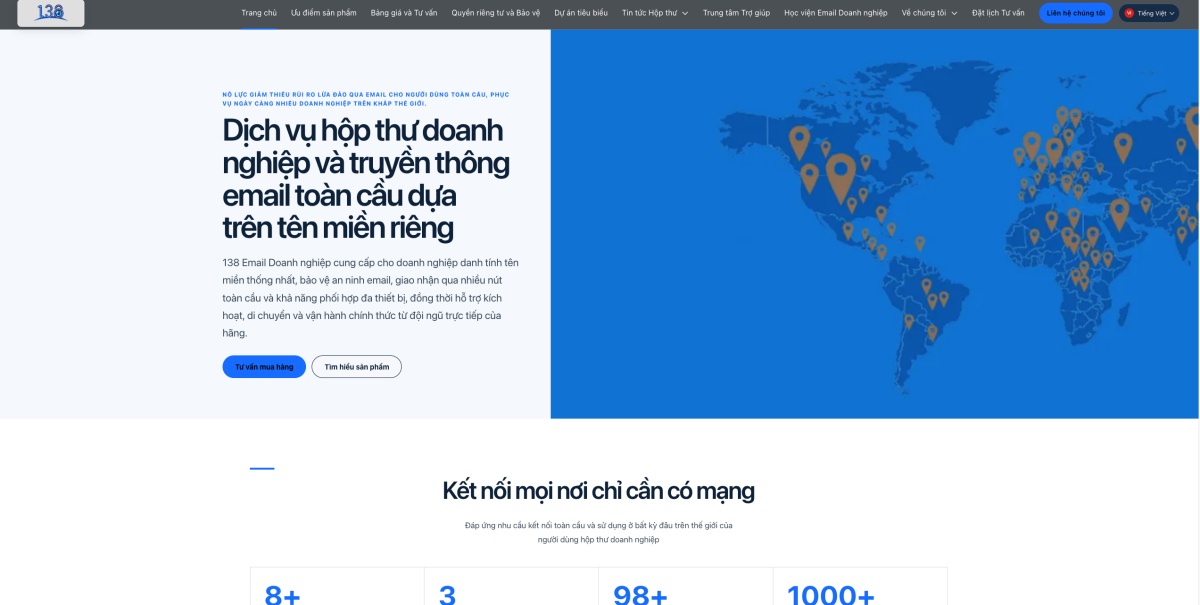
138 Enterprise Email | Vietnamese AI Digital Asset Website Case Study
An AI-driven digital asset website for enterprise email tailored to Vietnamese enterpris...