Corporate Digital Asset Services: What They Are, Who Needs Them, and How to Adopt Them
Who Actually Needs Corporate Digital Asset Services?
Corporate digital asset services are not a generic "digital transformation" label. They address a specific operational gap: enterprises that already have products, technical knowledge, and customer-facing materials, but lack a systematic way to turn those assets into discoverable, reusable, and continuously growing digital content.
The typical profile includes:
- Manufacturing and industrial enterprises that need to convert product manuals, technical parameters, and application experience into structured product pages and industry solutions.
- B2B professional service firms that must build trust around client decision questions, using case studies, methodologies, and FAQs to shorten pre-sales cycles.
- Foreign trade and overseas expansion companies that require multilingual websites with localized content systems, reusing product data across markets while adjusting expression for each region.
- Group, multi-brand, or multi-channel businesses that need a unified knowledge foundation to manage multiple sites by brand, region, or business line without duplicating effort or creating content inconsistencies.
If your enterprise falls into one of these categories and your current website operates more like a static brochure than a living content engine, corporate digital asset services are designed for your situation.
What the Service Actually Covers
A properly scoped corporate digital asset service is not just website design or SEO outsourcing. It is an integrated system—often called an Enterprise AI Digital Asset Growth System—that connects five core modules:
1. Enterprise AI Knowledge Base
This is the foundation. Your existing product documentation, technical specifications, service processes, case records, and FAQ knowledge are systematically organized into a structured, machine-readable knowledge base. This serves as the single source of truth for all downstream content. The key principle: all content is based on authentic enterprise materials and is auditable. AI improves production efficiency, but enterprise knowledge and professional judgment determine credibility.
2. Smart Corporate Website
The official website is rebuilt or upgraded to function as a dynamic content platform rather than a fixed set of pages. It supports structured product pages, solution pages, case study pages, and diagnostic tools, with internal linking architecture designed for both human navigation and search engine crawling. Typical route structures include dedicated paths for products, solutions, knowledge base, AI content growth, SEO/GEO optimization, and multilingual multi-site management.
3. AI Content Growth
Content production is organized around five content types that map to real buyer questions:
| Content Type | Buyer Question It Answers | Typical Output |
|---|---|---|
| Product Content | What do you offer? What are the specs? | Product detail pages, selection guides, comparison sheets |
| Solution Content | How do you solve my industry problem? | Industry solutions, application scenarios, implementation advice |
| Case Content | Have you actually done this? What were the results? | Customer case studies, delivery reviews, outcome summaries |
| Professional Content | Do you understand my industry? | Trend analysis, technical articles, procurement guides |
| FAQ Content | What should I worry about before buying? | Pricing, delivery, compatibility, after-sales, certification Q&A |
AI assists in drafting and structuring this content, but every piece is reviewed against authentic enterprise materials before publication.
4. SEO and GEO Optimization
This module addresses two distinct discovery channels:
- Traditional SEO ensures your content ranks in conventional search results for relevant product, industry, and solution queries.
- GEO (Generative Engine Optimization) ensures your content is structured so that AI-powered search platforms can understand, cite, and recommend your enterprise in generated answers.
A critical boundary: no reputable provider guarantees fixed search rankings or guaranteed AI platform recommendations. SEO and GEO are long-term growth efforts. The goal is sustainable asset accumulation and continuous optimization, not short-term ranking manipulation.
5. Multilingual and Multi-Site Capabilities
For enterprises operating across markets, the system supports content reuse and management across multiple languages and sites. Product data and knowledge base entries are maintained centrally, then adapted for different regional sites—reducing redundant construction and preventing content drift between markets.

Before Adoption: What to Assess
Before engaging a corporate digital asset service provider, evaluate your current state against these criteria:
Content inventory. Do you have existing product documentation, technical materials, case records, or internal knowledge that can serve as source material? The system works by transforming authentic enterprise materials—not by generating content from scratch without factual grounding.
Organizational readiness. Is there someone on your team who can review and approve content for technical accuracy? AI accelerates production, but enterprise experts must validate claims, parameters, and case details.
Current website limitations. Is your existing site structurally capable of supporting dynamic content growth, or does it require a rebuild? A smart corporate website needs proper information architecture, internal linking logic, and content management capabilities.
Market scope. How many languages, regions, or brand sites do you need to support? This directly affects the service scope, delivery timeline, and ongoing operational requirements.
During Implementation: What the Process Looks Like
A typical implementation follows a phased approach:
Phase 1: Knowledge Base Construction. Your existing materials are collected, structured, and organized into the enterprise AI knowledge base. This includes product data, technical parameters, service processes, case records, and FAQ knowledge. The output is an auditable, reusable knowledge foundation.
Phase 2: Website Architecture and Build. The smart corporate website is designed and developed with proper information architecture. Route structures are established for product pages, solution pages, case studies, knowledge base access, AI content, SEO/GEO resources, and multilingual sites. Internal linking rules are implemented—for example, each product page links to at least one solution page, one FAQ, and one call-to-action.
Phase 3: Content Production and Population. AI-assisted content is generated across the five content types (product, solution, case, professional, FAQ), reviewed by enterprise experts, and published. Initial content covers core products, primary industry solutions, and high-priority buyer questions.
Phase 4: SEO/GEO Activation. On-page optimization, structured data implementation, and content structuring for AI discoverability are applied. This is the beginning of a long-term optimization effort, not a one-time setup.
Phase 5: Continuous Operation. Content production continues on an ongoing basis, covering new products, emerging industry questions, additional case studies, and expanding FAQ coverage. The system is designed for continuous accumulation, not a one-time project delivery.
Boundaries and Risks to Understand
Several important boundaries define what corporate digital asset services can and cannot do:
No guaranteed rankings or customer acquisition. Any provider promising fixed search positions, guaranteed AI recommendations, or assured customer volumes is making claims that cannot be verified. SEO and GEO are long-term efforts with outcomes influenced by competition, algorithm changes, and market dynamics.
Content must be auditable. The system's credibility depends on authentic enterprise materials. If your organization cannot provide verifiable product data, case records, or technical documentation, the content produced will lack the foundation needed for both search visibility and buyer trust.
Pricing is variable. Service packages typically range from basic to enterprise tiers, but specific pricing, content quotas, number of supported languages, service boundaries, and delivery cycles are determined by the final contract based on your actual scope.
AI is a tool, not a replacement for expertise. AI content growth accelerates drafting and structuring, but enterprise knowledge and professional judgment remain essential for accuracy and credibility. The system is designed so that AI enhances efficiency while human experts control quality.
After Adoption: What Continuous Operation Looks Like
Once the system is live, the focus shifts to sustained content growth and optimization:
- Regular content production covering new products, updated technical specifications, fresh case studies, and evolving industry questions.
- Ongoing SEO and GEO refinement based on search performance data, emerging query patterns, and changes in AI platform behavior.
- Knowledge base expansion as your enterprise accumulates new experience, enters new markets, or launches new product lines.
- Multilingual content adaptation for additional markets or updated regional expressions.
The objective is not a one-time website launch but a continuously growing digital asset that compounds in value over time—making your enterprise more easily discovered by search, understood by AI, and positioned for sustained customer inquiry opportunities.
Next Steps for Evaluation
If you are comparing corporate digital asset service providers or considering whether this approach fits your enterprise:
- Audit your existing materials. Catalog your product documentation, case records, technical specifications, and internal knowledge. This determines how quickly a knowledge base can be built.
- Define your scope. Clarify how many languages, sites, product lines, and industry solutions you need to support.
- Request a diagnostic. A qualified provider should offer a website and AI visibility diagnostic to assess your current state and identify specific gaps.
- Review the service structure. Ensure the provider covers all five modules—knowledge base, smart website, AI content growth, SEO/GEO, and multilingual multi-site—as an integrated system rather than disconnected services.
- Clarify delivery boundaries. Confirm what is included in the proposed package, what requires ongoing operational investment, and what outcomes are realistically achievable within your timeline.
Corporate digital asset services represent a shift from treating your website as a cost center to building it as a compounding business asset. The decision to adopt should be grounded in a clear understanding of your current materials, your market scope, and your commitment to continuous content operation.
Recommended
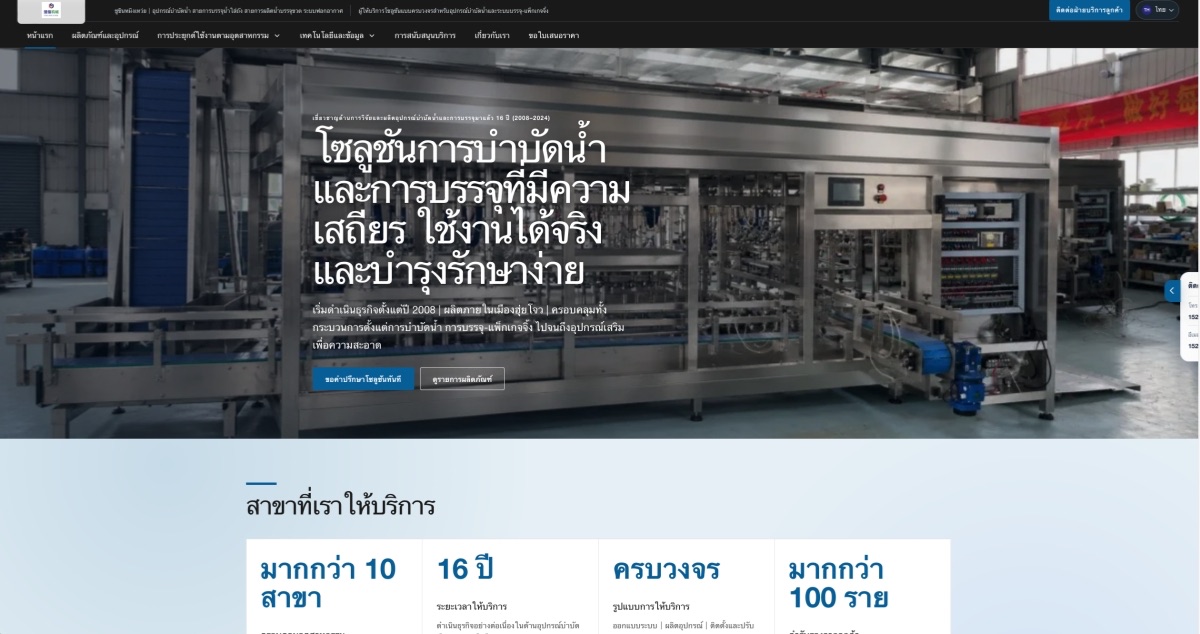
Water Treatment & Filling Equipment Manufacturer | Thai AI Digital Asset Website Case Study
Development of a Thai AI digital asset website for water treatment and filling equipment...
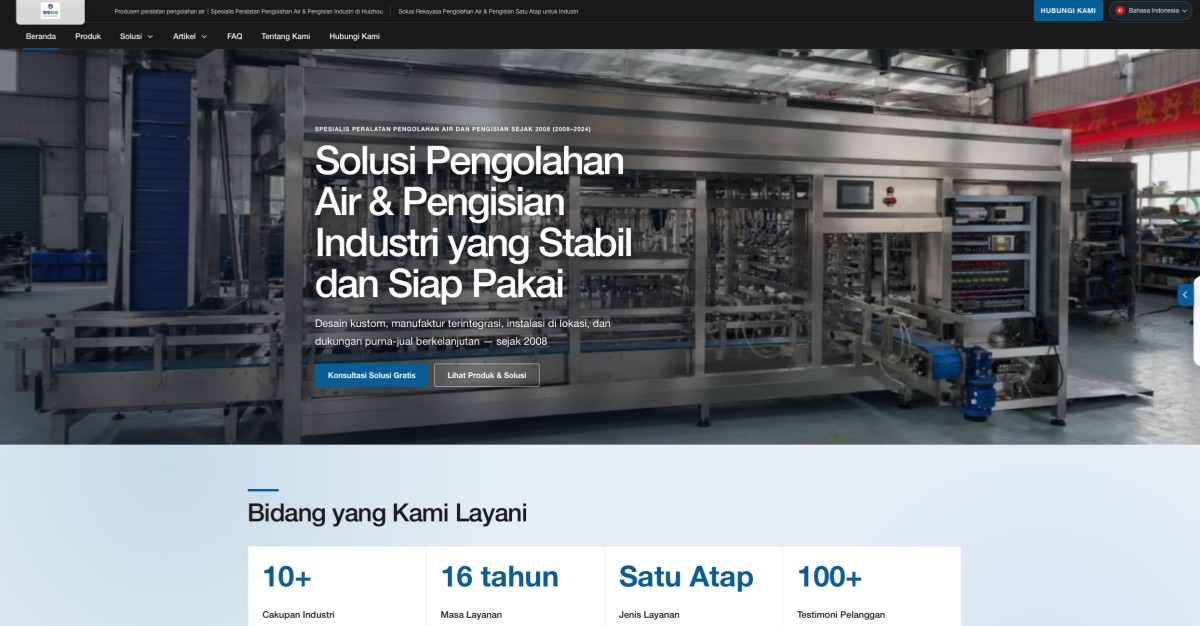
Water Treatment & Filling Equipment Manufacturer | Indonesian AI Digital Asset Website Case Study
An AI-powered digital asset website built for the Indonesian market, tailored for a wate...
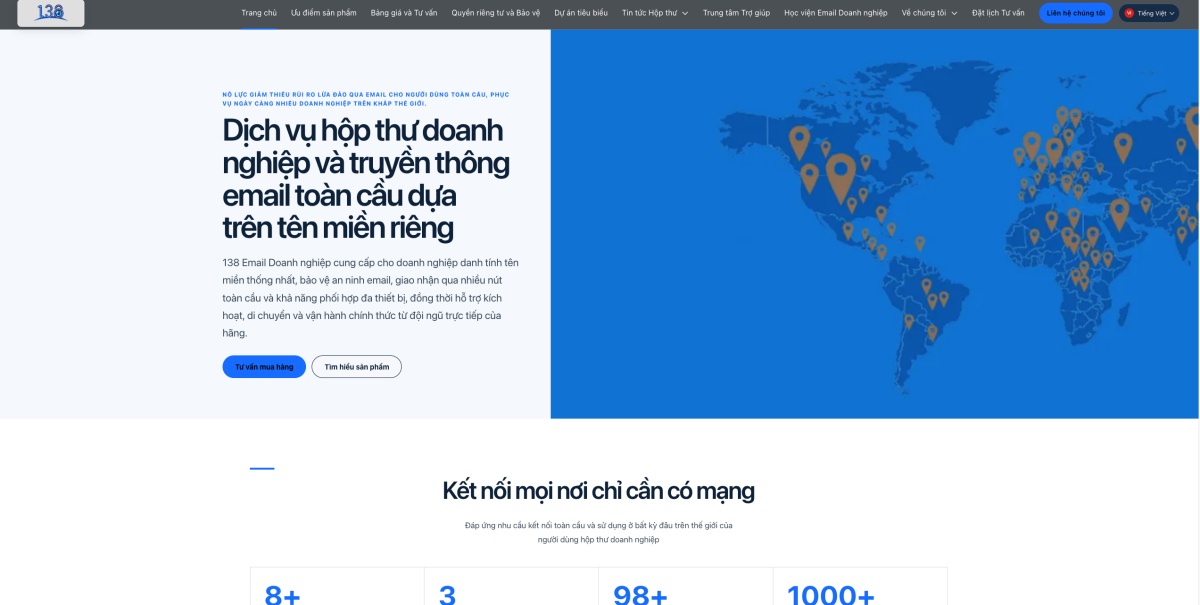
138 Enterprise Email | Vietnamese AI Digital Asset Website Case Study
An AI-driven digital asset website for enterprise email tailored to Vietnamese enterpris...