Why AI Workers Fail on Hardware Product Websites: A Diagnostic Guide for Compliance and Operations Managers
Why AI Workers Fail on Hardware Product Websites: A Diagnostic Guide for Compliance and Operations Managers
The Core Failure: Knowledge Fragmentation
When hardware manufacturers deploy AI workers to generate product content, manage multilingual sites, or optimize for search and AI platforms, the most common failure point is not the AI system itself—it's the absence of a structured enterprise knowledge base.
Hardware products require precise technical parameters, application scenarios, compliance documentation, and industry-specific terminology. Without a centralized, auditable knowledge foundation, AI workers produce content that is either generic, inconsistent, or factually unreliable.
Why this happens:
- Product specifications exist in isolated documents, emails, or individual team members' knowledge
- Technical parameters lack standardized formatting across product lines
- Application scenarios and case studies are not systematically documented
- Multilingual content is translated without maintaining technical accuracy
- Content updates are reactive rather than driven by structured operational workflows
Diagnostic Framework: Five Critical Failure Points
1. Product Content Inconsistency
Symptom: AI-generated product pages contain conflicting specifications, missing parameters, or generic descriptions that don't differentiate your offerings.
Root cause: The AI worker lacks access to a verified product knowledge base. It fills gaps with industry averages or competitor information.
Corrective action: Establish a structured product knowledge repository covering:
- Complete technical specifications for each model
- Material compositions and manufacturing processes
- Performance parameters under different conditions
- Compatibility requirements and limitations
- Certification and compliance documentation
2. Solution Content Misalignment
Symptom: Industry solution pages describe generic applications without demonstrating your specific implementation experience or technical advantages.
Root cause: AI workers cannot access documented case studies, delivery processes, or outcome data. They generate plausible but unverified solution narratives.
Corrective action: Build a case study knowledge base that includes:
- Specific customer scenarios and challenges
- Your technical approach and implementation steps
- Measurable outcomes and performance data
- Lessons learned and optimization insights
- Replicable methodologies for similar applications
3. FAQ Content Gaps
Symptom: Customer inquiries reveal that your website doesn't address pre-purchase concerns about pricing, delivery timelines, compatibility, after-sales support, or certification requirements.
Root cause: FAQ content is created reactively or based on assumptions rather than actual customer decision-making questions.
Corrective action: Systematically document and publish answers to:
- Pricing structures and quotation processes
- Delivery cycles and customization lead times
- Technical compatibility and integration requirements
- Warranty terms and after-sales service scope
- Industry certifications and compliance standards
- Installation, training, and maintenance support
4. Multilingual Content Degradation
Symptom: Non-English versions of your website contain awkward translations, lost technical precision, or culturally inappropriate expressions that damage credibility in target markets.
Root cause: Translation processes don't maintain connection to the source knowledge base. Technical terms are translated inconsistently or incorrectly.
Corrective action: Implement a multilingual knowledge management system that:
- Maintains a single source of truth for all product and technical content
- Uses approved terminology glossaries for each target language
- Ensures technical parameters remain accurate across all language versions
- Adapts cultural expressions while preserving technical meaning
- Enables content reuse across multiple sites and brands
5. SEO/GEO Optimization Disconnect
Symptom: Your website ranks poorly in traditional search engines and is not cited or recommended by AI platforms, despite having comprehensive product information.
Root cause: Content is not structured for both human readability and machine understanding. Technical documentation exists but isn't optimized for search algorithms or AI comprehension.
Corrective action: Integrate SEO and GEO optimization into your content operations by:
- Structuring content with clear hierarchies and semantic markup
- Creating content that answers specific search queries and AI prompts
- Building internal linking architectures that connect related products, solutions, and knowledge
- Maintaining consistent content updates based on search performance data
- Balancing traditional search visibility with AI platform comprehension
Implementation Boundaries and Risk Factors
What AI workers can do effectively:
- Generate content variations based on verified knowledge base inputs
- Maintain consistency across multilingual and multi-site deployments
- Optimize content structure for search and AI comprehension
- Produce routine content updates and maintenance
- Support continuous content operations at scale
What AI workers cannot do:
- Replace enterprise-specific technical knowledge and professional judgment
- Guarantee specific search rankings or AI platform recommendations
- Create credible content without access to authentic enterprise materials
- Compensate for poor knowledge base quality or incomplete documentation
- Make autonomous decisions about product positioning or market strategy
Critical success factors:
- Enterprise knowledge must be the single source of truth
- All AI-generated content must be auditable and traceable to source materials
- Content operations require ongoing human oversight and quality control
- SEO/GEO optimization is a long-term growth effort, not a one-time project
- Results depend on continuous optimization rather than fixed outcomes
Next Steps for Operations and Compliance Managers
Phase 1: Knowledge Base Audit (Weeks 1-2)
Inventory your existing product documentation, technical specifications, case studies, and customer FAQs. Identify gaps, inconsistencies, and accessibility issues that prevent AI workers from generating reliable content.
Phase 2: Knowledge Structure Design (Weeks 3-4)
Define the knowledge base architecture that will serve as the foundation for AI content generation. Establish standards for product specifications, solution documentation, FAQ structures, and multilingual content management.
Phase 3: AI Worker Configuration (Weeks 5-6)
Configure AI systems to access and utilize your enterprise knowledge base. Establish content generation workflows, quality control checkpoints, and approval processes.
Phase 4: Content Operations Launch (Weeks 7-8)
Begin continuous content operations using AI workers supported by your knowledge base. Monitor content quality, search performance, and AI platform comprehension. Adjust workflows based on performance data.
Phase 5: Optimization and Scaling (Ongoing)
Continuously refine your knowledge base, content operations, and SEO/GEO strategies based on performance metrics and market feedback. Scale successful approaches across additional product lines, markets, or business units.
Moving Forward
AI workers for hardware products can significantly improve content consistency, operational efficiency, and market reach—but only when built on a foundation of authentic, structured enterprise knowledge. The technology is capable; the challenge is ensuring your knowledge infrastructure supports effective AI deployment.
If you're evaluating AI content systems for your hardware product website, start by assessing your knowledge base readiness. The quality of your AI outputs will always reflect the quality of your enterprise knowledge inputs.
For a diagnostic assessment of your current website's AI readiness and knowledge base structure, contact our team to discuss your specific requirements and implementation options.
Recommended
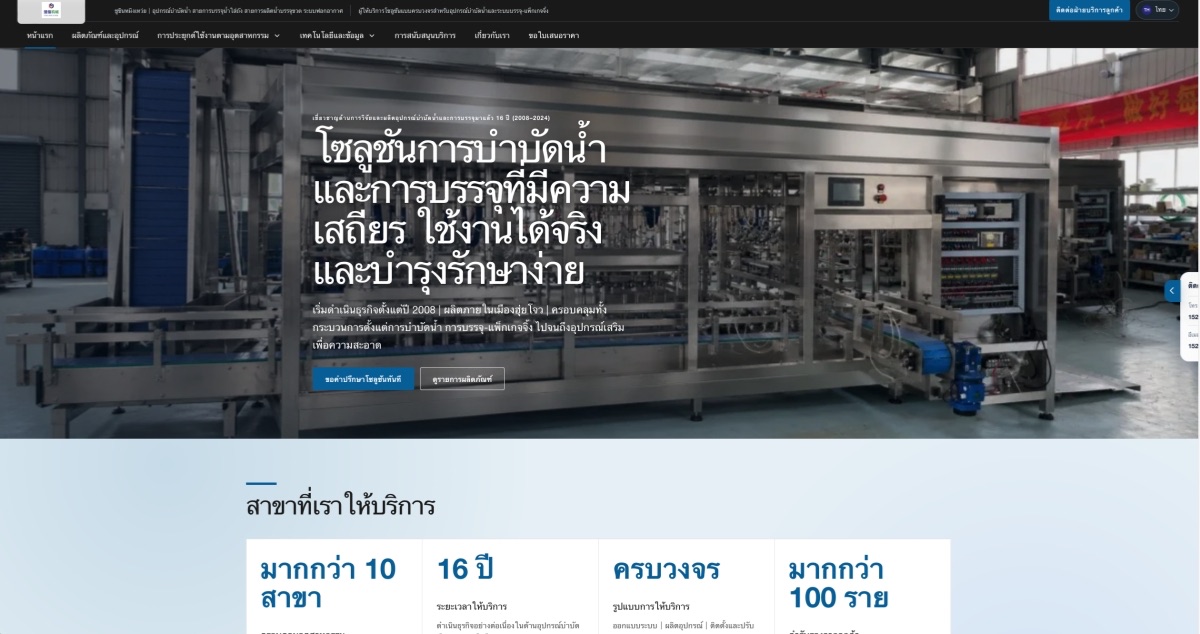
Water Treatment & Filling Equipment Manufacturer | Thai AI Digital Asset Website Case Study
Development of a Thai AI digital asset website for water treatment and filling equipment...
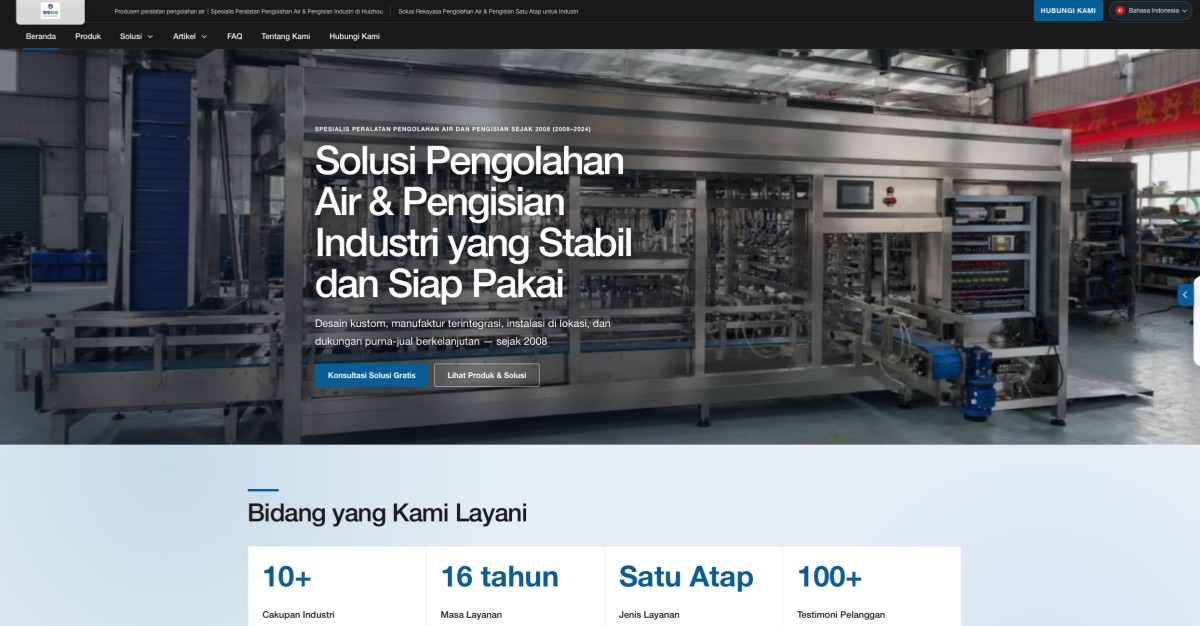
Water Treatment & Filling Equipment Manufacturer | Indonesian AI Digital Asset Website Case Study
An AI-powered digital asset website built for the Indonesian market, tailored for a wate...
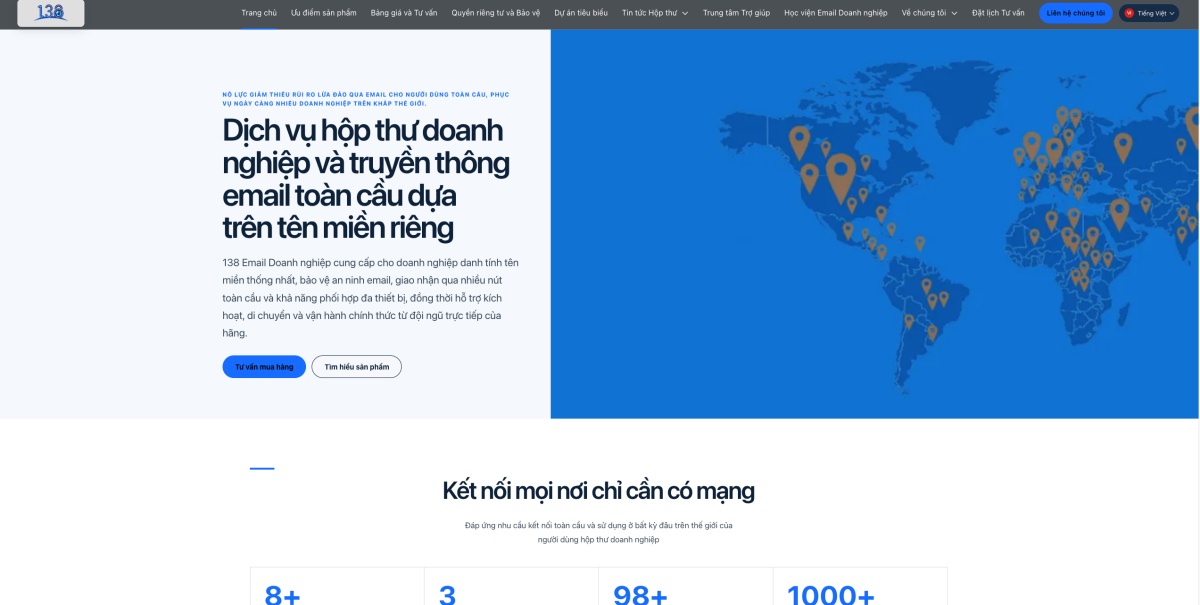
138 Enterprise Email | Vietnamese AI Digital Asset Website Case Study
An AI-driven digital asset website for enterprise email tailored to Vietnamese enterpris...