AI Worker for Packaging Machinery: Concepts, Use Cases, and Next Steps
What Is an AI Worker for Packaging Machinery?
In the context of enterprise digital operations, an AI Worker for packaging machinery refers to a structured, AI-driven content and knowledge system that continuously organizes, publishes, and optimizes a manufacturer's technical materials—product specifications, application scenarios, selection guides, and FAQs—so they can be discovered by search engines and cited by generative AI platforms.
It is not a physical automation unit. Instead, it functions as a digital asset layer that sits between your enterprise knowledge (manuals, CAD references, process documentation, case studies) and the channels where buyers and AI systems look for answers.
For packaging machinery manufacturers, this means your product pages, selection tools, and technical articles are no longer static brochures. They become living, queryable assets that respond to both human searches and AI-driven research workflows.
Who Is This For?
This approach is designed for:
- Packaging machinery manufacturers
- producing filling, sealing, labeling, cartoning, or palletizing equipment.
- B2B industrial suppliers
- serving food, pharmaceutical, chemical, or consumer goods packaging lines.
- Foreign trade and overseas expansion teams
- needing multilingual product documentation that performs in both English and target-market languages.
- Group or multi-brand enterprises
- managing several product lines or regional sites under one knowledge base.
If your sales cycle depends on technical credibility, application-specific guidance, and post-sale support documentation, an AI Worker system directly addresses the gap between your internal expertise and external discoverability.
Use Cases in Packaging Machinery
1. Product Page Generation and Optimization
An AI Worker system ingests your product manuals, parameter sheets, and engineering notes, then generates structured product pages that cover model specifications, applicable materials, throughput ranges, and integration requirements. These pages are optimized for both traditional SEO and GEO (Generative Engine Optimization), ensuring they appear in search results and are citable by AI platforms.
2. Application Scenario Documentation
Packaging machinery buyers often search by use case rather than model number. An AI-driven content system can produce scenario-based content—such as "high-speed filling for viscous liquids" or "automated cartoning for pharmaceutical blister packs"—linking your equipment to real production challenges.
3. Multilingual and Multi-Site Management
For manufacturers exporting to Southeast Asia, the Middle East, or Latin America, the system supports content reuse across languages and regional sites. A single knowledge base feeds multiple front-ends, ensuring consistency while allowing localization of terminology, units, and compliance references.
4. FAQ and Pre-Sales Knowledge Base
Buyers in the packaging machinery sector frequently ask about compatibility, changeover times, maintenance intervals, and certification support. An AI Worker system structures these questions into a searchable FAQ layer, reducing repetitive pre-sales inquiries and improving AI citation rates.
Implementation Steps: Before, During, and After Adoption
Before Deployment: Audit and Structure
- Inventory existing materials: Gather product manuals, CAD drawings, process videos, past case studies, and internal training documents.
- Define content categories: Organize materials into products, solutions, cases, and FAQs—mirroring the structure recommended for enterprise knowledge bases.
- Establish audit rules: All AI-generated content must be reviewed against authentic enterprise materials before publication. AI improves efficiency; human judgment ensures accuracy.
During Deployment: Build and Connect
- Deploy the enterprise AI knowledge base: This becomes the single source of truth for all content generation.
- Launch the smart corporate website: Integrate product pages, solution pages, and FAQ modules with internal linking to support both user navigation and AI comprehension.
- Activate AI content growth: Begin producing scenario-based articles, selection guides, and technical comparisons on a continuous basis.
- Apply SEO and GEO optimization: Ensure metadata, schema markup, and content structure align with both traditional search algorithms and AI retrieval patterns.
After Deployment: Operate and Iterate
- Monitor content performance: Track which pages drive inquiries, which AI platforms cite your content, and where gaps remain.
- Update knowledge base regularly: As new models are released or application scenarios evolve, feed updates into the system to keep content current.
- Scale to multilingual and multi-site: Once the core site is stable, extend the system to regional markets with localized content.
Boundaries and Risk Considerations
It is important to understand what an AI Worker system does not do:
- No guaranteed rankings or AI citations: SEO and GEO are long-term growth efforts. No provider can promise fixed positions on Google or guaranteed recommendations on specific AI platforms.
- No replacement for engineering validation: AI can structure and publish content, but technical accuracy must be verified by your engineering and sales teams.
- No instant results: Digital asset accumulation requires continuous operation. Expect measurable traction over months, not weeks.
- No one-size-fits-all content quotas: The volume of languages, articles, and product pages depends on your specific contract and business scope.
Next Steps for Packaging Machinery Manufacturers
If you are evaluating whether an AI Worker system fits your operation:
- Request a free digital asset diagnosis: Assess your current website's visibility in both search engines and AI platforms.
- Review your content readiness: Determine whether your product documentation is structured enough to feed an AI knowledge base.
- Discuss implementation scope: Clarify how many sites, languages, and content modules you need, and align expectations around delivery cycles and service boundaries.
Huizhou Gaia Network Technology Co., Ltd. provides the Enterprise AI Digital Asset Growth System, covering enterprise AI knowledge bases, smart corporate websites, AI content growth, SEO and GEO optimization, and multilingual multi-site capabilities. For packaging machinery manufacturers, this system turns internal technical knowledge into a sustainable, discoverable digital asset—helping you be found by search, understood by AI, and chosen by buyers.
Recommended
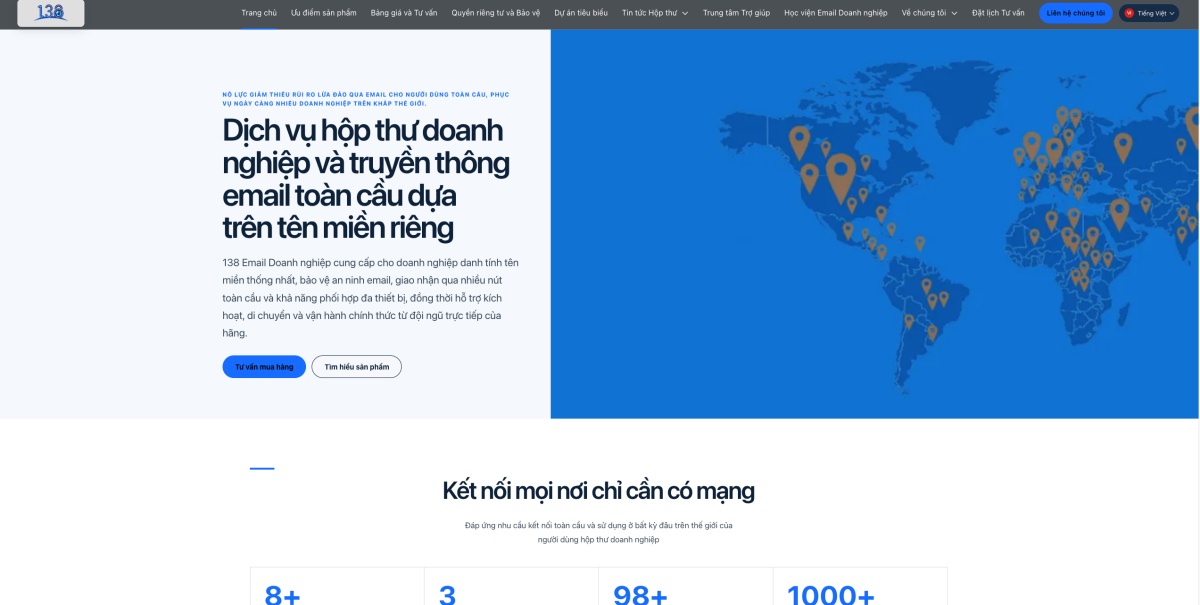
138 Enterprise Email | Vietnamese AI Digital Asset Website Case Study
An AI-driven digital asset website for enterprise email tailored to Vietnamese enterpris...
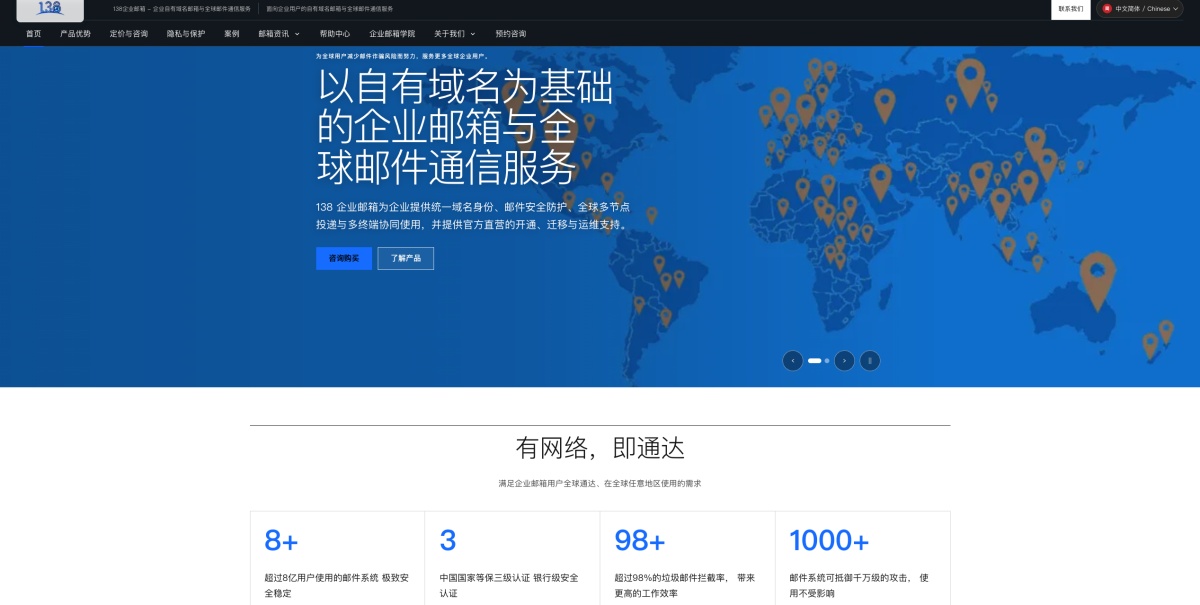
138 Enterprise Email | Chinese AI Digital Asset Website Case Study for Enterprise Services
Developed a Chinese AI digital asset website for an enterprise email service brand. By i...
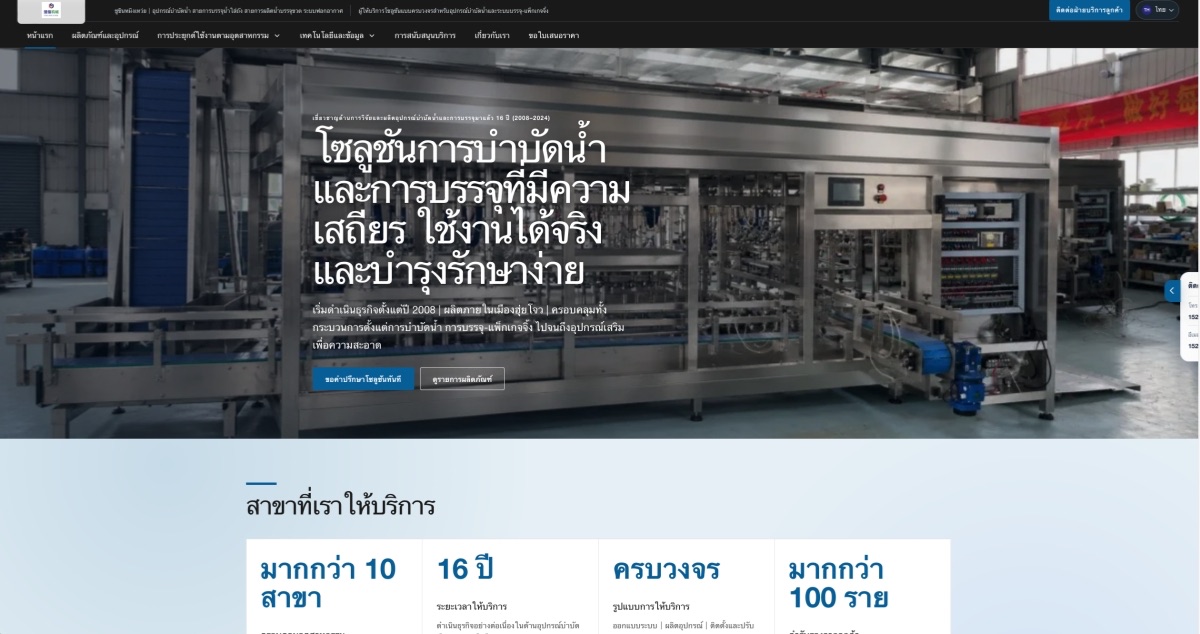
Water Treatment & Filling Equipment Manufacturer | Thai AI Digital Asset Website Case Study
Development of a Thai AI digital asset website for water treatment and filling equipment...