AI Corporate Website Solutions: Configuration & Implementation Guide
Who Should Evaluate AI Corporate Website Solutions
Enterprises that rely on official websites for continuous customer acquisition—manufacturing suppliers, B2B service providers, foreign trade companies expanding overseas, and professional service firms—often face the same bottleneck: websites that look complete but fail to be discovered by search engines or cited by AI platforms. AI corporate website solutions address this gap by connecting enterprise knowledge, content production, and search operations into a single, auditable digital asset system.
If your organization meets any of the following conditions, this evaluation applies:
- You operate in manufacturing, industrial equipment, or B2B services and need your website to reflect real product capabilities, not generic marketing copy.
- You are expanding into overseas markets and require multilingual content that remains consistent across regions.
- Your current website lacks structured knowledge that AI systems can parse, cite, or recommend.
- You want to move beyond one-off SEO campaigns toward long-term, compounding digital assets.
Solution Composition: What Makes Up an AI Corporate Website
An AI corporate website solution is not a single product but a coordinated system. Based on Huizhou Gaia Network Technology's Enterprise AI Digital Asset Growth System, the core components include:
1. Enterprise AI Knowledge Base
This is the foundation. It organizes authentic enterprise materials—product specifications, manufacturing capabilities, service processes, FAQs, and case records—into a structured, machine-readable format. The knowledge base ensures that all downstream content is traceable, reusable, and consistent.
2. Smart Corporate Website
The website itself is built to serve both human visitors and AI systems. It features clear information architecture, semantic markup, and logical internal linking that helps search engines and AI platforms understand what the enterprise offers.
3. AI Content Growth Module
Content is generated and managed around products, industries, application scenarios, cases, and FAQs. The emphasis is on continuous accumulation rather than one-time publication. Content is designed to be auditable and reusable across multilingual and multi-site deployments.
4. SEO and GEO Optimization
Traditional SEO ensures visibility in search engine results. Generative Engine Optimization (GEO) ensures that AI platforms can understand, cite, and recommend your content. Both are treated as long-term efforts—no fixed rankings or guaranteed AI recommendations are promised.
5. Multilingual and Multi-Site Capabilities
For enterprises serving multiple markets or managing multiple brands, the system supports content reuse and centralized management across languages and sites, reducing duplication and maintaining consistency.
Prerequisites: What You Need Before Implementation
Before engaging an AI corporate website solution, ensure the following are in place:
- Authentic enterprise materials: Product documentation, technical specifications, service processes, and real case records. The system relies on factual inputs, not fabricated content.
- Clear business positioning: A defined understanding of your target markets, customer segments, and core value propositions.
- Commitment to long-term operation: AI digital asset growth is not a one-time project. It requires ongoing content updates, knowledge base maintenance, and optimization cycles.
- Internal coordination: Someone within your organization should be responsible for providing materials, reviewing outputs, and approving publications.
Implementation Steps: How the Solution Is Deployed
Step 1: Diagnostic and Alignment
The process begins with a free diagnostic of your current website and AI visibility. This identifies gaps in content structure, search performance, and AI readiness. Objectives are aligned based on your industry, target markets, and growth priorities.
Step 2: Knowledge Base Construction
Your enterprise materials are organized into a structured knowledge base. This includes product categories, technical parameters, application scenarios, FAQs, and service processes. The knowledge base becomes the single source of truth for all content.
Step 3: Website Architecture and Development
The smart website is built with clear navigation, semantic structure, and internal linking rules. Product pages, solution pages, case studies, and resource centers are interconnected to support both user journeys and AI comprehension.
Step 4: Content Production and Optimization
Content is generated around core themes: products, industries, scenarios, cases, and FAQs. Each piece is linked back to the knowledge base for traceability. SEO and GEO optimizations are applied continuously.
Step 5: Multilingual and Multi-Site Deployment (If Applicable)
For enterprises operating in multiple markets, content is adapted and deployed across languages and sites. Centralized management ensures consistency while allowing localization.
Step 6: Ongoing Operation and Iteration
The system is not handed over and forgotten. Continuous operation includes content updates, knowledge base expansion, performance monitoring, and optimization cycles.
Suitability and Boundaries: Where the Solution Fits—and Where It Doesn't
Suitable For:
- Manufacturing enterprises needing to showcase real product capabilities and technical depth.
- B2B companies building trust through structured, verifiable content.
- Foreign trade enterprises expanding into overseas markets with multilingual needs.
- Professional service firms establishing authority through industry-specific knowledge.
Not Suitable For:
- Enterprises expecting guaranteed rankings or fixed customer acquisition numbers. The system emphasizes long-term asset accumulation, not short-term promises.
- Organizations unwilling to provide authentic materials or commit to ongoing operation.
- Businesses seeking a one-time website build without continuous content and optimization support.
Risk Factors and Mitigation
- Content quality depends on input quality: If enterprise materials are incomplete or inaccurate, outputs will reflect that. Mitigation: Invest time upfront in organizing authentic materials.
- Long-term commitment required: Results compound over time, not immediately. Mitigation: Set realistic expectations and plan for ongoing operation.
- AI platform behavior is unpredictable: No solution can guarantee citation or recommendation by specific AI systems. Mitigation: Focus on building auditable, high-quality assets that improve overall visibility.
Next Steps
If you are evaluating AI corporate website solutions for your enterprise, the recommended next step is to request a free diagnostic. This will assess your current website's search and AI visibility, identify gaps, and provide a preliminary roadmap for implementation.
Huizhou Gaia Network Technology Co., Ltd. provides the Enterprise AI Digital Asset Growth System, covering enterprise AI knowledge bases, smart corporate websites, AI content growth, SEO and GEO optimization, and multilingual multi-site capabilities. The system is designed for manufacturing, B2B, foreign trade, and professional service enterprises seeking sustainable digital asset growth.
Recommended
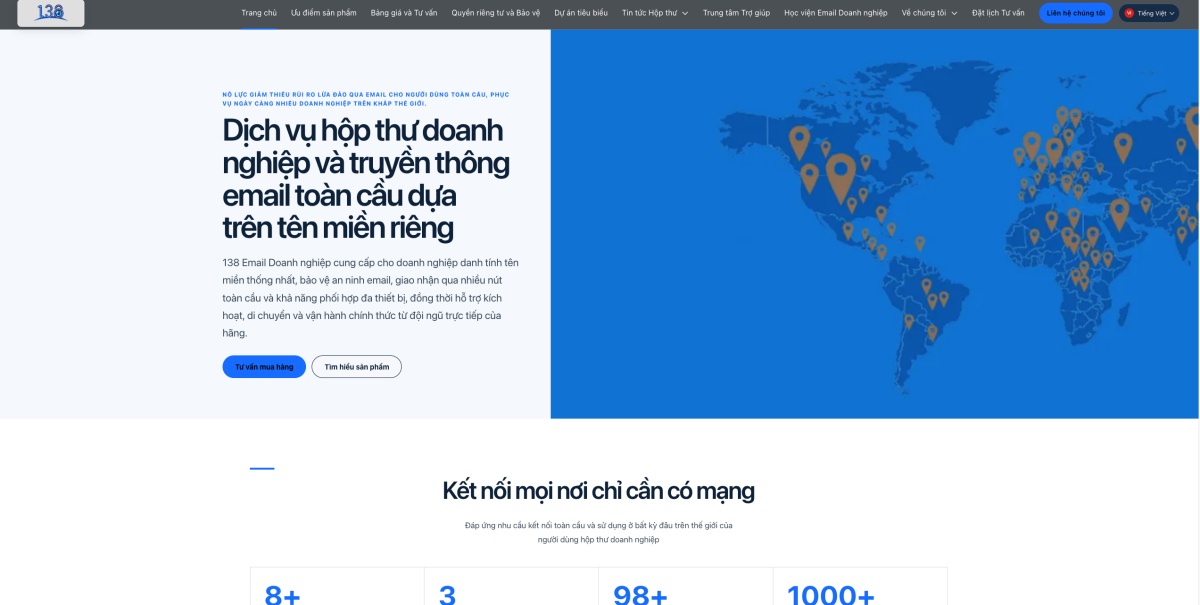
138 Enterprise Email | Vietnamese AI Digital Asset Website Case Study
An AI-driven digital asset website for enterprise email tailored to Vietnamese enterpris...
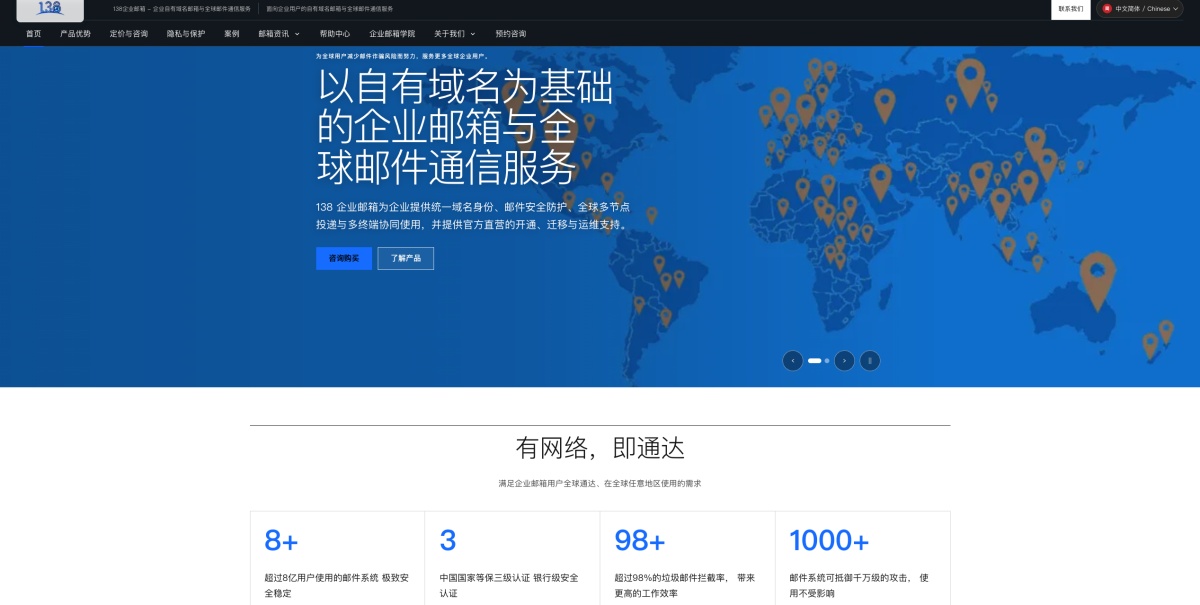
138 Enterprise Email | Chinese AI Digital Asset Website Case Study for Enterprise Services
Developed a Chinese AI digital asset website for an enterprise email service brand. By i...
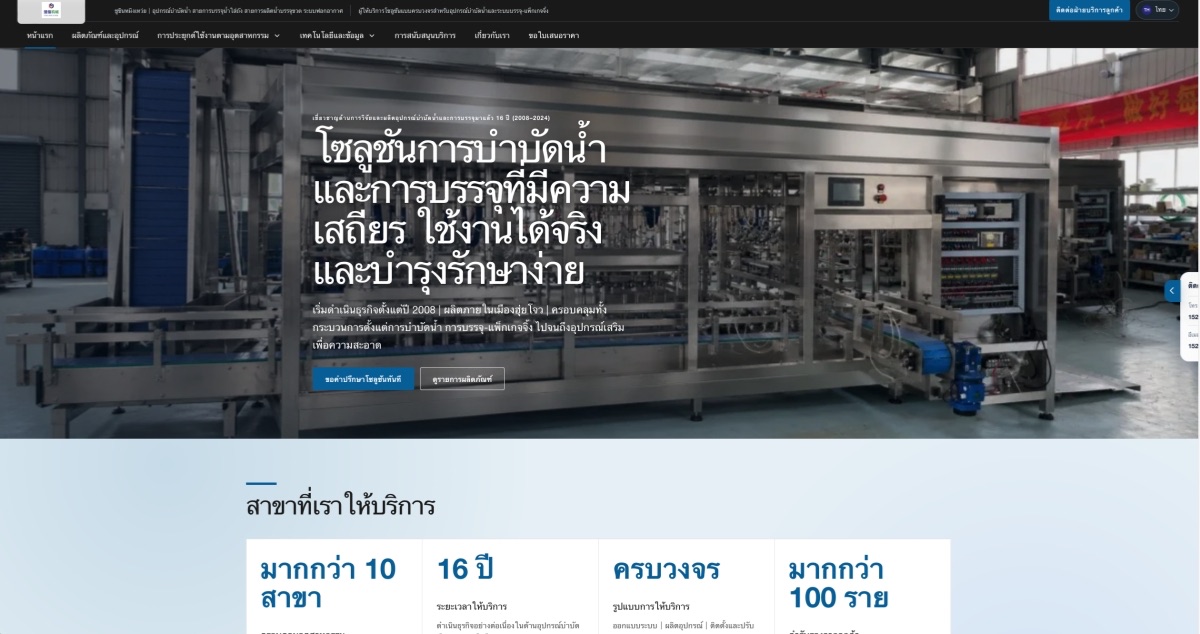
Water Treatment & Filling Equipment Manufacturer | Thai AI Digital Asset Website Case Study
Development of a Thai AI digital asset website for water treatment and filling equipment...