AI Article Generation for Hardware Products: A Practical Field Guide for Website Planning
Who should consider AI article generation for hardware products?
AI Article Generation for Hardware Products is most relevant to manufacturers, equipment suppliers, B2B trading companies, and foreign trade enterprises that need to explain complex products clearly on their websites. It is especially useful when a company has many models, technical parameters, application scenarios, installation conditions, maintenance questions, or export-market language requirements.
For a hardware company, the problem is usually not a lack of information. The problem is that useful information is scattered across product manuals, quotation documents, engineering notes, sales FAQs, exhibition materials, and internal files. A website built only with brief product titles and a few photos often fails to answer real buyer questions. AI-assisted article generation can help organize these materials into structured web content, but only if the enterprise first defines what information is approved for public use.
This approach is suitable for:
- Hardware and equipment manufacturers that need product pages with clear specifications, applications, and selection guidance.
- Foreign trade companies building independent sites for overseas buyers and search visibility.
- Multi-brand or multi-site enterprises that need consistent product messaging across regions or business lines.
- Technical sales teams that want reusable answers to repeated questions about compatibility, installation, maintenance, and procurement.
It is less suitable for companies that expect AI to invent product advantages, create unverifiable claims, or replace engineering review. In hardware marketing, credibility depends on accurate facts.
What counts as a good use case?
A practical use case should reduce explanation cost and create reusable website assets. The following content types are usually appropriate when based on authentic enterprise materials:
| Content type | Business question it answers | Typical source materials |
|---|---|---|
| Product detail page | What is this product, and what are its key parameters? | Product manual, specification sheet, model list |
| Selection guide | How should buyers choose the right model or configuration? | Selection criteria, application conditions, technical notes |
| Comparison explanation | What differences matter between models or solutions? | Feature tables, application limits, configuration options |
| Application scenario | Where and how can the product be used? | Industry experience, installation conditions, project notes |
| Case summary | Has the company handled similar requirements before? | Approved delivery records, process description, outcomes |
| FAQ | What do buyers ask before inquiry? | Sales questions, after-sales issues, pricing and delivery concerns |
For example, a water treatment or filling equipment manufacturer may need pages that explain equipment capacity, applicable bottle types, installation conditions, maintenance requirements, and market-specific buyer concerns. The same product knowledge can support a Chinese corporate site, an Indonesian market page, or another language version if the underlying knowledge base is structured properly. The point is not to generate more text, but to convert verified product knowledge into pages that help buyers understand and inquire.
Evaluation signals for technical assessors
When evaluating an AI article generation system for a hardware website, technical assessors should look beyond the demo output. The following signals help separate useful systems from superficial content tools.
1. Source-of-truth control
The system should be able to use enterprise materials as the source of truth. Product parameters, service boundaries, and application claims should be traceable to approved documents. If the AI output cannot be checked against a manual, specification sheet, or internal knowledge entry, the risk of inaccurate statements increases.
2. Review and approval workflow
AI-generated drafts should not be published automatically. For hardware products, a responsible person should verify model numbers, units, compatibility statements, safety notes, certifications, and commercial terms. A reliable process separates drafting, review, approval, and publication.

3. Structured content reuse
A good system does not only produce isolated articles. It should support reusable content blocks such as product introductions, FAQs, technical explanations, and application scenarios. These blocks can later support product pages, multilingual sites, sales materials, and search optimization.
4. SEO and GEO readiness
Hardware buyers may use traditional search engines, AI assistants, or platform-based research before contacting a supplier. Website content should therefore be written for both search indexing and AI understanding. This means clear headings, direct answers, product context, FAQ coverage, and internal links to relevant product or solution pages. However, long-term visibility should be treated as an ongoing operation, not a guaranteed ranking promise.
5. Multilingual and multi-site discipline
For export-oriented hardware companies, translation alone is not enough. Multilingual content should preserve technical meaning, local buyer concerns, and consistent product positioning. If a company manages multiple brands, regions, or product lines, the system should support controlled reuse instead of creating duplicated or inconsistent pages.
Implementation steps for a first deployment
For a company deploying AI article generation for the first time, a conservative rollout is usually safer than mass content production.
Step 1: Define the product scope
Start with one product family or one market segment. For example, choose a core equipment line that generates frequent inquiries. Avoid trying to cover every SKU at once.
Step 2: Collect approved materials
Gather product manuals, specification sheets, approved FAQs, application notes, service descriptions, and any verified case materials. Remove or mark any information that is outdated, confidential, or not approved for public use.
Step 3: Build the content framework
Decide which pages are needed: product overview pages, model comparison pages, application guides, FAQs, and contact or inquiry paths. This framework should align with the website structure so that articles support actual navigation and internal linking.
Step 4: Generate drafts with clear constraints
Use AI to draft content based on the approved materials. The prompt or system configuration should require conservative claims, clear structure, and no invented specifications. Any missing data should be flagged for human confirmation rather than filled automatically.
Step 5: Review technical and commercial accuracy
Engineering, sales, and after-sales teams should review the drafts. Check whether parameters, units, compatibility statements, delivery explanations, and service commitments are accurate. If a certification, customer name, or performance figure cannot be verified, it should not appear.
Step 6: Publish, measure, and update
After publication, monitor inquiry quality, search visibility, and user questions. Hardware content should be updated when products change, specifications are revised, or new buyer questions appear. This turns the website into a continuously maintained digital asset rather than a one-time project.
Boundaries and risks to manage
AI article generation can improve efficiency, but it has clear boundaries. Hardware companies should be especially careful in the following areas:
- Technical accuracy: AI may produce plausible but incorrect statements if source materials are incomplete. Every parameter should be verified.
- Certifications and compliance: Do not publish certification claims unless they are current and documented.
- Customer references: Use case names or project details only when permission and verification exist.
- Performance promises: Avoid absolute claims such as guaranteed rankings, guaranteed inquiries, or guaranteed AI recommendations.
- Multilingual risk: Machine-translated technical terms can mislead buyers if not reviewed by a responsible person.
- Content duplication: Reusing the same text across multiple sites without adaptation may reduce clarity and search value.
The safest principle is simple: AI improves production efficiency, but enterprise knowledge and professional judgment determine credibility.
How this connects to website construction and selection
For companies in the website construction or website selection stage, AI article generation should not be evaluated as a standalone writing tool. It should be assessed as part of a broader digital asset system. The website, enterprise knowledge base, AI content production, SEO/GEO optimization, and multilingual capabilities need to work together.
Huizhou Gaia Network Technology Co., Ltd. positions its Enterprise AI Digital Asset Growth System around this idea: using authentic enterprise materials to connect official websites, knowledge, content, and search operations. For manufacturing, B2B, foreign trade, and professional service enterprises, the practical value is not merely publishing more articles. The value is building content that can be found in search, understood by AI systems, reused across languages or sites, and continuously improved through operation.
Before selecting a package or service scope, enterprises should clarify their site count, language needs, content volume, data migration requirements, and service depth. Specific quotas, service boundaries, and delivery cycles should be confirmed in the final contract rather than assumed from reference materials.
Next steps
If you are evaluating AI Article Generation for Hardware Products, start with a small evidence-based pilot. Choose one product line, collect approved materials, define the required page types, and establish a review workflow. Then decide whether the output can support product pages, FAQs, multilingual expansion, and long-term content operation.
The most useful next step is not to ask whether AI can write articles. The better question is: can your enterprise turn verified product knowledge into website assets that support buyer understanding, search visibility, and continuous inquiry generation?
Recommended
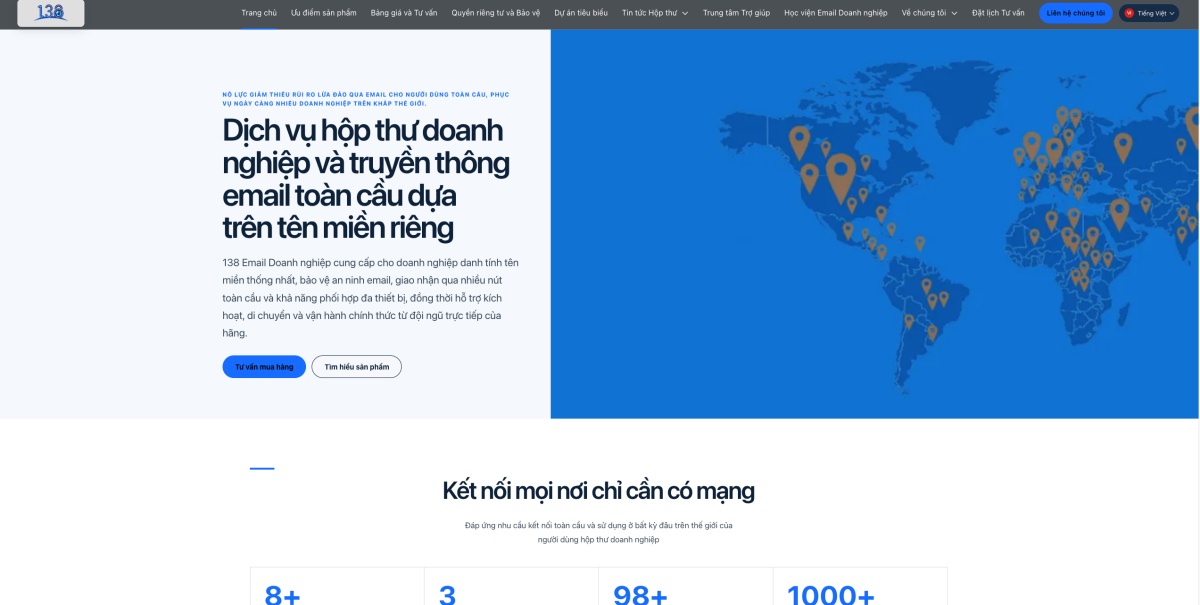
138 Enterprise Email | Vietnamese AI Digital Asset Website Case Study
An AI-driven digital asset website for enterprise email tailored to Vietnamese enterpris...
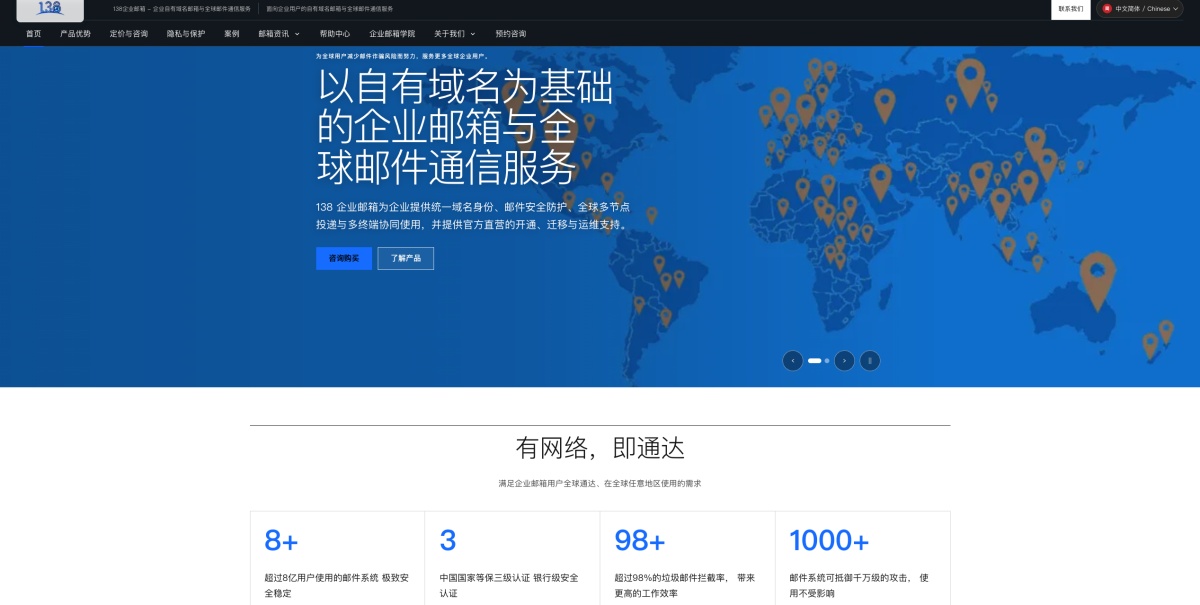
138 Enterprise Email | Chinese AI Digital Asset Website Case Study for Enterprise Services
Developed a Chinese AI digital asset website for an enterprise email service brand. By i...
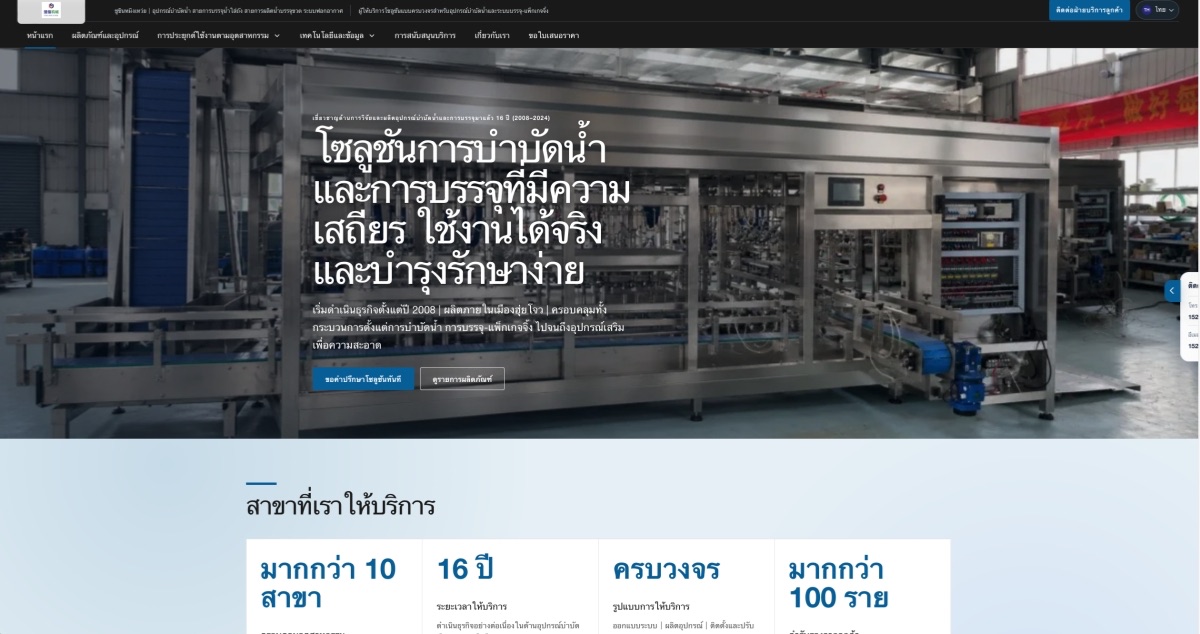
Water Treatment & Filling Equipment Manufacturer | Thai AI Digital Asset Website Case Study
Development of a Thai AI digital asset website for water treatment and filling equipment...