What Are Enterprise AI Digital Assets and How Do They Support Sustainable Business Growth?
Who Should Read This
If you are responsible for maintaining your company's official website, managing product documentation, or coordinating multilingual content across regions, you likely face a recurring question: how do we make our business easier to find—not just today, but continuously?
Enterprise AI digital assets are designed for manufacturing enterprises, B2B companies, foreign trade and overseas expansion businesses, and professional service firms that need their websites to function as more than static brochures. They are also relevant for group or multi-brand organizations managing multiple sites with overlapping content.
What Enterprise AI Digital Assets Actually Are
Enterprise AI digital assets are not a single tool or platform. They are a structured system that integrates:
- An enterprise AI knowledge base
- that organizes your authentic product specifications, manufacturing capabilities, service offerings, and industry expertise into a machine-readable format.
- A smart corporate website
- that presents this knowledge through clear information architecture, optimized for both human visitors and AI crawlers.
- AI-assisted content growth
- that produces product pages, solution guides, case studies, and FAQ content based on your verified materials.
- SEO and GEO optimization
- that balances traditional search engine visibility with AI search understanding, citation, and recommendation potential.
- Multilingual and multi-site management
- that allows content reuse and consistent messaging across different markets and brand entities.
The core principle: all content originates from your authentic enterprise materials. Nothing is fabricated. Everything is auditable and reusable.
Why This Matters for Business Growth
Traditional websites often become outdated quickly. Content is created once, published, and rarely updated. When search algorithms change or AI models evolve, these sites lose visibility.
Enterprise AI digital assets take a different approach. They treat your website as a living system where:
- Knowledge accumulates continuously. Every product update, technical clarification, or customer question becomes part of your knowledge base.
- Content is produced systematically. Instead of ad-hoc blog posts, content follows a structured framework covering products, industries, application scenarios, cases, and FAQs.
- Search and AI operations are integrated. Your site is optimized not just for keyword rankings, but for AI models to understand your expertise and cite your content when users ask relevant questions.
- Multilingual expansion is efficient. Core content is created once and adapted for different markets, reducing duplication and inconsistency.
This approach does not promise fixed rankings or guaranteed customer acquisition. It builds sustainable digital assets that improve over time through continuous optimization.
Step-by-Step Implementation Path
Step 1: Audit Your Existing Materials
Before building anything, collect and verify your current product documentation, technical specifications, service descriptions, and customer FAQs. Identify gaps, outdated information, and content that exists only in internal systems.
Checkpoint: You should have a clear inventory of what authentic materials you can use as the foundation.
Exception: If your materials are scattered across multiple departments or formats, start with one product line or business unit as a pilot.
Step 2: Structure Your Enterprise Knowledge Base
Organize your materials into categories that reflect how customers search and how AI models process information. Typical categories include:
- Product details (specifications, parameters, applications)
- Manufacturing capabilities (processes, materials, quality control)
- Service offerings (implementation, support, customization)
- Industry solutions (use cases by sector or scenario)
- Customer cases (with verified outcomes)
- FAQs (addressing common decision-making concerns)
Checkpoint: Your knowledge base should be structured so that both humans and AI systems can navigate it logically.
Exception: If you operate in a highly regulated industry, ensure all content passes compliance review before publication.
Step 3: Build or Upgrade Your Smart Website
Your website should reflect the structure of your knowledge base. Key elements include:
- Clear navigation that separates products, solutions, cases, and resources
- Product pages with complete specifications and application scenarios
- Solution pages organized by industry or use case
- A dedicated FAQ section addressing price, delivery, compatibility, after-sales, and certification questions
- Multilingual support with proper hreflang implementation for international markets
Checkpoint: Your website should load quickly, display correctly on mobile devices, and have a logical URL structure.
Exception: If you manage multiple brands or regional sites, implement a centralized content management system to avoid duplication.
Step 4: Implement AI Content Growth
Use your knowledge base to generate content systematically. This includes:
- Product comparison guides and selection criteria
- Industry-specific application articles
- Technical explainers for complex features
- Case studies with verified results
- FAQ updates based on customer inquiries
Checkpoint: Content should be reviewed and approved by subject matter experts before publication. AI assists production, but human judgment ensures accuracy.
Exception: Avoid publishing content that cannot be verified against your authentic materials. Quality over quantity.
Step 5: Optimize for SEO and GEO
Traditional SEO focuses on keyword rankings. GEO (Generative Engine Optimization) focuses on how AI models understand and cite your content. Both require:
- Clear, structured content that answers specific questions
- Proper use of headings, lists, and schema markup
- Internal linking that connects related topics
- External signals like backlinks and brand mentions
- Regular updates to keep content fresh and relevant
Checkpoint: Monitor both traditional search rankings and AI citation opportunities. Adjust your strategy based on performance data.
Exception: Do not expect immediate results. SEO and GEO are long-term efforts that require consistent optimization.
Step 6: Establish Continuous Operations
Enterprise AI digital assets are not a one-time project. They require ongoing maintenance:
- Regular content updates based on product changes or customer feedback
- Performance monitoring and strategy adjustments
- Knowledge base expansion as your business grows
- Multilingual content synchronization across markets
Checkpoint: Assign clear ownership for content operations. This is not a task for IT alone—it requires collaboration between marketing, sales, and technical teams.
Exception: If resources are limited, prioritize high-impact content areas first and expand gradually.
Boundaries and Risk Considerations
Enterprise AI digital assets are powerful, but they have clear boundaries:
- No guaranteed rankings.*
- Search algorithms and AI models change frequently. No provider can promise fixed positions or guaranteed customer acquisition.
- Content quality depends on your materials.*
- If your product documentation is incomplete or outdated, your digital assets will reflect that.
- Implementation requires internal coordination.*
- Success depends on collaboration between departments, not just external vendors.
- Results take time.*
- This is a long-term strategy, not a quick fix. Expect measurable improvements over months, not weeks.
Next Steps
If you are evaluating whether enterprise AI digital assets fit your business, start by assessing your current website and content operations:
- Is your website updated regularly with accurate product and service information?
- Do you have a structured knowledge base that your team can reference?
- Are you producing content systematically, or is it ad-hoc?
- Have you considered how AI models might understand and cite your business?
If you answered "no" to most of these questions, it may be time to explore a structured approach to building enterprise AI digital assets.
Huizhou Gaia Network Technology Co., Ltd. provides an Enterprise AI Digital Asset Growth System that integrates knowledge bases, smart websites, AI content production, SEO/GEO optimization, and multilingual multi-site management. Our approach is based on your authentic materials, with no promises of fixed rankings—only sustainable asset accumulation and continuous optimization.
Contact us to discuss your specific situation and explore whether this system fits your business needs.
Recommended
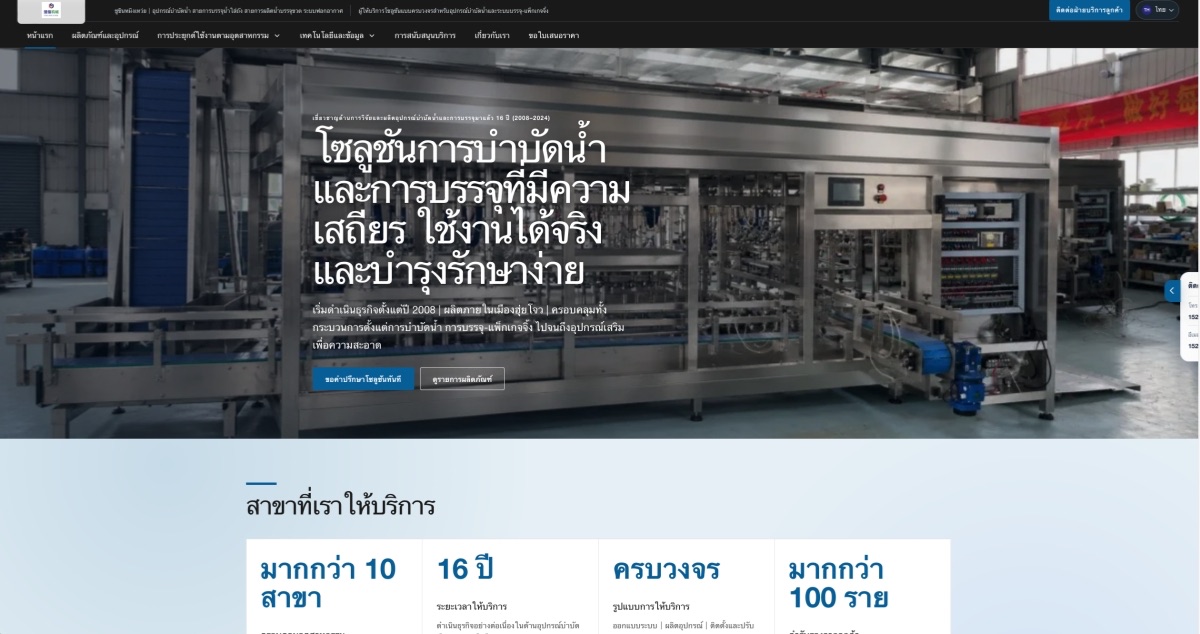
Water Treatment & Filling Equipment Manufacturer | Thai AI Digital Asset Website Case Study
Development of a Thai AI digital asset website for water treatment and filling equipment...
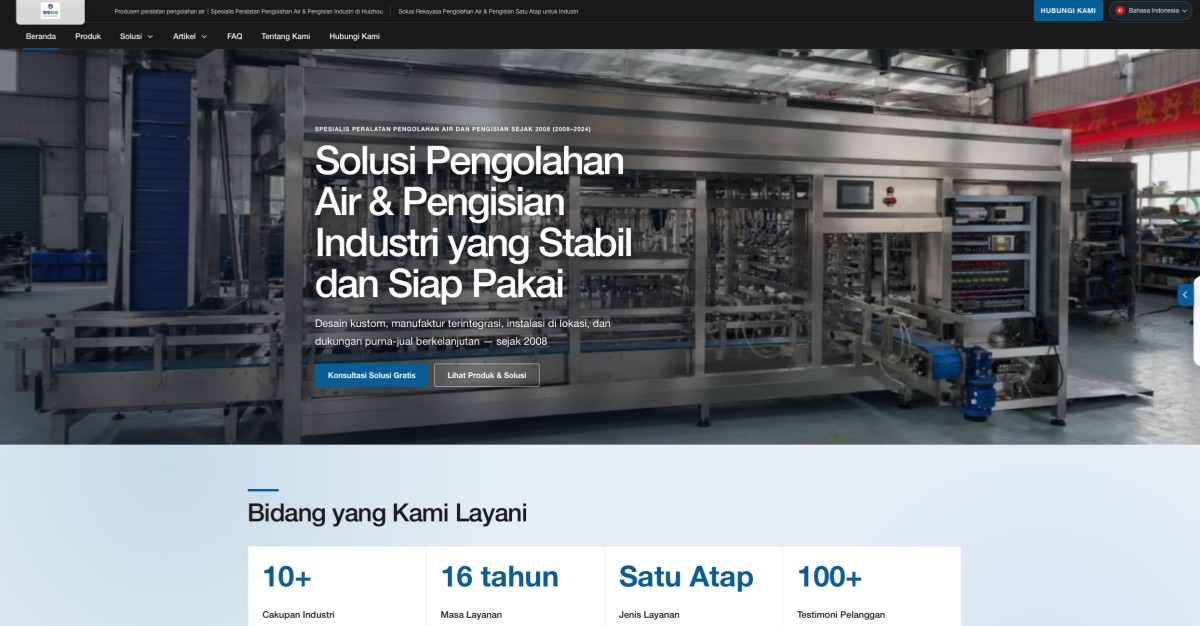
Water Treatment & Filling Equipment Manufacturer | Indonesian AI Digital Asset Website Case Study
An AI-powered digital asset website built for the Indonesian market, tailored for a wate...
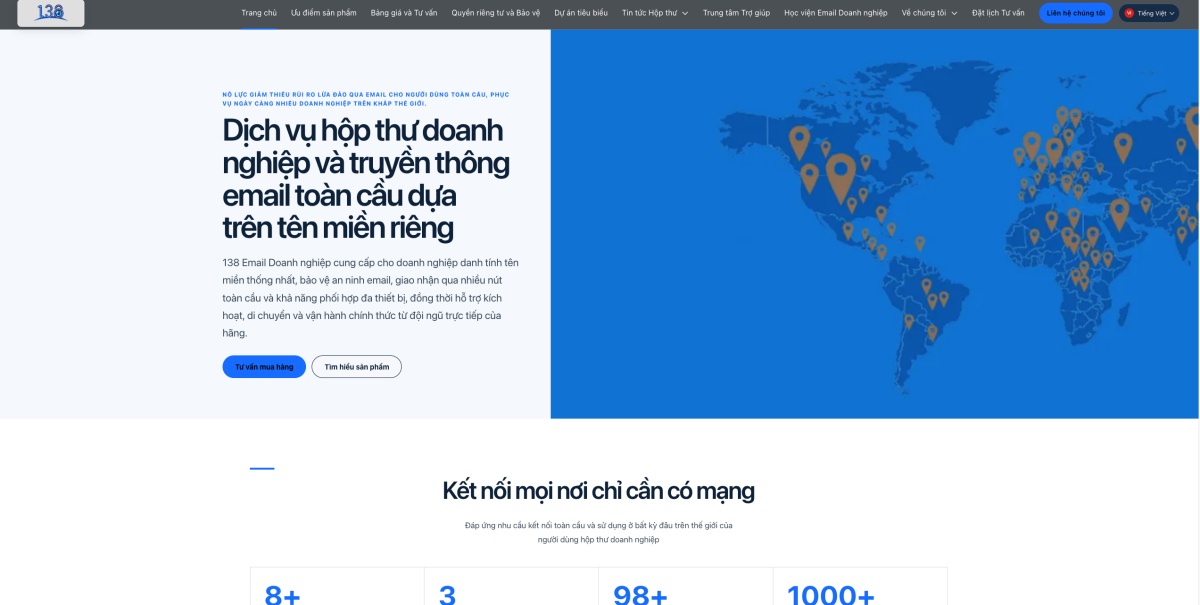
138 Enterprise Email | Vietnamese AI Digital Asset Website Case Study
An AI-driven digital asset website for enterprise email tailored to Vietnamese enterpris...