
Industry News Operations for Industrial Robots: Concepts, Use Cases, and Next Steps
When a manufacturing enterprise publishes an update about a new collaborative robot payload capacity, a change in safety standards, or a regional deployment trend, that content can either disappear after a week or become a reusable asset that supports search visibility and AI citation for years. The difference lies in how industry news operations are structured, governed, and connected to the enterprise's core knowledge base.
This article explains what industry news operations for industrial robots actually involve, who they serve, where they create measurable value, and where their boundaries lie. It is written for technical evaluators and operations leads who need a clear decision checklist before committing resources.
What Industry News Operations for Industrial Robots Mean in Practice
Industry news operations refer to the systematic collection, structuring, publishing, and maintenance of news-type content related to industrial robots and automation equipment. Unlike general marketing articles, this content is anchored in verifiable facts: product releases, application case references, regulatory updates, integration techniques, and market signals from specific regions or industries.
For an industrial robot manufacturer or system integrator, this means turning raw inputs such as engineering bulletins, trade show announcements, or customer deployment notes into structured pages that can be indexed by search engines and referenced by AI systems. The content is not written to chase short-term traffic spikes. It is written to accumulate long-term digital assets that support both traditional SEO and Generative Engine Optimization (GEO).
Who This Approach Serves
Industry news operations for industrial robots are most relevant to three types of enterprises:
- Industrial robot manufacturers and system integrators
- that need to explain product capabilities, application scenarios, and technical boundaries to technical buyers.
- Manufacturing enterprises
- that deploy robotic cells and want to document integration experience, maintenance practices, and upgrade paths for internal and external audiences.
- B2B service providers and foreign trade enterprises
- that serve overseas markets and need multilingual, region-specific news content to support local search and AI discovery.
These audiences share a common need: they must present technical information in a way that is auditable, reusable, and aligned with how buyers and AI systems actually search for answers.
Practical Use Cases
1. Product and Technology Updates
When a new robot model is released or an existing controller receives a firmware update, the news page should link directly to the corresponding product detail page and knowledge base entry. This creates a traceable content chain that helps both search engines and AI systems understand the relationship between news, product specifications, and application guidance.
2. Application Scenario Documentation
News content can describe how a specific robot configuration was applied in a welding, palletizing, or assembly scenario. The page should reference real process parameters where available, note the materials and cycle times involved, and clarify which parts of the deployment are repeatable versus customer-specific.
3. Regional and Multilingual Expansion
For enterprises serving Southeast Asia, Europe, or other regions, industry news must be adapted to local technical terminology, compliance references, and buyer expectations. A single source of truth in the enterprise knowledge base allows the same core update to be published across multiple language versions without creating conflicting information.
4. FAQ and Decision Support
News pages should naturally connect to FAQ content that addresses buyer concerns such as integration compatibility, maintenance intervals, or certification requirements. This reduces repetitive pre-sales inquiries and improves the enterprise's visibility in AI-generated answers.
Implementation Boundaries and Risk Points
Industry news operations are not a substitute for product documentation or verified case studies. Several boundaries must be respected:
- No guaranteed rankings or AI citation promises.*
- Search and AI systems evolve continuously. Content operations should focus on long-term asset accumulation rather than fixed performance commitments.
- Content must be auditable.*
- Every news page should be traceable to an internal source such as an engineering note, a product release, or a verified deployment record. Unverified claims reduce credibility and create compliance risk.
- Multilingual consistency requires governance.*
- When the same news is published in multiple languages, terminology, units, and compliance references must be reviewed to avoid contradictions across regions.
- News is one layer of the content system.*
- It works best when connected to product pages, solution pages, case studies, and FAQ content within a unified knowledge base.
Decision Checklist for Technical Evaluators
Before launching or restructuring industry news operations for industrial robots, evaluate the following:
- Is there a defined source of truth for technical claims, such as an enterprise knowledge base or product specification system?
- Can each news item be linked to at least one product page, solution page, or FAQ entry?
- Is there a review process to ensure content is auditable before publication?
- Are multilingual and multi-site requirements considered from the start, rather than added later?
- Is the team prepared for a long-term content operation cycle rather than short-term campaign output?
If the answer to most of these questions is yes, the enterprise is ready to structure industrial robot industry news as a sustainable digital asset. If not, the first step should be to establish the underlying knowledge base and content governance framework.
Next Steps
Enterprises that want to move from ad hoc news publishing to a structured industry news operation should start by mapping their existing technical materials, defining content ownership, and connecting news output to the enterprise AI knowledge base. This creates the foundation for consistent SEO and GEO performance across products, regions, and languages.
Huizhou Gaia Network Technology Co., Ltd. supports manufacturing, B2B, foreign trade, and professional service enterprises in building this foundation through the Enterprise AI Digital Asset Growth System, which integrates enterprise knowledge bases, smart websites, AI content growth, SEO and GEO optimization, and multilingual multi-site management into a continuous operation model.
For teams evaluating how to apply this approach to industrial robot content, a structured diagnostic of current website visibility and AI discoverability is a practical starting point.
Recommended
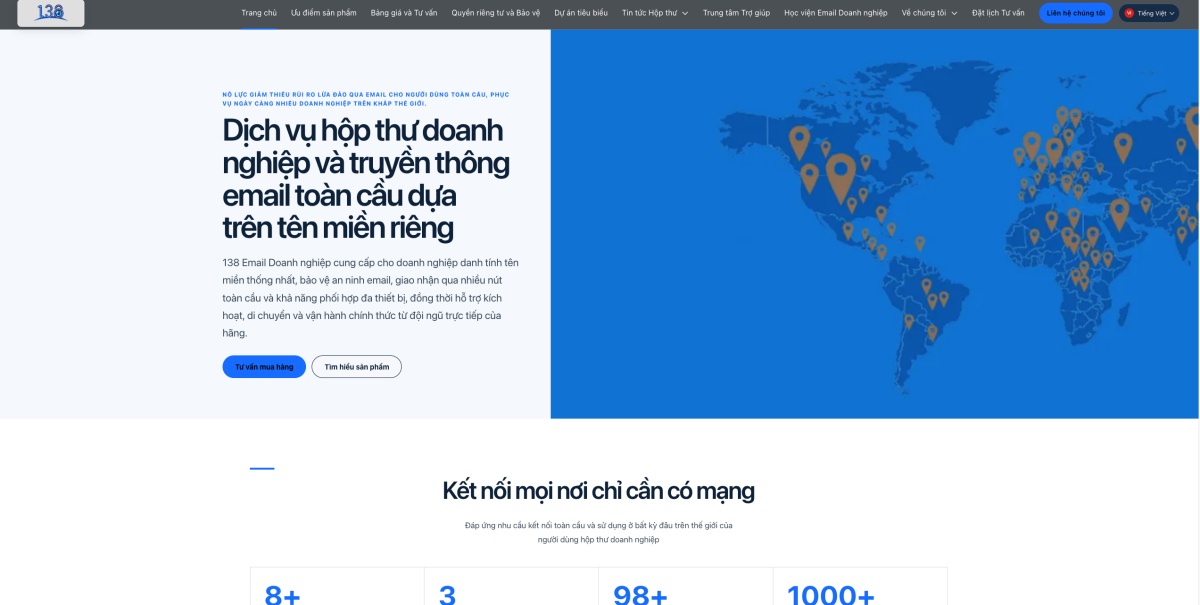
138 Enterprise Email | Vietnamese AI Digital Asset Website Case Study
An AI-driven digital asset website for enterprise email tailored to Vietnamese enterpris...
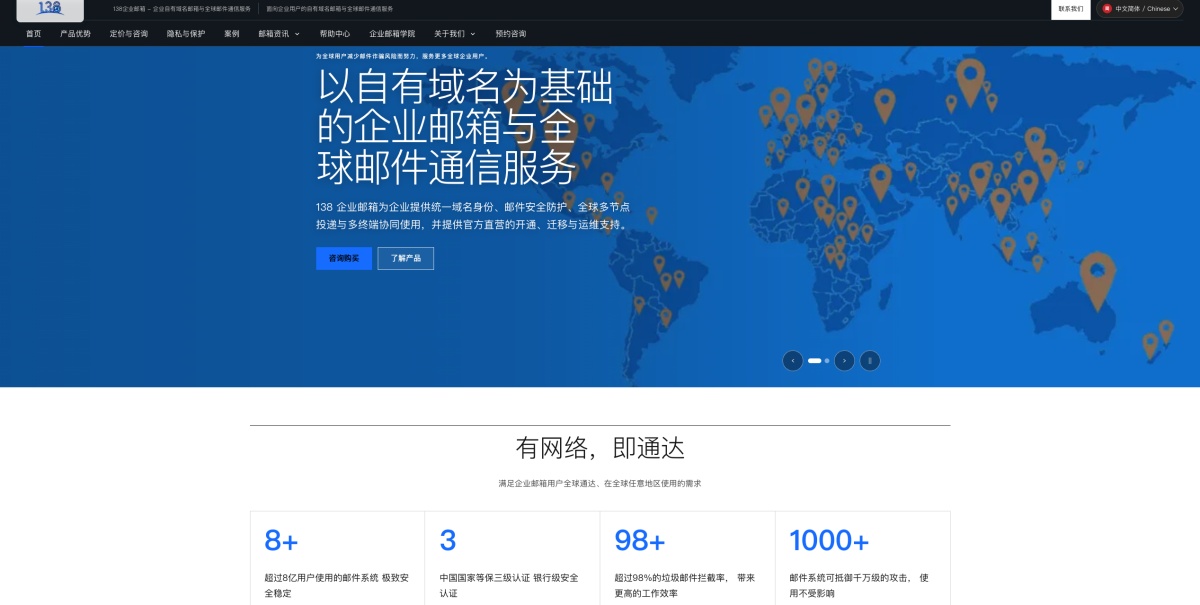
138 Enterprise Email | Chinese AI Digital Asset Website Case Study for Enterprise Services
Developed a Chinese AI digital asset website for an enterprise email service brand. By i...
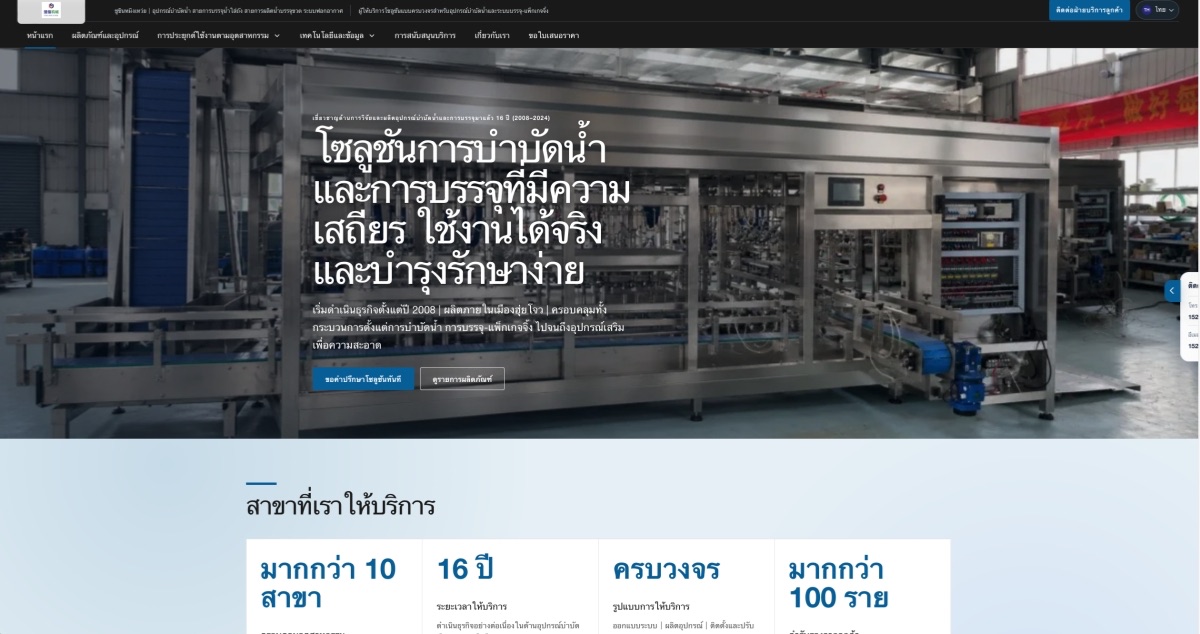
Water Treatment & Filling Equipment Manufacturer | Thai AI Digital Asset Website Case Study
Development of a Thai AI digital asset website for water treatment and filling equipment...