Industrial Robot Solutions Pages: Configuration and Implementation Guide
Who This Guide Is For
This guide is designed for manufacturing enterprises, B2B companies, and foreign trade businesses that are evaluating or deploying industrial robot solutions pages on their corporate websites. If your organization produces or integrates industrial robots, automation cells, or collaborative robotic systems, and you need a web presence that supports both traditional search visibility and AI-driven discovery, this guide will help you structure your approach.
The focus here is not on robot hardware specifications, but on how to configure and implement solution pages that accurately represent your industrial robot offerings, align with buyer search intent, and integrate into a broader Enterprise AI Digital Asset Growth System.
Solution Composition: What Makes Up an Industrial Robot Solutions Page
An effective industrial robot solutions page is not a single product listing. It is a structured digital asset that connects multiple layers of enterprise knowledge. Based on the Enterprise AI Digital Asset Growth System framework, a well-configured solution page typically includes:
1. Enterprise AI Knowledge Base Integration
The foundation of any solution page is a verified enterprise AI knowledge base. This includes:
- Product specifications and technical parameters (payload, reach, axes, cycle time)
- Application scenarios (welding, palletizing, assembly, inspection)
- Industry-specific use cases (automotive, electronics, food processing)
- Service offerings (installation, training, maintenance, remote diagnostics)
- FAQ content derived from real customer inquiries
Without a structured knowledge base, solution pages become static brochures that fail to support AI search understanding or long-term content reuse.
2. Smart Corporate Website Framework
The solution page must be built within a smart corporate website architecture that supports:
- Multilingual content delivery (critical for foreign trade and overseas expansion)
- Multi-site management for group or multi-brand enterprises
- Internal linking to related products, cases, and diagnostic tools
- Clear navigation paths from solution pages to contact or demo requests
3. AI Content Growth Engine
Solution pages are not "set and forget." They require continuous content growth through:
- Regular updates to application scenarios and case references
- Expansion of FAQ sections based on new customer questions
- Integration of industry news and technical insights
- Optimization for both traditional SEO and Generative Engine Optimization (GEO)
4. SEO and GEO Optimization Layer
Industrial robot buyers use both traditional search engines and AI-powered research tools. Your solution pages must be optimized for:
- Long-tail keywords (e.g., "6-axis robot for palletizing food products")
- Semantic relevance to industry terms and application contexts
- AI citation potential (structured data, clear headings, verifiable claims)
- Multilingual keyword alignment across target markets
---
Prerequisites: What You Need Before Implementation
Before configuring industrial robot solutions pages, ensure your organization has:
Verified Enterprise Materials
All content must be based on authentic enterprise materials. This includes:
- Official product documentation
- Verified application case studies
- Real customer feedback and FAQ records
- Accurate technical specifications
Do not publish unverified performance claims, unconfirmed certifications, or fabricated customer names. The Enterprise AI Digital Asset Growth System emphasizes that content must be auditable and reusable.
Clear Solution Boundaries
Define what your industrial robot solutions actually cover:
- Which robot models or configurations are included
- What industries or applications are supported
- What services are provided (installation, training, maintenance)
- What is explicitly not covered (to avoid misaligned inquiries)
Multilingual and Multi-Site Readiness
If you serve overseas markets or operate multiple brands, confirm:
- Which languages are required for initial launch
- Whether content will be managed centrally or per-region
- How multi-site architecture will handle duplicate or localized content
Operational Commitment
Solution pages require ongoing maintenance. Confirm that your team can support:
- Regular content updates
- FAQ expansion based on new inquiries
- Performance monitoring and optimization
- Coordination between technical, marketing, and sales teams
---
Implementation Steps: A Structured Rollout Path
Step 1: Knowledge Base Structuring
Begin by organizing your enterprise knowledge base around industrial robot solutions:
- Categorize products by type (articulated, SCARA, delta, collaborative)
- Map application scenarios to specific industries
- Document service offerings and support capabilities
- Compile verified FAQ content from sales and support teams
Step 2: Solution Page Architecture
Design the solution page structure to support both user navigation and AI understanding:
- Clear H1 headings that match search intent (e.g., "Industrial Robot Solutions for Automotive Welding")
- Structured sections for product overview, application scenarios, technical parameters, and service support
- Internal links to related product pages, case studies, and diagnostic tools
- Multilingual toggle or region-specific content paths
Step 3: Content Production and Optimization
Develop content that balances technical accuracy with search visibility:
- Use verified enterprise materials as the source of truth
- Write for both human readers and AI comprehension (clear structure, verifiable claims)
- Optimize for long-tail keywords and semantic relevance
- Ensure content is reusable across multilingual and multi-site deployments
Step 4: SEO and GEO Integration
Implement optimization layers that support both traditional and AI-driven discovery:
- Meta titles and descriptions aligned with search intent
- Structured data markup for product specifications and application scenarios
- Clear heading hierarchy and content organization for AI citation
- Multilingual keyword optimization for target markets
Step 5: Continuous Operation and Monitoring
Solution pages are digital assets that require ongoing management:
- Monitor search performance and AI visibility
- Update content based on new product launches or application cases
- Expand FAQ sections based on customer inquiries
- Adjust optimization strategies based on performance data
---
Risk Boundaries and Common Pitfalls
Risk 1: Unverified Claims
Signal: Publishing performance data, certifications, or customer names without verification.
Evaluation Criteria: All claims must be traceable to official enterprise materials.
Risk: Loss of credibility, potential legal exposure, AI systems flagging content as unreliable.
Practical Example: A manufacturer publishes "Industry-leading cycle time of 0.5 seconds" without official test reports. AI systems may cite this claim, but buyers who verify find no supporting documentation.
Risk 2: Static Content
Signal: Solution pages that are published once and never updated.
Evaluation Criteria: Content must be reviewed and updated at least quarterly.
Risk: Decreased search visibility, reduced AI citation potential, misalignment with current product offerings.
Practical Example: A robot manufacturer launches a new collaborative robot model but does not update solution pages. Buyers searching for "collaborative robot solutions" find outdated information.
Risk 3: Overpromising Results
Signal: Guaranteeing fixed search rankings, guaranteed customer acquisition, or guaranteed AI platform recommendations.
Evaluation Criteria: The Enterprise AI Digital Asset Growth System explicitly states that SEO/GEO is a long-term growth effort with no promises of fixed rankings or guaranteed recommendations.
Risk: Misaligned expectations, damaged trust, potential contractual disputes.
Practical Example: A service provider promises "Top 3 ranking for industrial robot keywords within 3 months." When rankings fluctuate (as they naturally do), the client disputes the service quality.
Risk 4: Ignoring Multilingual Requirements
Signal: Publishing solution pages in only one language for a global market.
Evaluation Criteria: Content must be available in the languages of target markets.
Risk: Lost opportunities in overseas markets, reduced AI visibility in non-English search contexts.
Practical Example: A Chinese robot manufacturer publishes solution pages only in English. Buyers in Southeast Asia searching in local languages cannot find the content.
Suitability Assessment: Is This Approach Right for Your Organization
The Enterprise AI Digital Asset Growth System approach to industrial robot solutions pages is most suitable for:
- Manufacturing enterprises
- that produce industrial robots or automation systems
- B2B companies
- that integrate robotic solutions into larger production lines
- Foreign trade and overseas expansion businesses
- that need multilingual web presence
- Professional service enterprises
- that provide robot integration, maintenance, or consulting
This approach is not suitable for organizations that:
- Expect immediate, guaranteed results from web content
- Cannot commit to ongoing content operation and maintenance
- Lack verified enterprise materials to support content claims
- Operate in highly regulated industries where unverified claims carry legal risk
---
Next Steps and Decision Guidance
If your organization is evaluating industrial robot solutions pages, consider the following actions:
- Audit your enterprise knowledge base: Verify that you have authentic, auditable materials covering products, applications, and services.
- Define solution boundaries: Clearly document what your industrial robot solutions cover and what they do not.
- Assess multilingual needs: Determine which languages and markets are priorities for initial launch.
- Evaluate operational capacity: Confirm that your team can support continuous content updates and optimization.
- Request a diagnostic: Use the free diagnosis tool to evaluate your current website's AI visibility and search performance.
- Consult with implementation partners: Engage with service providers who understand the Enterprise AI Digital Asset Growth System framework and can support knowledge base structuring, solution page configuration, and ongoing operation.
---
Conclusion
Industrial robot solutions pages are not standalone web pages. They are structured digital assets that connect enterprise knowledge, smart website architecture, AI content growth, and SEO/GEO optimization into a cohesive system. By following a structured configuration and implementation approach, manufacturing and B2B enterprises can build solution pages that support both traditional search visibility and AI-driven discovery.
The key is to start with verified enterprise materials, define clear solution boundaries, commit to ongoing operation, and avoid overpromising results. With the right approach, industrial robot solutions pages become sustainable digital assets that help enterprises be more easily discovered by search, understood by AI, and continuously generate customer inquiry opportunities.
Recommended
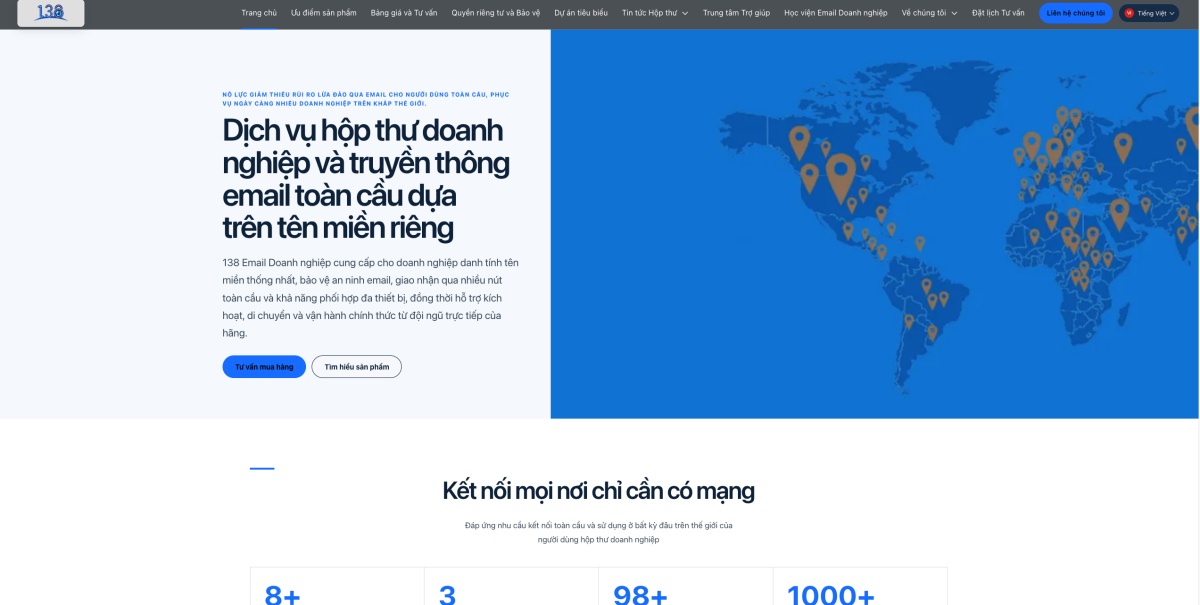
138 Enterprise Email | Vietnamese AI Digital Asset Website Case Study
An AI-driven digital asset website for enterprise email tailored to Vietnamese enterpris...
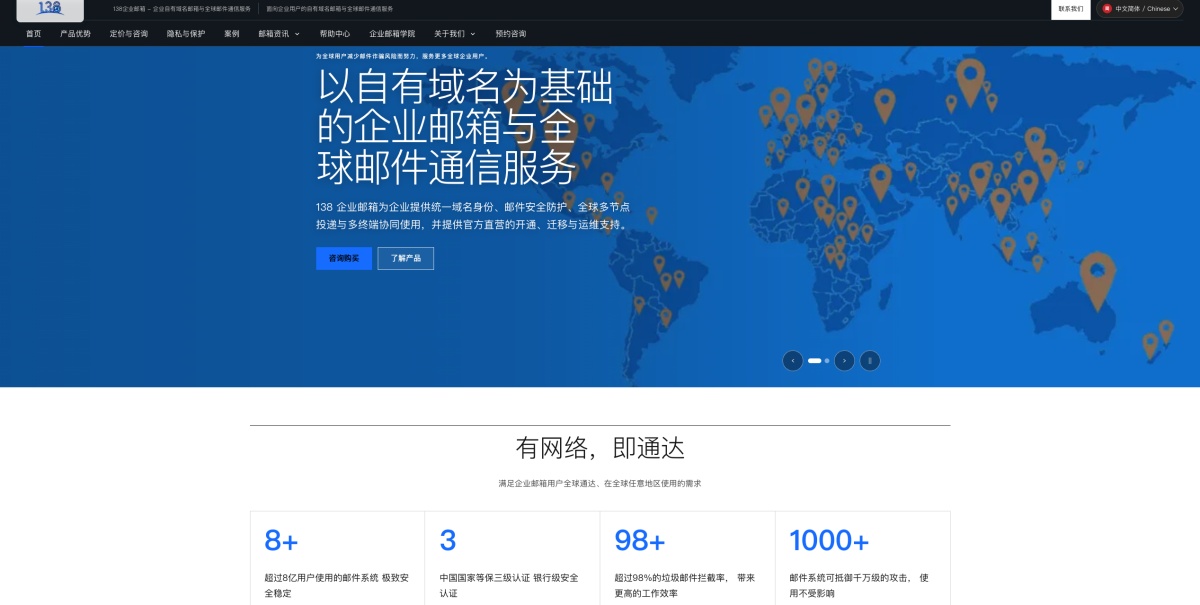
138 Enterprise Email | Chinese AI Digital Asset Website Case Study for Enterprise Services
Developed a Chinese AI digital asset website for an enterprise email service brand. By i...
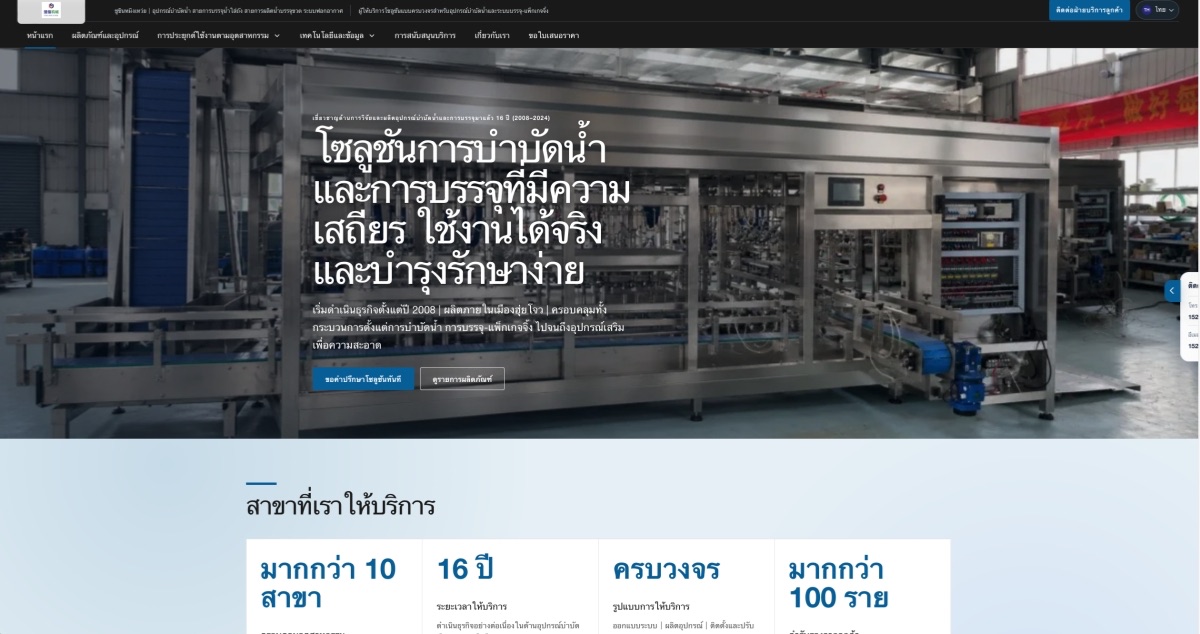
Water Treatment & Filling Equipment Manufacturer | Thai AI Digital Asset Website Case Study
Development of a Thai AI digital asset website for water treatment and filling equipment...