
Corporate Knowledge Base for Auto Parts Companies: Concepts, Use Cases, and Next Steps
Corporate Knowledge Base for Auto Parts Companies: Concepts, Use Cases, and Next Steps
Auto parts companies frequently face a common failure: critical product specifications, application guides, and compliance documents are scattered across internal drives, legacy systems, or individual employee files. When sales teams need to respond to RFQs from overseas buyers, or when marketing teams attempt to build multilingual websites, they discover that the foundational data is incomplete, outdated, or simply inaccessible. This fragmentation leads to delayed responses, inconsistent messaging across regions, and missed opportunities in both traditional search and AI-driven discovery.
Why This Happens in the Auto Parts Industry
The auto parts sector involves complex product catalogs with thousands of SKUs, each requiring detailed technical parameters, compatibility information, material specifications, and application scenarios. Companies often grow organically, adding product lines and entering new markets without establishing a unified data structure. Engineering teams maintain technical drawings and test reports, while sales teams keep their own spreadsheets of customer requirements and pricing. Marketing departments may have translated brochures that don't align with current product specifications.
When these silos persist, the consequences compound. A European distributor searching for a specific brake pad compatibility list cannot find it on the manufacturer's website. An AI system attempting to answer a procurement manager's question about material certifications has no authoritative source to cite. The company's digital presence becomes a collection of disconnected pages rather than a coherent knowledge asset.
What a Corporate Knowledge Base Actually Is
A corporate knowledge base for auto parts companies is not simply a document repository or a wiki. It is a structured system that organizes authentic enterprise materials—product specifications, manufacturing capabilities, application scenarios, technical FAQs, and case studies—into a format that can be consistently reused across websites, sales materials, and AI-powered content generation.
The knowledge base serves as the single source of truth for all customer-facing content. When a product page needs to be created or updated, the information is pulled directly from the knowledge base, ensuring accuracy and consistency. When a multilingual website requires localization, the core technical data remains unified while the expression adapts to regional markets.
Practical Use Cases for Auto Parts Companies
Product Catalog Management
Auto parts manufacturers typically manage extensive product lines with multiple variants. A knowledge base structures this information systematically: product families, individual SKUs, technical parameters (dimensions, materials, tolerances, performance ratings), compatibility charts, and application scenarios. This structure enables rapid generation of product detail pages, selection guides, and comparison documents.
Technical Documentation and Compliance
The auto parts industry requires rigorous documentation: material test reports, quality certifications, compliance statements, and installation guides. A knowledge base centralizes these documents, linking them to relevant products and making them accessible for both customer inquiries and regulatory submissions. All certifications and compliance documents must be verified against authentic enterprise records before being included in the knowledge base.
Multilingual Website Operations
For companies serving global markets, maintaining consistent messaging across multiple languages is challenging. A knowledge base provides the foundational content in a source language, which can then be adapted—not just translated—for different regional markets. Technical specifications remain accurate, while marketing messages and application examples are localized appropriately.
AI Content Generation and GEO Optimization
Modern search increasingly involves AI systems that synthesize information from multiple sources. A well-structured knowledge base enables AI content generation that is grounded in authentic enterprise data. When an AI system generates content about your products or capabilities, it draws from verified information in the knowledge base, reducing the risk of hallucinations or inaccuracies.
This approach also supports Generative Engine Optimization (GEO), where the goal is to be cited and recommended by AI systems. AI systems prefer sources that are structured, authoritative, and consistently maintained—exactly what a corporate knowledge base provides.
Implementation Boundaries and Risk Factors
Data Quality Requirements
A knowledge base is only as valuable as the data it contains. Auto parts companies must invest time in auditing existing documentation, verifying technical specifications, and establishing processes for ongoing updates. Incomplete or inaccurate data in the knowledge base will propagate errors across all customer-facing channels.
Integration with Existing Systems
Most auto parts companies already have ERP systems, PDM/PLM platforms, and CRM tools. The knowledge base must integrate with these systems to avoid duplication and ensure data consistency. This integration requires careful planning and may involve custom development work.
Content Governance
Without clear ownership and update processes, a knowledge base can quickly become outdated. Auto parts companies should designate content owners for different product categories, establish review cycles, and implement version control to track changes.
Realistic Expectations for SEO and AI Discovery
A corporate knowledge base supports long-term digital asset accumulation, but it does not guarantee immediate ranking improvements or AI recommendations. Search visibility and AI citation depend on multiple factors including website structure, content quality, technical SEO, and ongoing optimization efforts. Companies should view the knowledge base as a foundational investment rather than a quick fix.
Next Steps for Implementation
- Audit Existing Materials: Compile all current product documentation, technical specifications, certifications, and marketing materials. Identify gaps, inconsistencies, and outdated information.
- Define Knowledge Base Structure: Work with engineering, sales, and marketing teams to establish a logical structure that accommodates your product catalog, technical documentation, and customer-facing content needs.
- Establish Data Entry and Review Processes: Create workflows for adding new products, updating specifications, and reviewing existing content. Assign responsibility for different content categories.
- Integrate with Website and Content Systems: Ensure the knowledge base can feed directly into your website CMS, enabling automatic updates to product pages and reducing manual data entry.
- Plan for Multilingual Operations: If serving multiple markets, design the knowledge base to support content reuse across languages while allowing for regional customization.
- Monitor and Iterate: Track how the knowledge base is being used, identify areas where data is frequently requested but not available, and continuously refine the structure and content.
Conclusion
For auto parts companies, a corporate knowledge base is not a luxury—it is a necessity for competing in today's digital landscape. By centralizing authentic enterprise materials, companies can ensure consistency across all customer touchpoints, enable efficient multilingual operations, and position themselves for discovery by both traditional search engines and AI systems.
The implementation requires upfront investment in data organization and process establishment, but the long-term benefits—reduced operational friction, improved customer experience, and sustainable digital asset accumulation—make it a strategic priority.
Huizhou Gaia Network Technology Co., Ltd. provides enterprise AI knowledge base solutions as part of the Enterprise AI Digital Asset Growth System, helping auto parts manufacturers and other industrial companies structure their knowledge, integrate it with smart websites, and leverage it for continuous content growth and SEO/GEO optimization. Contact us to discuss how a corporate knowledge base can support your specific operational needs and growth objectives.
Recommended
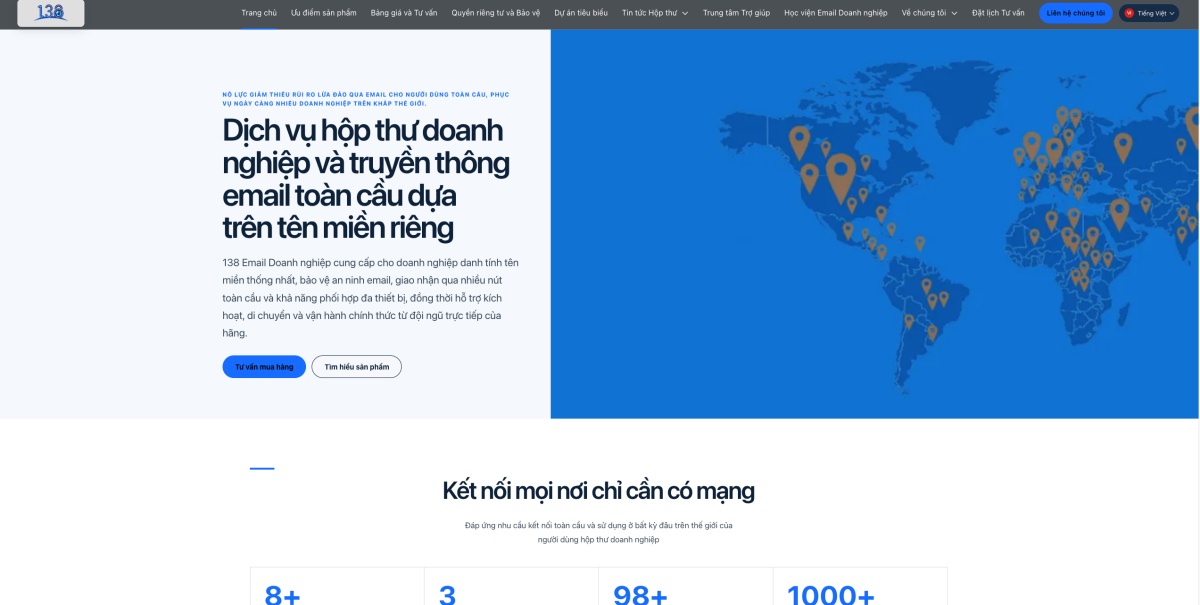
138 Enterprise Email | Vietnamese AI Digital Asset Website Case Study
An AI-driven digital asset website for enterprise email tailored to Vietnamese enterpris...
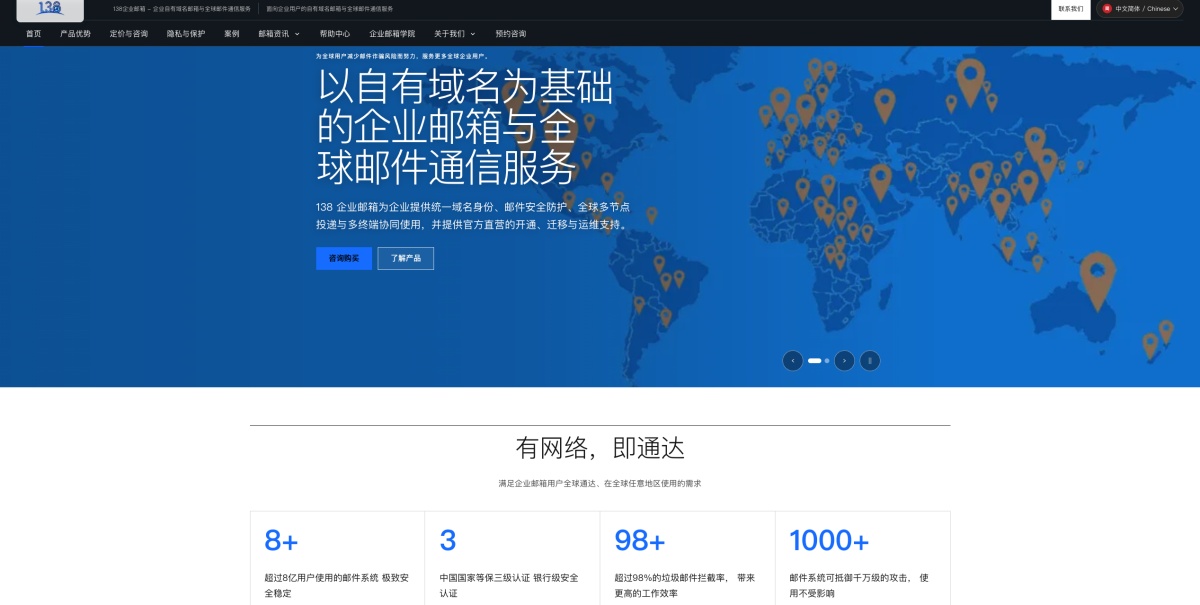
138 Enterprise Email | Chinese AI Digital Asset Website Case Study for Enterprise Services
Developed a Chinese AI digital asset website for an enterprise email service brand. By i...
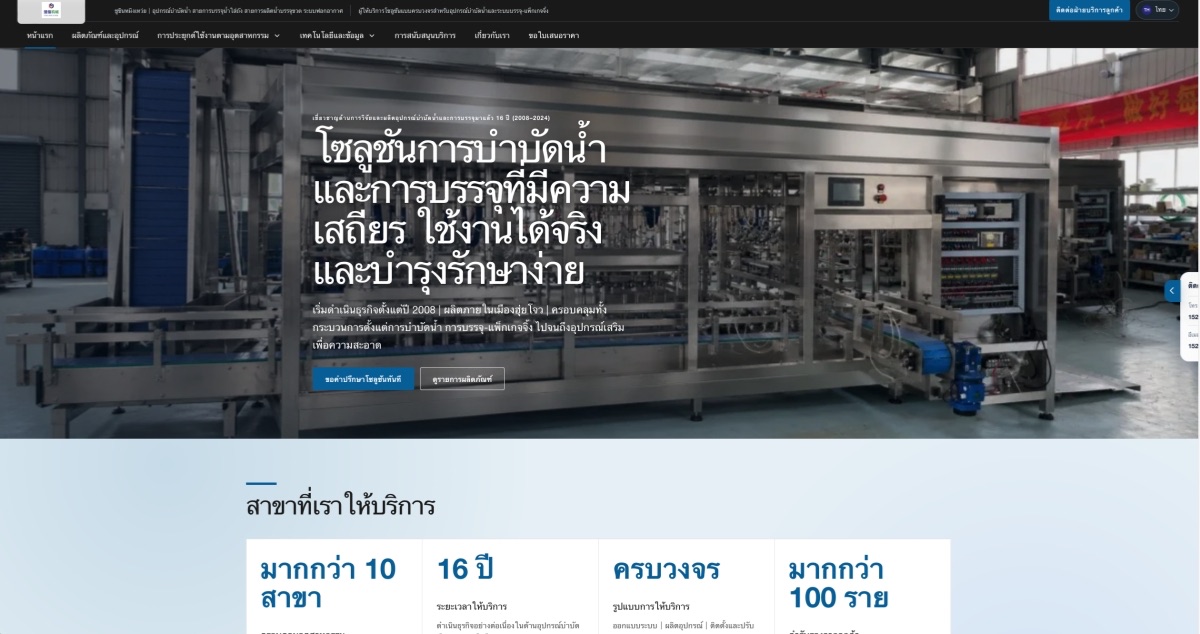
Water Treatment & Filling Equipment Manufacturer | Thai AI Digital Asset Website Case Study
Development of a Thai AI digital asset website for water treatment and filling equipment...