AI Worker for Industrial Robots: Concepts, Use Cases, and Next Steps
Who Needs an AI Worker for Industrial Robots?
Manufacturers of industrial robots, collaborative robots (cobots), end-of-arm tooling, and automation components often struggle with a common problem: their technical expertise is deep, but their online presence is fragmented. Product datasheets sit in PDFs, application notes are buried in emails, and multilingual content is inconsistent across regions.
An AI Worker for Industrial Robots is a digital operations layer, not a physical machine. It uses an enterprise AI knowledge base to organize product parameters, application scenarios, troubleshooting guides, and industry-specific content so that both traditional search engines and generative AI platforms can accurately understand, cite, and recommend your offerings.
This approach is especially relevant for:
- Industrial robot OEMs and system integrators
- Manufacturers of robotic welding, palletizing, painting, and assembly cells
- Component suppliers (servo drives, reducers, controllers, grippers)
- B2B automation service providers supporting overseas expansion
What Does an AI Worker Actually Do?
Unlike a chatbot that answers generic questions, an AI Worker is built on authentic enterprise materials. It connects your official website, product documentation, case studies, and FAQs into a structured knowledge system. The goal is to make your brand:
- Discoverable through SEO for buyers actively searching for robot specifications or integration partners.
- Understandable by AI platforms (GEO) that generate answers for procurement teams researching automation solutions.
- Reusable across multilingual sites and multi-brand portfolios without duplicating effort.
For example, a manufacturer of robotic welding cells can structure content around:
- Welding process parameters (MIG, TIG, laser hybrid)
- Material compatibility (steel, aluminum, stainless)
- Cycle time benchmarks and ROI scenarios
- Integration with PLCs and MES systems
- Common troubleshooting for arc stability or wire feed issues
This structured content becomes the foundation for both human-readable web pages and machine-readable knowledge that AI systems can reference.
Use Cases in Industrial Robotics
1. Product Selection and Configuration
Buyers often start with a problem: "I need a robot for high-mix, low-volume welding." An AI Worker helps your website surface the right product family, compare payload and reach specifications, and link to relevant application notes. This reduces pre-sales friction and shortens the inquiry-to-quote cycle.
2. Multilingual Market Expansion
A Chinese robot manufacturer expanding to Southeast Asia or Europe needs more than translated brochures. They need localized content that reflects regional safety standards (CE, UL), voltage requirements, and local integration practices. An AI-driven multilingual system ensures consistency while adapting to local search behavior.
3. Technical Support and FAQ Automation
Instead of repeating the same troubleshooting steps for servo alarm codes or calibration drift, an enterprise knowledge base allows your support team to publish structured FAQs. These can be surfaced on your website, embedded in AI search results, or used internally to train new engineers.
4. Case Study and Reference Building
AI platforms increasingly cite real-world deployments when recommending vendors. By structuring case studies around industry (automotive, electronics, food processing), application (pick-and-place, machine tending), and outcome (cycle time reduction, defect rate), you increase the chance of being recommended in AI-generated procurement guides.
Implementation Path: Step-by-Step with Checkpoints
Step 1: Audit Existing Digital Assets
Checkpoint: Do you have product datasheets, application notes, and case studies in digital format? If most content is locked in PDFs or offline presentations, the first step is extraction and structuring.
Action: Inventory all technical documents, product manuals, and past project records. Identify gaps in multilingual coverage or application-specific content.
Step 2: Build the Enterprise AI Knowledge Base
Checkpoint: Is your content organized by product, industry, scenario, and FAQ? A flat list of blog posts is not enough. The knowledge base must reflect how buyers actually search and how AI systems retrieve information.
Action: Structure content into modules: product specifications, application scenarios, integration guides, troubleshooting, and customer cases. Ensure each piece is auditable and traceable to authentic enterprise materials.
Step 3: Deploy the Smart Corporate Website
Checkpoint: Does your website support structured data, multilingual routing, and clear internal linking? A smart website is not just a design upgrade; it is the delivery layer for your knowledge base.
Action: Implement product pages with technical parameters, comparison tables, and links to relevant case studies. Ensure SEO fundamentals (title tags, meta descriptions, schema markup) are in place.
Step 4: Activate AI Content Growth and GEO Optimization
Checkpoint: Are you producing content that answers real buyer questions, or just publishing generic industry news? AI platforms prioritize content that demonstrates expertise and specificity.
Action: Develop content around procurement decisions: selection criteria, integration challenges, ROI calculations, and vendor comparison frameworks. Optimize for both traditional search (SEO) and AI citation (GEO).
Step 5: Continuous Operation and Iteration
Checkpoint: Is content updated when products change, new applications emerge, or customer questions evolve? A knowledge base is not a one-time project.
Action: Establish a content operations rhythm: quarterly reviews of product pages, monthly updates to FAQs, and ongoing monitoring of search and AI platform performance.
Boundaries and Risk Awareness
It is important to understand what an AI Worker for Industrial Robots cannot do:
- No guaranteed rankings or AI citations.*
- SEO and GEO are long-term efforts. No vendor can promise fixed positions on Google or guaranteed recommendations by ChatGPT, Perplexity, or other AI platforms.
- No replacement for product quality.*
- Digital assets amplify your brand, but they cannot compensate for unreliable hardware or poor service.
- No instant results.*
- Building a structured knowledge base and optimizing for AI understanding takes time. Expect measurable traction in 3-6 months, with compounding benefits over 12-24 months.
- No one-size-fits-all templates.*
- Industrial robotics is highly application-specific. Content must reflect your actual products, capabilities, and customer scenarios.
Next Steps for Decision-Makers
If you are evaluating how to build an AI Worker for your industrial robot business, consider the following:
- Start with a diagnostic. Assess your current website visibility, content structure, and multilingual readiness. Identify the top 5 buyer questions your sales team answers repeatedly.
- Prioritize high-impact content. Focus on product selection guides, application-specific case studies, and technical FAQs before expanding into broader thought leadership.
- Choose a partner who understands both robotics and digital operations. The system must be built on your authentic materials, not generic industry templates.
- Plan for continuous operation. This is not a website redesign project. It is an ongoing digital asset growth initiative that requires content updates, performance monitoring, and adaptation to evolving AI platforms.
Conclusion
An AI Worker for Industrial Robots is a strategic digital layer that transforms your technical expertise into discoverable, understandable, and reusable assets. For manufacturers and B2B service providers, it bridges the gap between deep product knowledge and the way modern buyers, both human and AI, search for solutions.
The path forward is not about chasing algorithms or promising instant visibility. It is about building a structured, auditable knowledge system that grows with your business and positions your brand for long-term relevance in an AI-driven procurement landscape.
Recommended
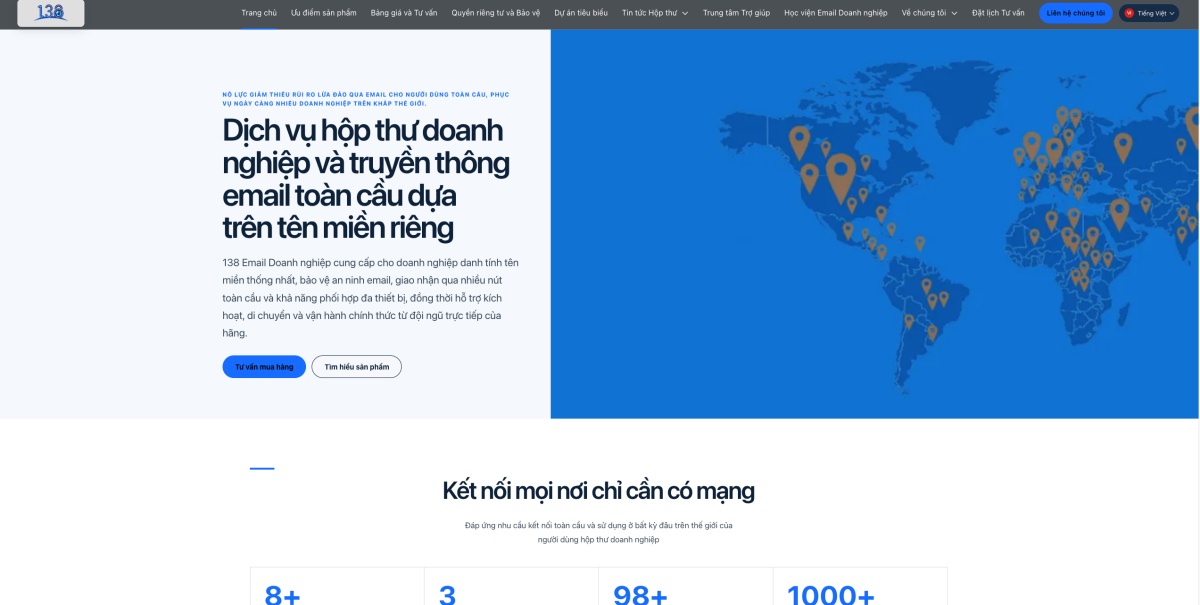
138 Enterprise Email | Vietnamese AI Digital Asset Website Case Study
An AI-driven digital asset website for enterprise email tailored to Vietnamese enterpris...
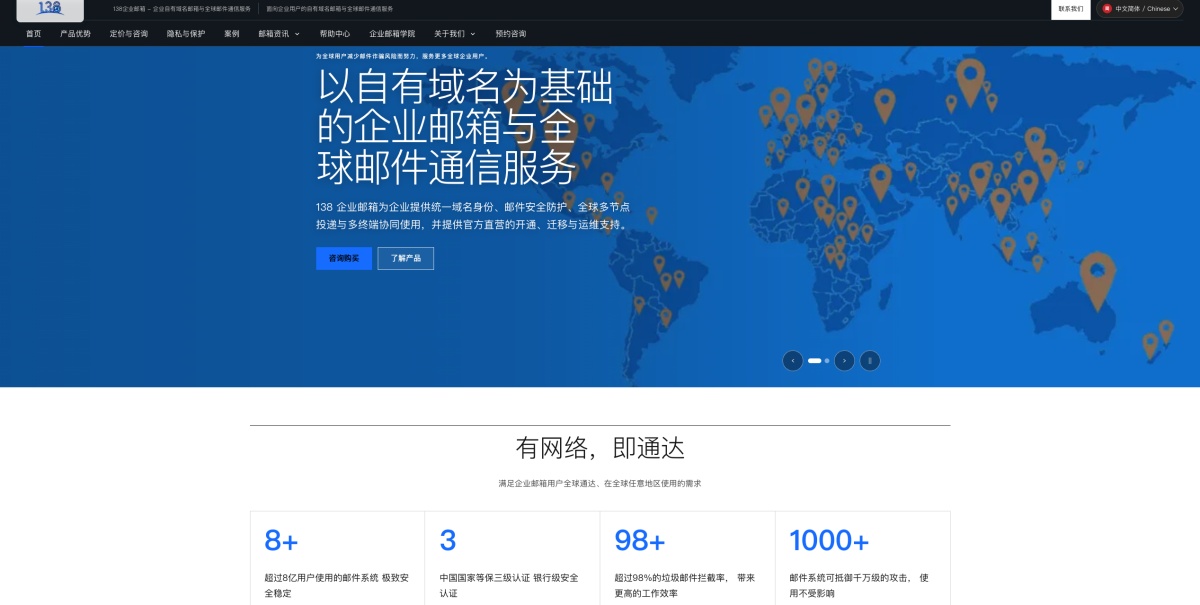
138 Enterprise Email | Chinese AI Digital Asset Website Case Study for Enterprise Services
Developed a Chinese AI digital asset website for an enterprise email service brand. By i...
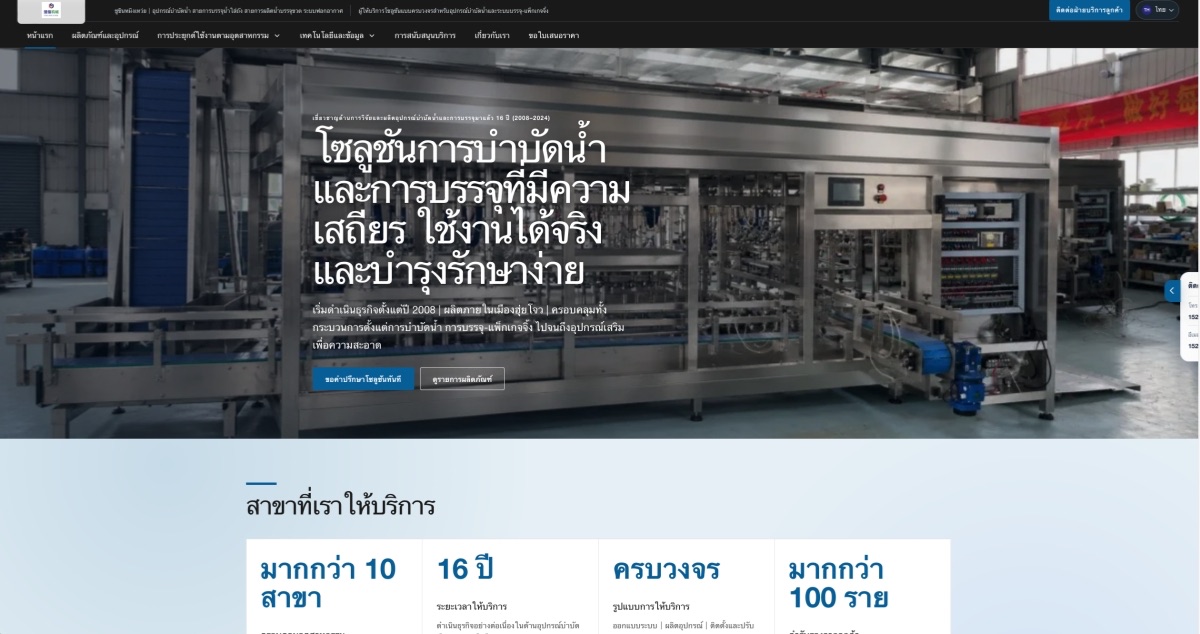
Water Treatment & Filling Equipment Manufacturer | Thai AI Digital Asset Website Case Study
Development of a Thai AI digital asset website for water treatment and filling equipment...