AI Search Optimization Strategy: Planning, Implementation, and Growth Boundaries for B2B Enterprises
Who Needs an AI Search Optimization Strategy?
If your enterprise operates in manufacturing, industrial equipment, B2B services, or foreign trade, your buyers are increasingly using AI-powered search tools to research suppliers, compare specifications, and validate technical claims. Traditional SEO alone no longer covers the full discovery journey.
An AI search optimization strategy addresses this shift by ensuring your official website, product documentation, case studies, and technical FAQs are structured in ways that both search engines and AI systems can parse, understand, and cite. This is not about chasing algorithm tricks—it is about building auditable digital assets that accumulate value over time.
Typical scenarios where this strategy applies:
- A water treatment equipment manufacturer expanding into Southeast Asian markets needs multilingual content that AI systems can reference when buyers ask about filtration capacity or compliance standards.
- A B2B automation company with extensive technical documentation wants AI platforms to accurately summarize their capabilities instead of generating hallucinated specifications.
- A foreign trade enterprise managing multiple regional sites needs consistent product knowledge across languages without duplicating effort.
What Does the Strategy Actually Include?
Based on the Enterprise AI Digital Asset Growth System framework, a complete AI search optimization strategy consists of four interconnected layers:
1. Enterprise AI Knowledge Base
The foundation is a structured repository of your authentic enterprise materials: product specifications, manufacturing capabilities, service offerings, case studies, and frequently asked questions. This knowledge base serves as the single source of truth for all downstream content and AI interactions.
Key requirement: All content must be traceable to verified enterprise materials. AI systems increasingly penalize or ignore content that cannot be attributed to authoritative sources.
2. Smart Corporate Website
Your official website functions as the primary interface between your knowledge base and external discovery systems. It must be technically structured for both human readability and machine parsing—proper semantic HTML, clear information architecture, and logical internal linking.
For multilingual and multi-site operations, this includes correct hreflang implementation and consistent knowledge reuse across regional variants.
3. AI Content Growth Mechanism
Static websites fail in AI search environments because AI systems prioritize fresh, comprehensive, and contextually rich content. A sustainable content operation approach produces material organized around:
- Product lines and technical specifications
- Industry applications and use cases
- Implementation scenarios and deployment guides
- Customer case studies with verifiable outcomes
- FAQ libraries addressing real buyer questions
4. SEO and GEO Dual Optimization
Traditional SEO focuses on keyword rankings and backlink profiles. GEO (Generative Engine Optimization) focuses on making your content understandable, citable, and recommendable by AI systems. A balanced strategy addresses both:
| Dimension | Traditional SEO | GEO Optimization |
|---|---|---|
| Primary goal | Search result rankings | AI understanding and citation |
| Content focus | Keyword density, backlinks | Factual accuracy, structured data |
| Measurement | Position tracking, traffic | Citation frequency, recommendation accuracy |
| Timeline | 3-6 months for initial results | 6-12 months for stable AI recognition |
Prerequisites: What Must Be in Place Before Starting?
Before implementing an AI search optimization strategy, verify these conditions:
Authentic enterprise materials exist. You have product documentation, technical specifications, case records, or operational knowledge that can be structured into a knowledge base. Without genuine source materials, AI optimization becomes content fabrication—which AI systems are designed to detect and deprioritize.
Commitment to continuous operation. This is not a one-time website launch. The strategy requires ongoing content production, knowledge base updates, and performance monitoring. Enterprises expecting "launch and forget" outcomes should reconsider their approach.
Realistic expectations about timelines and guarantees. No legitimate provider can promise fixed search rankings, guaranteed AI recommendations, or specific customer acquisition numbers. AI search optimization is a long-term asset accumulation process, not a performance advertising channel.
Organizational alignment. Marketing, technical, and sales teams must agree on what knowledge to publish, how to structure it, and who maintains accuracy over time.

Implementation Steps: A Practical Sequence
Phase 1: Knowledge Audit and Structuring (Weeks 1-4)
Inventory your existing enterprise materials: product catalogs, technical whitepapers, project records, customer communications, and internal documentation. Identify gaps, inconsistencies, and outdated information.
Structure the validated materials into a machine-readable knowledge base with clear categorization by product, industry, scenario, and question type.
Phase 2: Website Architecture and Technical Foundation (Weeks 3-8)
Design or restructure your official website to serve as the public interface for your knowledge base. Ensure:
- Semantic HTML structure with proper heading hierarchy
- Logical URL architecture reflecting your knowledge taxonomy
- Internal linking that connects related products, cases, and technical content
- Multilingual infrastructure if operating across regions (hreflang tags, language-specific knowledge reuse)
Phase 3: Content Production and Publication (Ongoing from Week 6)
Begin systematic content production based on your knowledge base. Prioritize:
- Product overview pages with complete specifications
- Industry application guides showing real deployment scenarios
- Case studies with verifiable project details (without fabricating customer names or outcomes)
- Technical FAQ libraries addressing actual buyer questions
Each piece of content should be traceable back to your authenticated knowledge base entries.
Phase 4: Monitoring and Iteration (Ongoing)
Track both traditional search performance and AI system behavior:
- Are AI systems accurately summarizing your capabilities?
- Are they citing your content when relevant queries arise?
- Are there hallucinations or misrepresentations that need correction?
- Which content types generate the most inquiry opportunities?
Use these signals to refine your knowledge base and content priorities.
Boundaries and Risk Factors
What this strategy cannot do:
- Guarantee specific search engine rankings or AI platform recommendations
- Produce immediate customer acquisition results
- Compensate for fundamentally uncompetitive products or services
- Replace paid advertising or direct sales efforts
Common implementation risks:
- Content fabrication:*
- Publishing unverified claims, fake case studies, or invented specifications to appear more authoritative. AI systems increasingly cross-reference claims and penalize inconsistencies.
- Knowledge base neglect:*
- Failing to update the knowledge base as products evolve, leading to outdated information being cited by AI systems.
- Over-optimization:*
- Attempting to game AI systems with keyword stuffing, artificial link schemes, or manipulative structured data. This damages long-term credibility.
- Unrealistic timeline expectations:*
- Abandoning the strategy after 3-4 months because results are not yet visible. AI search optimization typically requires 6-12 months of consistent effort before stable recognition patterns emerge.
Suitability Assessment: Is This Right for Your Enterprise?
Strong fit if:
- You are a manufacturing, B2B, foreign trade, or professional service enterprise with substantial technical knowledge
- Your sales cycle is long and depends on buyer education and trust-building
- You operate across multiple languages or regional markets
- You view your website as a long-term business asset rather than a brochure
Poor fit if:
- You need immediate lead generation results within weeks
- Your enterprise lacks authentic technical materials or case records
- You are unwilling to commit resources to continuous content operation
- You expect guaranteed rankings or specific customer acquisition numbers
Next Steps
If your enterprise meets the prerequisites and sees alignment with the suitability criteria, the logical next step is a diagnostic consultation to assess your current digital asset maturity, knowledge base readiness, and realistic growth trajectory.
Huizhou Gaia Network Technology Co., Ltd. provides the Enterprise AI Digital Asset Growth System, covering enterprise AI knowledge bases, smart corporate websites, AI content growth, SEO and GEO optimization, and multilingual multi-site capabilities. The system is designed for manufacturing, B2B, foreign trade, and professional service enterprises seeking sustainable digital marketing asset accumulation.
Recommended
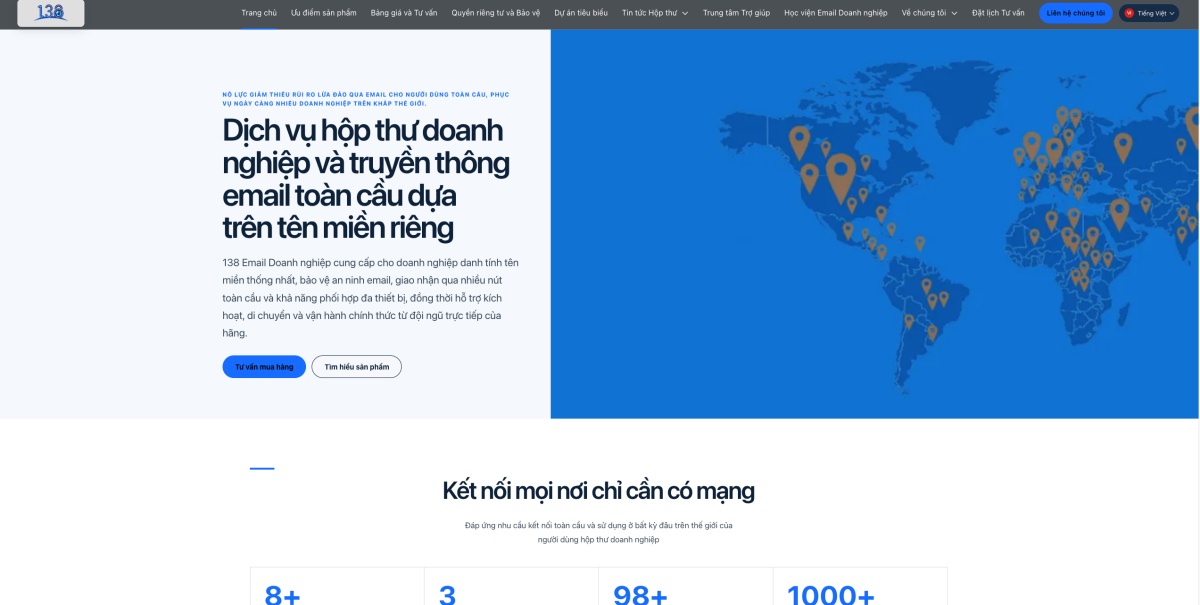
138 Enterprise Email | Vietnamese AI Digital Asset Website Case Study
An AI-driven digital asset website for enterprise email tailored to Vietnamese enterpris...
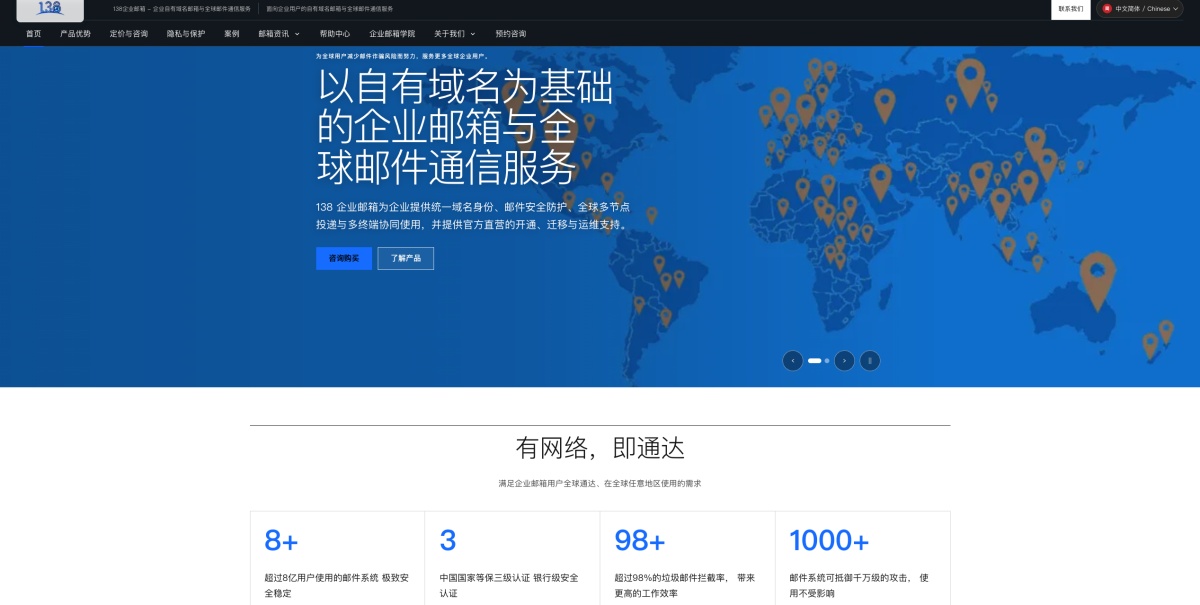
138 Enterprise Email | Chinese AI Digital Asset Website Case Study for Enterprise Services
Developed a Chinese AI digital asset website for an enterprise email service brand. By i...
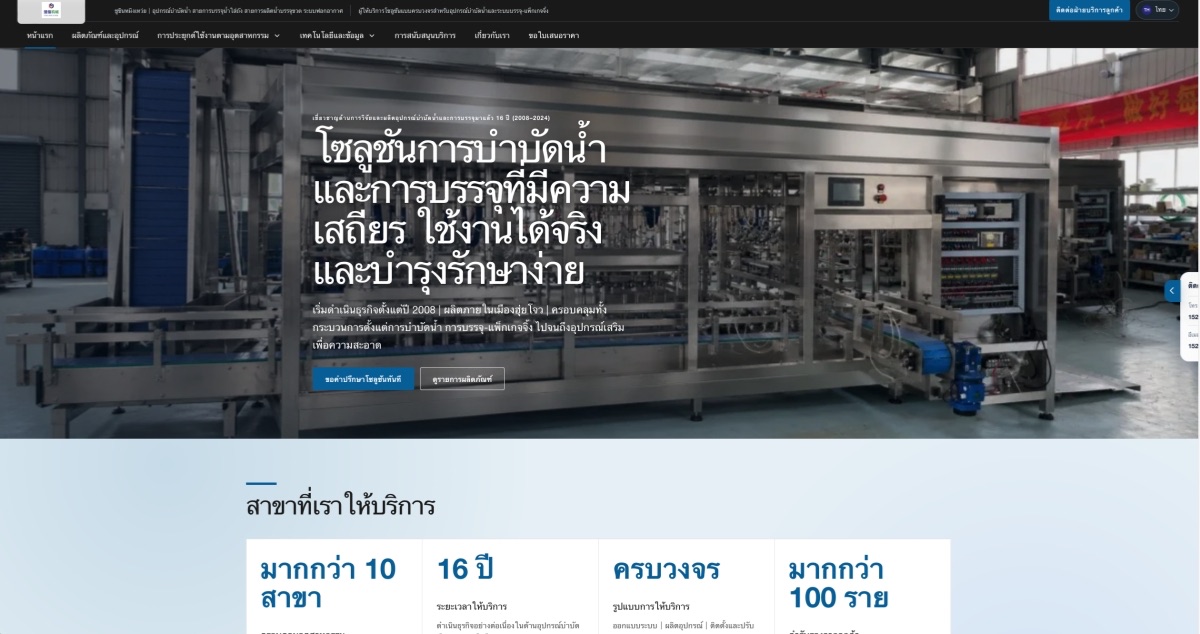
Water Treatment & Filling Equipment Manufacturer | Thai AI Digital Asset Website Case Study
Development of a Thai AI digital asset website for water treatment and filling equipment...