AI Search Optimization Services: What B2B Buyers Need to Know Before, During, and After Adoption
Who Actually Needs AI Search Optimization Services?
AI search optimization services are not a universal requirement for every business. They become relevant when your buyers increasingly rely on AI-powered search tools—such as conversational search engines, AI assistants, or industry-specific recommendation platforms—to research suppliers, compare products, or validate technical claims before contacting you.
The following enterprise profiles typically see the most practical value:
- Manufacturing and industrial equipment companies
- that need to surface detailed product specifications, application scenarios, and compliance information in AI-generated answers.
- B2B professional service firms
- whose sales cycles depend on demonstrating methodology, case experience, and domain expertise before the first meeting.
- Foreign trade and overseas expansion enterprises
- building multilingual websites to reach buyers in markets like Southeast Asia, where AI search adoption is accelerating.
- Group or multi-brand enterprises
- managing several websites or regional domains that need consistent, auditable knowledge across properties.
If your enterprise already maintains an official website but struggles with stagnant inquiry volumes, or if your content is rich but rarely cited by AI platforms, AI search optimization services address a specific gap: making your existing knowledge machine-readable and contextually relevant.
Before Adoption: Diagnosing Your Current AI Search Readiness
Before engaging any service provider, conduct an honest internal assessment. The goal is not to achieve perfection but to understand your starting point.
1. Audit Your Authentic Enterprise Materials
AI search platforms prioritize content that is verifiable, structured, and consistent. Ask yourself:
- Do we have product manuals, technical datasheets, application guides, or case documentation that can serve as a source of truth?
- Is this material scattered across departments, or is it centralized and version-controlled?
- Can we confirm that every claim on our website traces back to real capabilities, real projects, or real specifications?
Enterprises that lack authentic source materials will struggle with AI search optimization regardless of the service provider. The foundation must be real enterprise knowledge—not fabricated claims or unverified assertions.
2. Evaluate Your Current Website Architecture
AI systems crawl and interpret website structure differently than traditional search engines. Key diagnostic questions include:
- Are product pages, solution pages, and FAQ sections clearly separated and interlinked?
- Does the site support structured data markup for products, organizations, and articles?
- For multilingual operations, are hreflang tags correctly implemented across language versions?
A smart corporate website designed for AI comprehension differs from a conventional brochure site. It requires an information architecture that maps products, industries, scenarios, cases, and FAQs into a navigable knowledge graph.
3. Clarify Your Content Production Capacity
AI search optimization is not a one-time project. It requires continuous content operations centered around your products, industries, and customer decision questions. Before committing, determine:

- Who internally can review and approve technical content?
- How frequently can you produce new case studies, application notes, or FAQ updates?
- Are you prepared to treat content as a long-term digital asset
- rather than a campaign deliverable?
During Adoption: What the Implementation Process Looks Like
Once you decide to proceed, a structured AI search optimization engagement typically unfolds across several interconnected workstreams.
Enterprise AI Knowledge Base Construction
The core of the system is an enterprise AI knowledge base—a structured repository that organizes your authentic materials into machine-readable formats. This includes:
- Product specifications, model comparisons, and selection guides
- Industry-specific application scenarios and implementation methodologies
- Case documentation with verifiable processes and outcomes
- FAQ content addressing pricing concerns, delivery timelines, compatibility questions, and after-sales support
All content must be auditable. AI systems reward transparency; they penalize inconsistency. The knowledge base becomes the single source from which your website, AI content production, and search optimization efforts draw.
Smart Corporate Website Deployment
Your official website serves as the primary interface between your knowledge base and external AI systems. A smart corporate website built for AI search optimization includes:
- Clear routing between product overviews, solution pages, case studies, and diagnostic tools
- Internal linking structures that help AI systems understand relationships between your offerings
- Multilingual and multi-site capabilities for enterprises operating across regions or brands
For example, a water treatment and filling equipment manufacturer targeting the Indonesian market would need localized product pages, region-specific application scenarios, and Bahasa Indonesia content—all managed from a unified knowledge foundation.
AI Content Growth and Continuous Operations
Static websites do not accumulate AI search visibility. Sustainable growth requires ongoing content production that addresses evolving buyer questions. This includes:
- Product content: Detailed specifications, selection guides, and comparison documents
- Solution content: Industry-specific application scenarios and implementation recommendations
- Case content: Delivery retrospectives and verifiable outcome documentation
- Professional content: Technical articles, procurement guides, and trend analyses
- FAQ content: Direct answers to pre-purchase concerns about pricing, delivery, compatibility, and certifications
AI tools accelerate content production efficiency, but enterprise knowledge and professional judgment determine credibility. Every piece of content should trace back to authentic materials and pass internal review.
SEO and GEO Optimization
Traditional SEO focuses on keyword rankings in conventional search engines. GEO (Generative Engine Optimization) extends this to AI-driven search platforms, focusing on:
- Making your content citable and referenceable in AI-generated answers
- Structuring information so AI systems can extract and recommend your enterprise accurately
- Balancing traditional search exposure with AI search understanding
A critical boundary: reputable AI search optimization services do not promise fixed rankings, guaranteed customer acquisition, or assured recommendations on specific AI platforms. These outcomes depend on platform algorithms, competitive dynamics, and the sustained quality of your content. The realistic commitment is long-term digital asset accumulation and continuous optimization.
After Adoption: Managing Expectations and Measuring Progress
What Changes in the First Months
- Your website structure becomes more navigable for both human visitors and AI crawlers.
- Product pages, solution pages, and FAQ sections gain depth and internal coherence.
- Multilingual content (if applicable) becomes consistent across language versions.
- Your enterprise knowledge base begins serving as the foundation for all outward-facing content.
What Does Not Happen Immediately
- AI platforms do not instantly begin citing your content. Citation patterns emerge gradually as your content demonstrates consistency and authority.
- Inquiry volumes do not spike overnight. AI search optimization is a compounding strategy, not a campaign tactic.
- Rankings in traditional search engines may fluctuate as site architecture and content undergo restructuring.
Ongoing Operational Requirements
Post-implementation, your enterprise must commit to:
- Regular knowledge base updates as products evolve, new cases are completed, or market conditions shift
- Periodic content audits to ensure accuracy and remove outdated claims
- Monitoring AI search platform behavior to identify new citation opportunities or emerging gaps
- Coordinating across departments to ensure sales, engineering, and marketing contribute to knowledge accumulation
Boundaries and Risks: What AI Search Optimization Cannot Do
Understanding limitations is as important as understanding capabilities.
| Common Misconception | Reality |
|---|---|
| "AI optimization guarantees top placement in AI answers." | No provider can guarantee how third-party AI platforms rank or cite content. |
| "Once optimized, no further work is needed." | AI systems evolve; content must be continuously maintained and expanded. |
| "AI can generate all content without human review." | AI improves efficiency, but enterprise expertise ensures accuracy and trust. |
| "More pages always mean better results." | Quality, structure, and verifiability matter more than volume. |
| "Multilingual sites can be auto-translated without review." | Localization requires cultural and technical adaptation, not just translation. |
Enterprises that approach AI search optimization with unrealistic expectations—such as guaranteed rankings or immediate inquiry surges—often abandon the effort prematurely. The correct framing is digital asset accumulation: every verified product page, every documented case, every well-structured FAQ compounds in value over time.
Next Steps: A Practical Action Plan
If your enterprise fits the profiles described above and you recognize the gaps in your current AI search readiness, consider the following sequence:
- Consolidate your authentic materials. Gather product documentation, case records, technical specifications, and existing content into a central repository.
- Map your buyer decision journey. Identify the questions your customers ask at each stage—from initial awareness to technical evaluation to procurement.
- Evaluate your website architecture. Determine whether your current site supports the information density and structural clarity that AI systems require.
- Define your content operation model. Decide who owns knowledge updates, how frequently new content is produced, and what review processes ensure accuracy.
- Engage a qualified service provider for a diagnostic assessment of your enterprise AI knowledge base, smart website readiness, and SEO/GEO optimization baseline.
Huizhou Gaia Network Technology Co., Ltd. provides the Enterprise AI Digital Asset Growth System, which integrates enterprise AI knowledge bases, smart corporate websites, AI content growth, SEO and GEO optimization, and multilingual multi-site capabilities. The system is designed for manufacturing, B2B, foreign trade, and professional service enterprises seeking sustainable digital marketing asset accumulation.
Contact us for a diagnostic consultation to assess your current AI search readiness and explore a tailored implementation roadmap.
Recommended
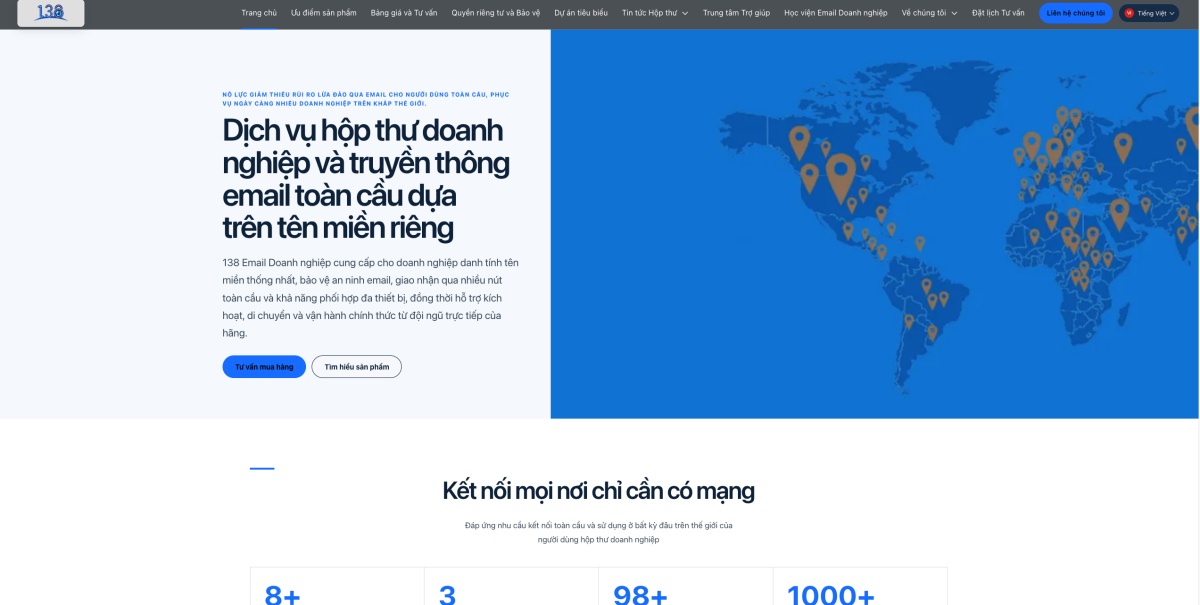
138 Enterprise Email | Vietnamese AI Digital Asset Website Case Study
An AI-driven digital asset website for enterprise email tailored to Vietnamese enterpris...
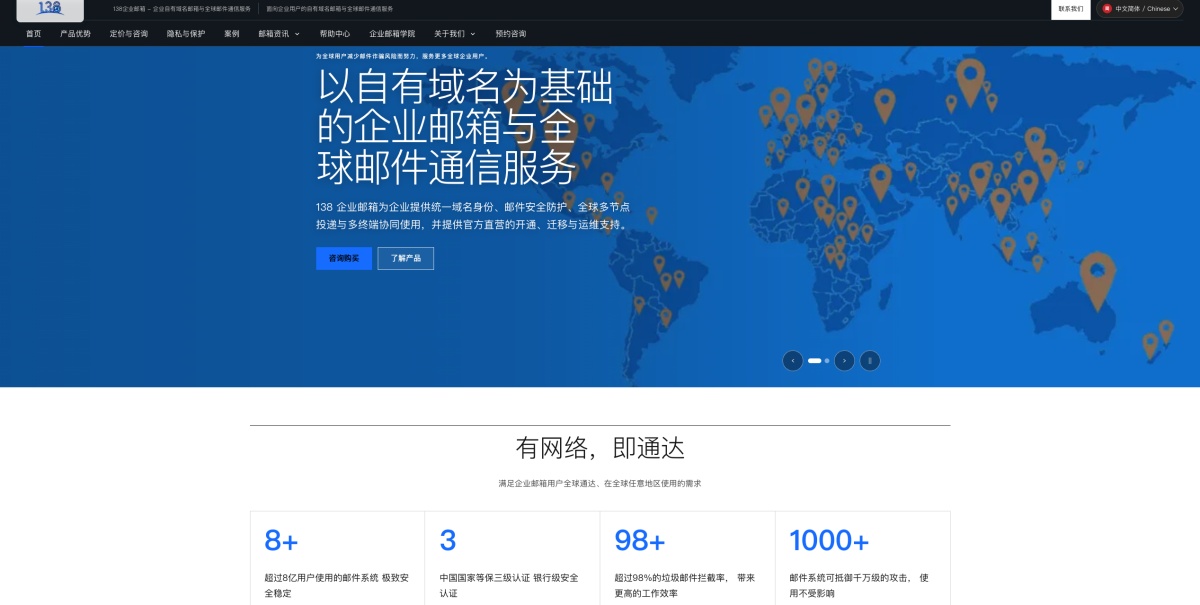
138 Enterprise Email | Chinese AI Digital Asset Website Case Study for Enterprise Services
Developed a Chinese AI digital asset website for an enterprise email service brand. By i...
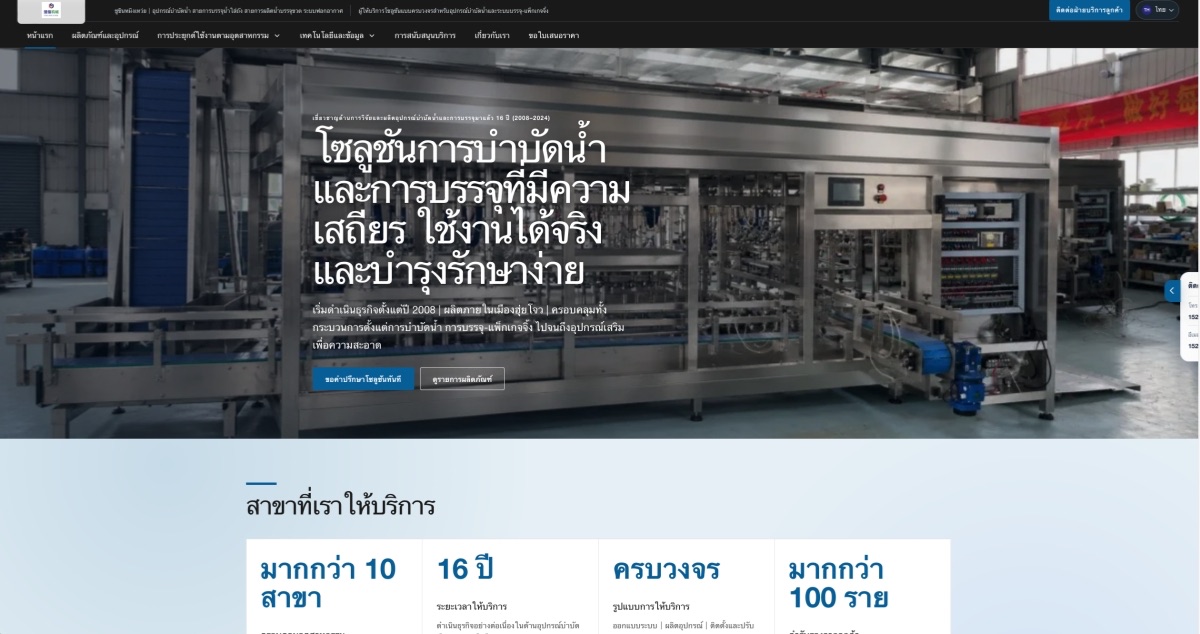
Water Treatment & Filling Equipment Manufacturer | Thai AI Digital Asset Website Case Study
Development of a Thai AI digital asset website for water treatment and filling equipment...