AI Content Growth Services: Concepts, Use Cases & Next Steps
Who needs AI content growth services
AI content growth services are designed for enterprises that rely on their official website as a long-term channel for customer acquisition, knowledge accumulation and brand credibility. Typical users include manufacturing enterprises, B2B companies, foreign trade and overseas expansion businesses, and professional service providers. These organizations usually face the same core challenge: they have rich product manuals, technical parameters, application experience and customer questions, but lack a structured way to turn these materials into discoverable, reusable digital assets. For group companies or multi-brand businesses, the challenge is multiplied. Different sites, languages and business lines often end up with duplicated content, inconsistent messaging and fragmented search performance. AI content growth services address this by connecting official websites, enterprise knowledge bases, content production, SEO and GEO optimization into one continuous operational system.
What AI content growth services actually deliver
At the core, AI content growth services do not promise fixed rankings or guaranteed customer acquisition. Instead, they focus on building auditable, reusable content assets based on authentic enterprise materials. The service typically covers four layers:
- Enterprise AI knowledge base: organizing product specifications, application scenarios, industry know-how and FAQs into a structured, machine-readable foundation.
- Smart corporate website: presenting the knowledge base through a website architecture that supports multilingual, multi-site and multi-brand management.
- AI content growth: continuously producing product pages, solution articles, case summaries and FAQ content aligned with real buyer questions.
- SEO and GEO optimization: balancing traditional search exposure with AI search understanding, citation and recommendation opportunities. The output is not a one-time project but a continuous content operation approach centered around products, industries, scenarios, cases and FAQs.
Typical use cases in real enterprise scenarios
Manufacturing and industrial enterprises
Manufacturers can convert product manuals, technical parameters and application experience into structured product pages and industry solutions. Content covers model differences, process details, material choices, application scenarios and procurement questions. The result is a website that helps both search engines and AI systems understand what the company actually makes and where it performs best.
B2B professional service providers
Service companies can build professional trust by continuously answering the questions buyers ask before making a decision. Case studies, methodology articles and detailed FAQs reduce pre-sales explanation costs and shorten the evaluation cycle.
Foreign trade and overseas expansion businesses
Export-oriented companies can establish multilingual official websites and localized content systems. Product materials are reused across markets while expression is adjusted to local search behavior and industry terminology.
Group and multi-brand businesses
Groups can unify the knowledge base and manage multiple sites by brand, region or business line. This reduces duplicated website construction and avoids content inconsistency across properties.
Implementation steps for first-time deployment
A practical rollout of AI content growth services usually follows three stages: before adoption, during deployment, and after go-live.
Before adoption
- Clarify the business objective: is the priority customer inquiry volume, market coverage, or knowledge consolidation?
- Audit existing materials: product catalogs, technical documents, past cases, FAQs and multilingual resources.
- Define content boundaries: what can be published, what requires review, and what must remain internal.
During deployment
- Build the *enterprise AI knowledge base
- using verified internal materials as the source of truth.
- Design the smart website architecture, including multilingual routing, hreflang setup and multi-site management if needed.
- Produce the first batch of content covering core products, key industries, typical scenarios and high-frequency FAQs.
- Align SEO and GEO optimization with the content structure, ensuring both traditional search and AI search can interpret the site correctly.
After go-live
- Operate content continuously around products, industries, scenarios, cases and FAQs.
- Reuse and adapt content across languages and sites to maintain consistency.
- Monitor search and AI citation performance, adjusting content priorities based on real buyer questions rather than assumed trends.
Boundaries and risks to understand early
AI content growth services are a long-term growth effort, not a shortcut to instant visibility. Key boundaries include:
- No fixed ranking positions or guaranteed recommendations on specific AI platforms can be promised.
- Content quality depends on the authenticity and completeness of enterprise materials; AI improves efficiency, but enterprise knowledge and professional judgment determine credibility.
- Multilingual and multi-site deployment requires clear governance to avoid content duplication and conflicting messaging.
- SEO and GEO optimization must be treated as continuous operations, not one-time configurations. Understanding these boundaries helps decision-makers set realistic expectations and allocate resources appropriately.
Next steps for evaluation
For enterprises considering AI content growth services for the first time, a practical starting point is to map existing digital assets against current buyer questions. Identify which product lines, industries or markets are underrepresented online, and prioritize content that answers real procurement and technical questions. From there, a structured discussion with a service provider can clarify scope, site architecture, language coverage and operational rhythm. Huizhou Gaia Network Technology Co., Ltd. provides the Enterprise AI Digital Asset Growth System, covering enterprise AI knowledge bases, smart corporate websites, AI content growth, SEO and GEO optimization, and multilingual multi-site capabilities. The system is designed for manufacturing, B2B, foreign trade and professional service enterprises that want to accumulate sustainable digital marketing assets for continuous customer inquiry opportunities.
Recommended
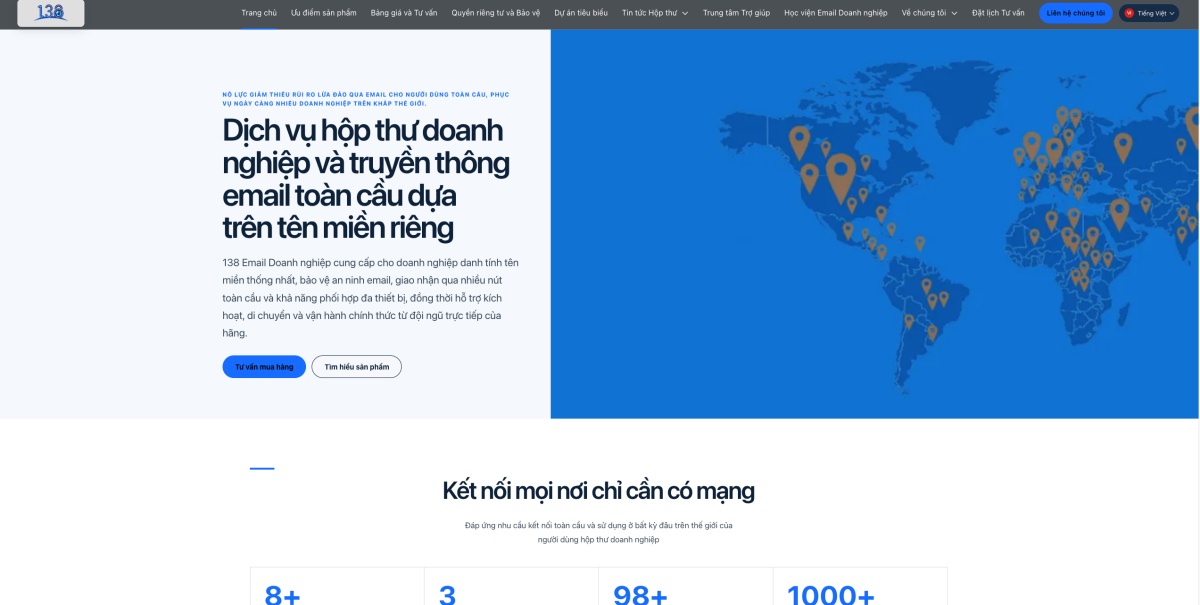
138 Enterprise Email | Vietnamese AI Digital Asset Website Case Study
An AI-driven digital asset website for enterprise email tailored to Vietnamese enterpris...
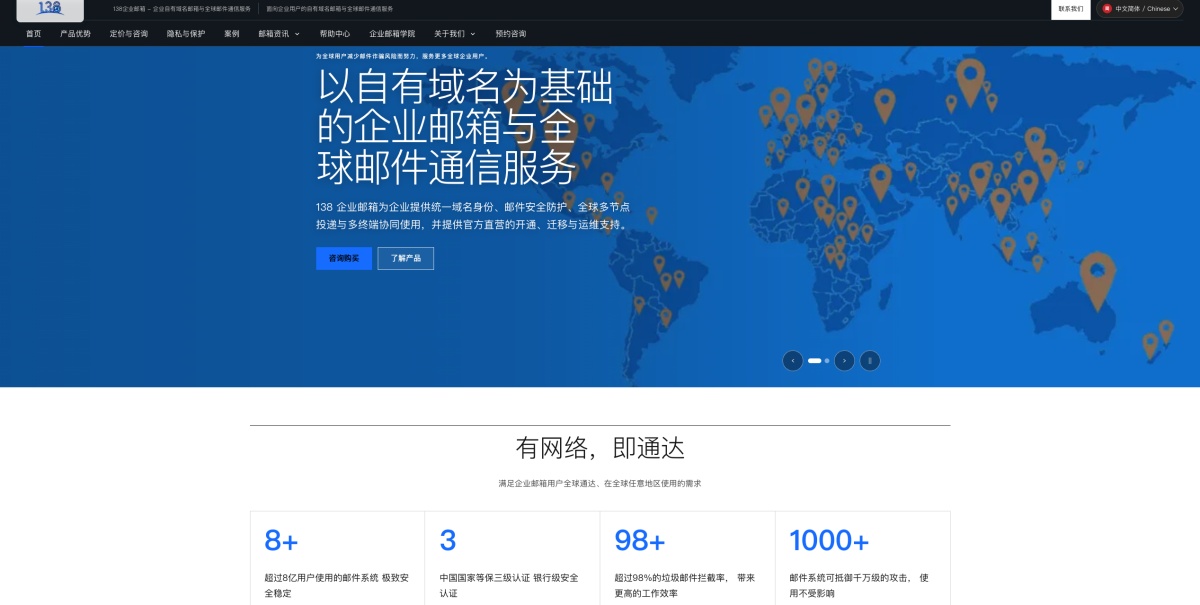
138 Enterprise Email | Chinese AI Digital Asset Website Case Study for Enterprise Services
Developed a Chinese AI digital asset website for an enterprise email service brand. By i...
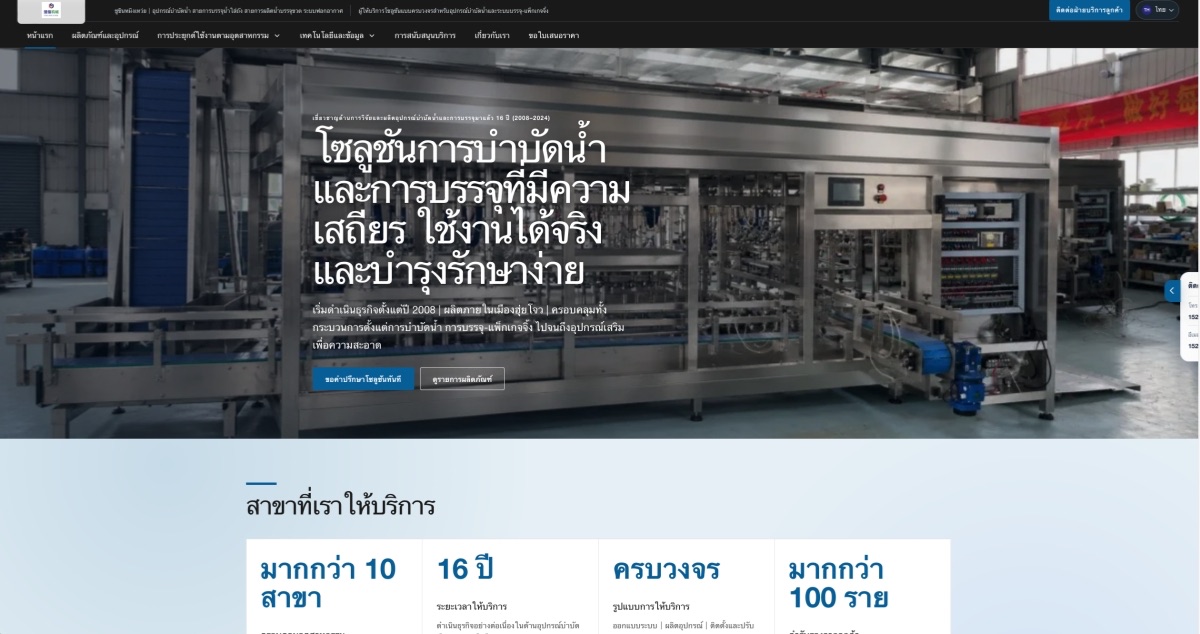
Water Treatment & Filling Equipment Manufacturer | Thai AI Digital Asset Website Case Study
Development of a Thai AI digital asset website for water treatment and filling equipment...